Ukraine
Flag of Ukraine
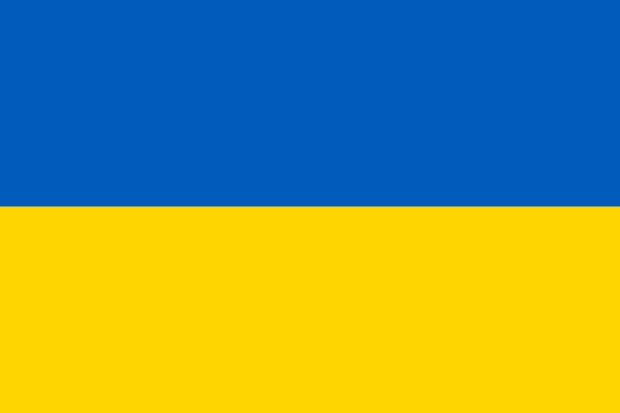
Flag is available in resolutions
| Icon 88x59 |  |
| Icon 32x21 |  |
Ukraine
Ukraine: A Land of Resilience, Rich History, and Untapped Potential
Ukraine, a vast and geographically diverse nation situated in Eastern Europe, stands as a country of profound historical significance, immense natural beauty, and a spirit of unwavering resilience. Its name, meaning „borderland,“ hints at its strategic position, a crossroads of cultures and empires that has shaped its unique identity over centuries. From the fertile plains of its agricultural heartland to the majestic Carpathian Mountains and the azure waters of the Black Sea, Ukraine offers a captivating tapestry of landscapes and experiences. The nation’s journey has been marked by periods of great triumph and profound struggle, yet its people have consistently demonstrated an indomitable will to preserve their sovereignty and cultural heritage. Understanding Ukraine requires delving into its intricate past, appreciating its present complexities, and recognizing its potential for a vibrant future.
The population of Ukraine is a testament to its diverse historical influences and geographical expanse. Predominantly ethnically Ukrainian, the country also hosts significant Russian, Belarusian, Moldovan, Crimean Tatar, and other minority populations, each contributing to the rich cultural mosaic. Ukrainian is the official state language, a beautiful East Slavic tongue that has experienced a resurgence in prominence in recent decades. Russian is also widely spoken, particularly in the eastern and southern regions, reflecting historical ties and migration patterns. The Ukrainian Orthodox Church is the dominant religious institution, with a significant presence of the Orthodox Church of Ukraine and the Ukrainian Orthodox Church – Moscow Patriarchate, alongside Roman Catholic, Greek Catholic, Protestant, and other faiths. This religious diversity has, at times, been a source of both unity and tension, mirroring the nation’s broader historical experiences. The demographic landscape has been significantly impacted by historical events, including periods of famine and emigration, and more recently, by the ongoing conflict, which has led to substantial internal displacement and outward migration. Despite these challenges, the Ukrainian people are known for their warmth, hospitality, and a deep sense of national pride.
Ukraine’s history is a long and complex narrative, stretching back to the ancient Scythians and the powerful Kievan Rus’ civilization, which is considered the cradle of East Slavic culture and statehood. The Golden Age of Kievan Rus’ in the 10th and 11th centuries saw the flourishing of art, literature, and Orthodox Christianity. Following the Mongol invasion and the fragmentation of Rus’, Ukrainian lands fell under the influence of various powers, including the Grand Duchy of Lithuania, the Kingdom of Poland, and later the Russian Empire and the Austro-Hungarian Empire. The Cossack Hetmanate, established in the 17th century, represented a period of semi-autonomy and fierce resistance against foreign domination, leaving an indelible mark on Ukrainian national consciousness. The 20th century brought further upheaval. Following the collapse of the Russian Empire, Ukraine briefly declared independence in 1918, only to be absorbed into the Soviet Union. The Soviet era was marked by devastating events, including the Holodomor, a man-made famine in the 1930s that claimed millions of Ukrainian lives, and the horrors of World War II. Despite the immense suffering, the spirit of Ukrainian nationhood persisted. Ukraine finally regained its independence in 1991 following the dissolution of the Soviet Union, embarking on a challenging path of democratic and economic transition. The Orange Revolution of 2004 and the Revolution of Dignity in 2014 demonstrated the Ukrainian people’s unwavering commitment to democracy and their desire for closer ties with the West, ultimately leading to the current conflict with Russia, which began in 2014 and escalated dramatically in 2022.
Geographically, Ukraine is the second-largest country in Europe by area, after Russia. Its territory is predominantly characterized by fertile plains, known as the steppes, which form part of the vast Eurasian steppe. These plains are exceptionally fertile, making Ukraine a global agricultural powerhouse, particularly for grain and sunflower production. The Dnieper River, one of Europe’s longest, flows through the heart of the country, serving as a vital waterway and a source of hydroelectric power. To the west, the Carpathian Mountains offer a dramatic contrast with their rolling hills, dense forests, and picturesque valleys, providing opportunities for hiking, skiing, and exploring unique Hutsul culture. The southern coast is bordered by the Black Sea, with its popular resort towns and historical ports like Odesa. Crimea, a peninsula in the south, boasts a distinct Mediterranean climate and a rich historical heritage, though it has been under Russian occupation since 2014. Ukraine’s diverse climate ranges from continental in the interior to subtropical along the Black Sea coast, with distinct seasons that influence its agricultural cycles and natural beauty.
Ukraine’s industrial sector is diverse, though it has undergone significant restructuring since the collapse of the Soviet Union. Historically, the country was a major center for heavy industry, including metallurgy, mining, and machine building, particularly in the eastern Donbas region. Agriculture remains a cornerstone of the Ukrainian economy, with vast tracts of land dedicated to growing wheat, corn, barley, and sunflowers. The food processing industry is consequently well-developed. Ukraine also possesses significant natural resources, including coal, iron ore, and manganese. The IT sector has emerged as a rapidly growing and dynamic industry in recent years, attracting significant foreign investment and talent. However, the ongoing conflict has had a devastating impact on Ukraine’s industrial infrastructure, supply chains, and economic stability, necessitating a massive effort towards reconstruction and modernization.
Ukraine is replete with tourist attractions, offering a wealth of experiences for visitors. The capital city, Kyiv, is a historical and cultural gem, boasting magnificent golden-domed churches like Saint Sophia’s Cathedral and St. Michael’s Golden-Domed Monastery, both UNESCO World Heritage sites. The Kyiv Pechersk Lavra, a stunning Orthodox monastery complex, is a spiritual center and a marvel of architecture. The vibrant city also offers lively cultural scenes, museums, and bustling streets. Lviv, in western Ukraine, is renowned for its charming Old Town, a UNESCO World Heritage site, with its cobblestone streets, Austro-Hungarian architecture, and a distinct European ambiance. Odesa, the “Pearl of the Black Sea,” captivates with its elegant boulevards, the iconic Potemkin Stairs, and its lively port atmosphere. The Carpathian Mountains offer breathtaking natural beauty, with opportunities for outdoor activities and exploring traditional Hutsul villages. For history buffs, the Chernobyl Exclusion Zone offers a unique and somber glimpse into the past. From the grandeur of its historical cities to the serenity of its natural landscapes, Ukraine presents a compelling destination that is only beginning to reveal its full potential to the world. The resilience and spirit of the Ukrainian people, forged through centuries of history, are perhaps its most profound and inspiring attraction.
Information about Ukraine
The information comes from the publication CIA The World Factbook.
Automated text translation, excuse errors, please!
Country Ukraine is situated in a location / continent Europe. Ukraine has an area of 603 550 km2 and 44 854 065 residents. The highest point has a height 2 061 above sea level. and it is called Hora Hoverla. The lowest point is located at the level of 0 above sea level and it is named Black Sea. System of government is republic and the date of independence 24th August 1991. The capital city is Kyiv (Kiev). Ukraine has the international abbreviation UP.
Ukraine - economy
Total gross domestic product (GDP) is 333 700 000 000 $. Total gross domestic product per capita in purchasing power parity is 7 300 $. GDP grows by 5.20 % a year. Inflation (consumer price index) is equal to 8.00 % a year. Ukraine have 22 090 000 working-age population (from a total population 44 854 065 people). Unemployment is at 7.00 %. Ukraine issued 7.00 % GDP to healt care and 1,40 % GDP to army. The public debt of the country is 39.00 % GDP. The total amount of foreign debt is 123 700 000 000 USD.
Ukraine - demography
As suggested above, Ukraine has 44 854 065 people. Population growth is in the amount -0.63 % per year. Number of children born per 1000 population per year is 9.59.Every mother has average 1.29 children. The infant mortality rate is 8.38 and maternal mortality 32.00 deaths per 100,000 births. Average estimated life expectancy makes 68.74 years. Mortality is 15.76 people per 1000 population per year.
Ukraine - transport and telecommunications
Ukraine has 169 496 km of roads, 21 684 km of railway lines and 412 airports. The total length of waterways (navigable rivers, canals, etc.) is 1 672 km. There is registered 134 ships.
Number of active mobile phones (sim card) in the country Ukraine is 53 929 000. Number of active fixed telephone lines is 12 941 000. Ukraine has 7 770 000 internet users, who have the available 1 997 000 Internet connections. Ukraine has been assigned a domain first Choose range .ua.
Ukraine - energetics
Ukraine consumes a year 138 300 000 000 kWh of electricity. Annual electricity production is 164 500 000 000 kWh in power plants with a total installed electrical capacity 54 380 000 kW. Ukraine exports 7 961 000 000 kWh and imports 1 894 000 000 kWh of electricity per year Energy mix of power generation is as follows: fossil fuels: 64.4 %, nuclear energy: 25.4 %, renewable: 0.1 %, hydropower: 10.0 %. The country Ukraine is harvested annually 73 180 barrels of oil.
Keywords: flag, all flags, information, transport, list of countries, flags of countries in the world, national flags, Ukraine, list of flags, telecommunications, Flags of countries, world countries, Flag of Ukraine, economy, flag states, energetics, demography, politic.