Antarctica
Flag of Antarctica
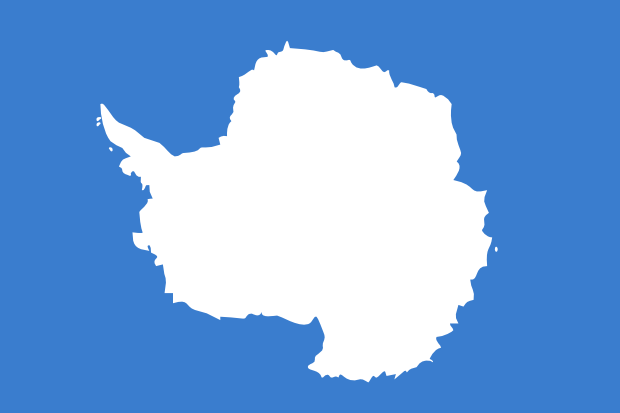
Flag is available in resolutions
| Icon 88x59 |  |
| Icon 32x21 |  |
Antarctica
Heres an article about Antarctica, approximately 5000 characters long, written in English, using Czech quotation marks „“ and proper apostrophes, with bold text indicated by `` tags, and no ` ` or `` tags.
Antarctica: The Frozen Continent of Mystery and Wonder
Antarctica, the southernmost continent on Earth, is a land of extremes, a vast, icy wilderness that has captivated human imagination for centuries. It is a continent unlike any other, characterized by its immense size, its frigid temperatures, and its unique ecosystem. Unlike other continents, Antarctica has no indigenous human population and no permanent settlements in the traditional sense. Its inhabitants are transient, comprised of scientists and support staff who reside at research stations scattered across the continent. These hardy individuals are dedicated to unraveling the mysteries of this pristine environment, studying its climate, geology, and biology, and contributing to our understanding of the planet. The governance of Antarctica is unique as well, managed by the Antarctic Treaty System, an international agreement that designates the continent for peaceful purposes, primarily scientific research, and prohibits military activity and resource exploitation. This treaty, signed in 1959, has been remarkably successful in preserving Antarctica as a continent dedicated to science and international cooperation, a testament to humanitys ability to work together for the common good. The very remoteness and harshness of Antarctica have fostered a spirit of shared endeavor among those who work there, creating a unique community bound by common purpose and a deep respect for the natural world.
The history of Antarctica is a narrative of exploration, discovery, and scientific endeavor. For millennia, the continent remained unknown, a mythical Terra Australis Incognita that fueled the imaginations of ancient geographers. The first confirmed sightings of the Antarctic mainland by Europeans occurred in the early 19th century, marking the beginning of a new era of exploration. Ambitious expeditions, often fraught with peril and hardship, ventured into the treacherous Southern Ocean, driven by a thirst for knowledge and the lure of the unknown. Figures like Captain James Cook, who circumnavigated the continent in the late 18th century, and later explorers such as Roald Amundsen, who famously led the first expedition to the South Pole in 1911, etched their names into the annals of Antarctic history. The Heroic Age of Antarctic Exploration in the early 20th century saw a surge of expeditions, each pushing the boundaries of human endurance and scientific inquiry. These expeditions faced unimaginable challenges, from brutal weather conditions and treacherous ice to the sheer isolation of their endeavor. Despite the immense difficulties, these early explorers laid the groundwork for the scientific research that continues to this day, collecting invaluable data and charting the unknown territories. The establishment of permanent research stations in the mid-20th century further solidified Antarcticas role as a global scientific hub, enabling continuous, long-term research projects that have yielded profound insights into Earths climate, geology, and the unique adaptations of its wildlife. The legacy of these pioneers continues to inspire, reminding us of the enduring human spirit of exploration and discovery.
Geographically, Antarctica is a continent of unparalleled scale and dramatic landscapes. It is the fifth-largest continent, with an area of approximately 14 million square kilometers, roughly twice the size of Australia. The vast majority of this landmass, over 98%, is covered by an immense ice sheet, the largest single mass of ice on Earth. This ice sheet, averaging about 1.9 kilometers in thickness, contains about 70% of the worlds fresh water. The sheer weight of this ice has depressed the underlying landmass, creating a subglacial topography that includes mountain ranges, valleys, and even active volcanoes. The Transantarctic Mountains, one of the longest mountain ranges on Earth, divide the continent into East Antarctica and West Antarctica. East Antarctica is largely a high, ice-covered plateau, while West Antarctica is a more complex region of islands and ice shelves. The Antarctic Peninsula, a finger of land extending northwards towards South America, is the most accessible part of the continent and experiences slightly milder temperatures. The coastline is a dynamic environment, shaped by the relentless action of glaciers and icebergs. Enormous ice shelves, floating extensions of the ice sheet, fringe much of the continent, calvings vast icebergs into the surrounding Southern Ocean. Beneath the ice, however, lies a land of geological fascination, with evidence of ancient mountain ranges, sedimentary basins, and mineral deposits, hinting at a past that was very different from the frozen present.
Despite its inhospitable climate, Antarctica possesses a unique and surprisingly rich biodiversity, adapted to survive in one of the planets most extreme environments. The surrounding Southern Ocean teems with life, forming the base of a complex food web. Krill, small crustaceans, are a cornerstone of this ecosystem, feeding a multitude of marine animals. Penguins, perhaps the most iconic inhabitants of Antarctica, are found in large colonies, with species like the Emperor penguin and the Adélie penguin being particularly well-known. These flightless birds are remarkable swimmers and divers, expertly navigating the frigid waters in search of food. Seals, including Weddell seals, crabeater seals, and leopard seals, also thrive in Antarctic waters, adapted to the icy conditions with thick blubber layers. Whales, such as humpback whales and minke whales, migrate to the nutrient-rich Antarctic waters during the austral summer to feed. On land, life is more sparse, primarily consisting of mosses, lichens, and a few species of hardy flowering plants that can tolerate the harsh conditions. Insects and mites are also present in some ice-free areas. The scientific research conducted in Antarctica has revealed fascinating adaptations, such as antifreeze proteins in the blood of some fish and the ability of certain organisms to survive extreme cold and desiccation. The continents pristine environment also makes it a crucial barometer for understanding global climate change, with ongoing research monitoring the impact of rising temperatures on its fragile ecosystems. The intricate web of life in Antarctica, from the microscopic krill to the majestic whales, highlights the resilience and adaptability of nature in the face of extreme challenges.
Antarctica does not have a traditional industry in the sense of manufacturing or resource extraction, as these activities are prohibited by the Antarctic Treaty. However, the continents economy is entirely driven by scientific research and tourism. Numerous countries operate research stations, employing scientists, technicians, and support staff. These stations conduct a wide range of studies, from meteorology and glaciology to biology and astronomy. The infrastructure required to support these stations, including specialized vehicles, aircraft, and ships, represents a significant logistical undertaking. Tourism has also become a significant, albeit carefully managed, industry. Expedition cruise ships bring thousands of visitors each year to experience the awe-inspiring landscapes and wildlife. These tours are strictly regulated to minimize environmental impact, with guidelines for landing sites, wildlife viewing, and waste management. The focus is on educational and ecotourism, allowing visitors to witness the unique beauty of Antarctica while respecting its pristine nature. The economic activity generated by these sectors supports a specialized workforce and contributes to the economies of the countries involved in Antarctic research and logistics. The absence of commercial exploitation ensures that Antarctica remains a continent dedicated to scientific discovery and the preservation of its unique natural heritage, a model for international cooperation and environmental stewardship.
The tourist attractions of Antarctica are as breathtaking as they are unique, offering an unparalleled opportunity to witness some of the planets most dramatic and pristine natural wonders. The sheer scale of the ice formations, from towering glaciers to colossal icebergs, is awe-inspiring. Visitors are often captivated by the abundance and diversity of wildlife. Penguin colonies, with their bustling activity and comical antics, are a major draw. Witnessing thousands of penguins, such as the charismatic Adélie or the majestic Emperor, waddling, swimming, and caring for their young is an unforgettable experience. Seals lounging on ice floes, their sleek bodies basking in the Antarctic sun, are another common sight. For fortunate visitors, the sight of whales breaching in the icy waters is a truly majestic spectacle. The Antarctic Peninsula, with its dramatic fjords, snow-capped mountains, and relatively accessible location, is a popular destination. Activities often include zodiac cruising through ice-choked bays, allowing for close-up views of icebergs and marine life, and landing on shore to explore penguin rookeries and historical sites. Deception Island, a horseshoe-shaped volcanic caldera, offers a unique opportunity to sail into an active volcano and even take a dip in its geothermally heated waters. The historical significance of early exploration huts, preserved as monuments to the bravery of past explorers, adds another layer of interest. While the primary focus is on the natural environment, the sheer remoteness and the feeling of being at the edge of the world contribute to the profound and transformative experience that Antarctica offers to its visitors, a journey into a realm of raw, untamed beauty.
Information about Antarctica
The information comes from the publication CIA The World Factbook.
Automated text translation, excuse errors, please!
Country Antarctica is situated in a location / continent Antarctica. The highest point has a height 4 897 above sea level. and it is called Vinson Massif. The lowest point is located at the level of -2540 above sea level and it is named Bentley Subglacial Trench. Antarctica has the international abbreviation AY.
Antarctica - economy
Antarctica - demography
Antarctica - transport and telecommunications
Antarctica has 23 airports.
Antarctica have 7 763 Internet connections. Antarctica has been assigned a domain first Choose range .aq.
Antarctica - energetics
.
Keywords: all flags, world countries, Flags of countries, list of flags, Flag of Antarctica, list of countries, information, national flags, flags of countries in the world, flag states, transport, flag, Antarctica, demography, energetics, economy, telecommunications, politic.