Tajikistan
Flag of Tajikistan
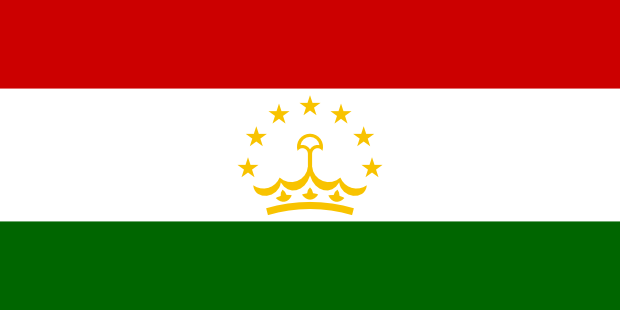
Flag is available in resolutions
| Icon 88x44 |  |
| Icon 32x16 |  |
Tajikistan
Tajikistan: A Land of Mountains, History, and Enduring Spirit
Nestled in the heart of Central Asia, Tajikistan is a land of dramatic contrasts and breathtaking beauty. Characterized by its towering mountain ranges, fertile river valleys, and a rich tapestry of history, this nation offers a compelling glimpse into a region that has long been a crossroads of civilizations. From the rugged peaks of the Pamirs to the ancient Silk Road cities, Tajikistan’s geography has shaped its destiny, fostering a resilient and proud population. Understanding Tajikistan requires delving into its diverse populace, its tumultuous past, its awe-inspiring landscapes, its nascent industrial base, and the burgeoning potential of its tourist attractions.
The demographic landscape of Tajikistan is primarily defined by its titular ethnic group, the Tajiks, who constitute the vast majority of the population. These are an Iranian people, their language, Tajik, closely related to Persian and written in a Cyrillic script, a legacy of its Soviet past. Beyond the Tajiks, significant minority groups include Uzbeks, who inhabit fertile lowland areas, and smaller communities of Russians, Kyrgyz, and Tatars. This ethnic mosaic has contributed to a rich cultural heritage, evident in the country’s music, dance, and intricate craftsmanship. The population is predominantly Muslim, with the Hanafi school of Sunni Islam being the most prevalent. This religious identity plays a significant role in the social fabric, influencing customs, traditions, and community life. Life expectancy has been steadily increasing, a testament to improvements in healthcare, though challenges remain, particularly in rural areas. The youth demographic is substantial, presenting both opportunities and challenges for the nation’s future development, demanding investment in education and employment. The cultural traditions are deeply rooted, with a strong emphasis on hospitality, respect for elders, and a vibrant oral tradition of storytelling and poetry. Festivals, often tied to agricultural cycles and religious observances, are celebrated with great enthusiasm, bringing communities together in shared joy and remembrance. The Soviet era left an indelible mark, influencing aspects of daily life and societal structures, but the enduring spirit of Tajik culture continues to thrive, adapting and evolving while retaining its unique identity.
Tajikistan’s history is a long and complex narrative, deeply intertwined with the ebb and flow of empires and the strategic importance of its location. For millennia, this land was a vital artery of the Silk Road, a conduit for trade and cultural exchange between East and West. Ancient Sogdiana and Bactria, powerful kingdoms that once flourished here, left behind archaeological remnants that whisper tales of their former glory. The region later fell under the sway of successive empires, including the Achaemenids, the Sasanids, and the Arab Caliphates, each leaving their imprint on the region’s language, religion, and architecture. The rise of the Samanid Empire in the 9th century marked a golden age for Persian culture and science, with cities like Bukhara and Samarkand (though now in Uzbekistan, they were historically significant to the Tajik people) becoming centers of learning and artistic innovation. The Mongol invasions in the 13th century brought widespread destruction but also ushered in a new era of Turkic influence. In the 19th century, the Russian Empire gradually extended its control over Central Asia, and what is now Tajikistan became part of Russian Turkestan. Following the Bolshevik Revolution, the Tajik Soviet Socialist Republic was established in 1929. The Soviet period brought significant changes, including industrialization, collectivization, and the imposition of a secular ideology, though Islam remained a potent cultural force. Independence was declared on September 9, 1991, following the dissolution of the Soviet Union. This newfound sovereignty was tragically marred by a brutal civil war that raged from 1992 to 1997, pitting government forces against a coalition of opposition groups, including Islamists and democrats. The conflict devastated the country, leading to widespread displacement, economic collapse, and a heavy loss of life. The peace agreement, brokered with international assistance, brought an end to the hostilities, but the scars of war continue to shape the nation’s trajectory. The post-civil war era has been characterized by efforts to rebuild the economy, consolidate political stability, and navigate the complex geopolitical landscape of Central Asia.
The geography of Tajikistan is, quite simply, spectacular and overwhelmingly mountainous. It is a land dominated by the Pamir Mountains, often referred to as the “Roof of the World,” which form the country’s eastern and southeastern regions. These majestic peaks, some exceeding 7,000 meters, are home to glaciers, high-altitude lakes, and dramatic valleys. The Fann Mountains, in the northwest, offer a slightly less extreme but equally breathtaking alpine scenery, characterized by turquoise lakes and rugged trails. These mountain ranges are the source of Tajikistan’s vital river systems, including the Syr Darya and Amu Darya, which flow into the Aral Sea basin and are crucial for irrigation and hydropower throughout the region. The western and southwestern parts of the country feature lower mountain ranges and fertile river valleys, such as the Fergana Valley, where a significant portion of the agricultural production takes place. The climate varies dramatically with altitude. The lowlands experience hot summers and cold winters, while the high mountains are characterized by perpetual snow and ice. This diverse topography presents both immense challenges and unparalleled opportunities. The mountains act as a natural barrier, influencing settlement patterns and transportation, while also possessing vast untapped mineral resources and immense potential for tourism and renewable energy. The extreme terrain has historically shaped the resilience and resourcefulness of its people, who have learned to adapt to the harsh but beautiful environment.
Tajikistan’s economy is primarily driven by agriculture and remittances. Cotton remains a significant agricultural export, though efforts are underway to diversify production into fruits, vegetables, and other crops. Hydropower is another cornerstone of the economy, with Tajikistan possessing vast untapped potential due to its abundant water resources and mountainous terrain. The Rogun Dam, currently under construction and set to be one of the world’s tallest dams, is expected to significantly boost electricity generation and provide a crucial source of revenue. Mining is also an important sector, with deposits of gold, silver, antimony, and uranium contributing to the national economy. However, the country faces significant economic challenges, including high levels of poverty, unemployment, and reliance on remittances from Tajiks working abroad, particularly in Russia. Infrastructure development, especially in transportation and energy, remains a priority for fostering economic growth and attracting investment. The industrial sector is relatively underdeveloped, with a focus on processing agricultural products and extracting mineral resources. There is a growing interest in developing light industries and manufacturing, but this is hampered by limited capital and a lack of skilled labor. The government is working to attract foreign investment and implement reforms to improve the business climate, but progress is gradual. The informal economy plays a significant role, providing livelihoods for many but also posing challenges for taxation and regulation. The country’s economic future hinges on its ability to harness its natural resources sustainably, diversify its economy, and create opportunities for its growing population.
For the intrepid traveler, Tajikistan offers a wealth of unique and unforgettable experiences, largely centered around its breathtaking natural beauty and rich cultural heritage. The Pamir Highway, also known as the M41, is arguably the country’s most famous tourist attraction. This legendary road winds its way through the Pamir Mountains, offering unparalleled vistas of snow-capped peaks, vast plateaus, and remote villages. It is a journey that tests the endurance of both vehicle and traveler, but the rewards are immense, providing access to some of the most remote and awe-inspiring landscapes on Earth. The Wakhan Corridor, a narrow strip of land separating Tajikistan from Afghanistan, offers a glimpse into a distinct culture and a dramatic landscape shaped by the confluence of two great mountain ranges. High-altitude trekking and mountaineering are popular activities, with opportunities to ascend peaks like Ismoil Somoni Peak (formerly Communism Peak) and Korzhenevskaya Peak. The Fann Mountains are a paradise for hikers, boasting stunning alpine lakes such as Iskanderkul, Alauddin Lakes, and Kulikalon Lakes, each with its own unique charm and beauty. Beyond the mountains, the historical sites offer a connection to Tajikistan’s ancient past. While many of the most famous Silk Road cities lie in neighboring Uzbekistan, Tajikistan has its own treasures, such as the ruins of Sarazm, a UNESCO World Heritage site, which is one of the oldest continuously inhabited settlements in Central Asia, dating back to the 4th millennium BCE. The ancient city of Penjikent, with its well-preserved Zoroastrian and Buddhist ruins, provides a fascinating insight into pre-Islamic Tajikistan. Dushanbe, the capital city, offers a more modern experience, with its grand avenues, museums, and the imposing Ismoili Somoni Monument. The National Museum of Tajikistan houses artifacts that chronicle the country’s rich history and diverse cultures. The opportunity to experience genuine Tajik hospitality, sharing tea and conversation with local families in remote mountain villages, is a profound aspect of any visit. The country is actively working to develop its tourism infrastructure, with a growing number of guesthouses, tour operators, and improved road networks, making it increasingly accessible to international visitors seeking an authentic and off-the-beaten-path adventure.
Information about Tajikistan
The information comes from the publication CIA The World Factbook.
Automated text translation, excuse errors, please!
Country Tajikistan is situated in a location / continent Central Asia. Tajikistan has an area of 143 100 km2 and 7 768 385 residents. The highest point has a height 7 495 above sea level. and it is called Qullai Ismoili Somoni. The lowest point is located at the level of 300 above sea level and it is named Syr Darya (Sirdaryo). System of government is republic and the date of independence 9th September 1991. The capital city is Dushanbe. Tajikistan has the international abbreviation TI.
Tajikistan - economy
Total gross domestic product (GDP) is 16 430 000 000 $. Total gross domestic product per capita in purchasing power parity is 2 100 $. GDP grows by 7.40 % a year. Inflation (consumer price index) is equal to 12.50 % a year. Tajikistan have 2 100 000 working-age population (from a total population 7 768 385 people). Unemployment is at 2.20 %. Tajikistan issued 5.30 % GDP to healt care and 1,50 % GDP to army. The total amount of foreign debt is 2 593 000 000 USD.
Tajikistan - demography
As suggested above, Tajikistan has 7 768 385 people. Population growth is in the amount 1.82 % per year. Number of children born per 1000 population per year is 25.93.Every mother has average 2.85 children. The infant mortality rate is 37.33 and maternal mortality 65.00 deaths per 100,000 births. Average estimated life expectancy makes 66.38 years. Mortality is 6.49 people per 1000 population per year.
Tajikistan - transport and telecommunications
Tajikistan has 27 767 km of roads, 680 km of railway lines and 24 airports. The total length of waterways (navigable rivers, canals, etc.) is 200 km.
Number of active mobile phones (sim card) in the country Tajikistan is 6 324 000. Number of active fixed telephone lines is 380 000. Tajikistan has 700 000 internet users, who have the available 4 268 Internet connections. Tajikistan has been assigned a domain first Choose range .tj.
Tajikistan - energetics
Tajikistan consumes a year 13 290 000 000 kWh of electricity. Annual electricity production is 15 950 000 000 kWh in power plants with a total installed electrical capacity 4 426 000 kW. Tajikistan exports 4 247 000 000 kWh and imports 338 500 000 kWh of electricity per year Energy mix of power generation is as follows: fossil fuels: 8.8 %, nuclear energy: 0 %, renewable: 0.0 %, hydropower: 91.2 %. The country Tajikistan is harvested annually 215 barrels of oil.
Keywords: telecommunications, Flags of countries, information, flag, flags of countries in the world, national flags, Tajikistan, list of countries, Flag of Tajikistan, world countries, list of flags, all flags, demography, flag states, energetics, transport, economy, politic.