Russia
Flag of Russia
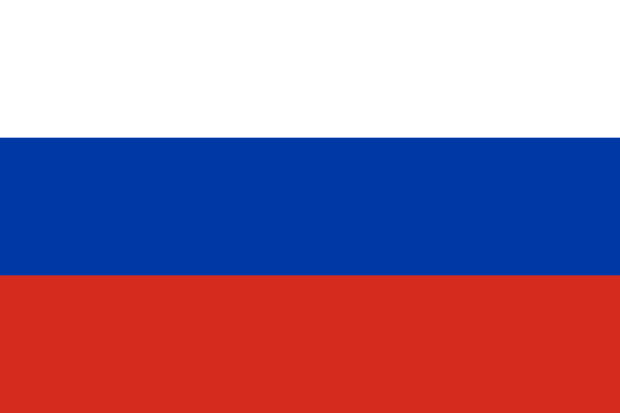
Flag is available in resolutions
| Icon 88x59 |  |
| Icon 32x21 |  |
Russia
Russia, officially known as the Russian Federation, is the largest country in the world by land area, spanning an impressive 17,098,246 square kilometers. This colossal nation stretches across Eastern Europe and Northern Asia, encompassing eleven time zones and a vast array of landscapes, from the frozen tundras of the Arctic to the temperate forests of Siberia and the steppes of Southern Russia. Its sheer size means it shares borders with fourteen countries, a testament to its immense territorial reach. The countrys geography is incredibly diverse. In the west, the Ural Mountains form a traditional, though not always strictly adhered to, geographical boundary between Europe and Asia. To the west of the Urals lies the vast East European Plain, home to most of Russias population and its major cities, including the capital, Moscow, and the second-largest city, Saint Petersburg. This region is characterized by fertile plains, rolling hills, and extensive river systems like the Volga, Europes longest river. East of the Urals, the landscape transforms dramatically into Siberia, a region of immense size and stark beauty. Siberia is dominated by coniferous forests, known as taiga, and vast, treeless plains called tundra. It is also home to Lake Baikal, the worlds deepest freshwater lake and the largest by volume, containing approximately 20% of the worlds unfrozen surface freshwater. Further east, the Siberian Plateau gives way to mountain ranges and the Pacific coast. The climate of Russia is predominantly continental, with long, cold winters and short, warm summers, though significant regional variations exist. The Far East experiences a monsoon climate, while the Arctic coast is perpetually frozen.
The population of Russia, as of recent estimates, is around 146 million people, making it the ninth most populous country in the world. However, this population is unevenly distributed, with the majority concentrated in the European part of the country, particularly in and around the major cities. Siberia and the Russian Far East are sparsely populated, with vast stretches of wilderness inhabited by only a few. The ethnic composition of Russia is remarkably diverse, reflecting its long history of expansion and interaction with various cultures. While ethnic Russians constitute the largest group, comprising over 80% of the population, there are over 190 other distinct ethnic groups. These include Tatars, Ukrainians, Bashkirs, Chuvash, Chechens, and many others, each with their own languages, traditions, and cultural heritage. This diversity is a source of both richness and, at times, complexity for the nation. The official language is Russian, which is spoken by the vast majority of the population. However, many minority languages are spoken in their respective regions. Religion also plays a significant role in Russian society, with Orthodox Christianity being the dominant faith. The Russian Orthodox Church has historically been intertwined with the state and national identity. Islam is the second-largest religion, prevalent in regions like the Caucasus and Tatarstan. Buddhism and other indigenous beliefs are also practiced by various ethnic groups. Russian society has undergone profound transformations throughout its history, from the Tsarist autocracy to the Soviet era and the post-Soviet transition. These shifts have left an indelible mark on its social fabric, values, and demographics.
The history of Russia is a long and complex tapestry, woven with threads of conquest, revolution, expansion, and resilience. Its origins can be traced back to the East Slavs who settled in the region in the early Middle Ages. The foundation of the first East Slavic state, Kievan Rus, in the 9th century marked a significant turning point, laying the groundwork for a distinct East Slavic civilization and the eventual adoption of Orthodox Christianity from Byzantium. Following the Mongol invasion in the 13th century, which led to the fragmentation of Kievan Rus, the Grand Duchy of Moscow gradually rose to prominence, consolidating power and expelling the Mongol yoke. The 16th century saw the rise of Ivan the Terrible, the first Tsar of Russia, who expanded the Tsardom and established a centralized state. The Romanov dynasty, which came to power in the early 17th century, ushered in an era of considerable territorial expansion and Westernization, particularly under Peter the Great in the 18th century. Peter the Great reformed the military, administration, and culture, establishing Saint Petersburg as the new capital and opening Russia to European influences. The 19th century was a period of both imperial glory and growing internal dissent. Russia played a crucial role in defeating Napoleon and emerged as a major European power, but social and political tensions simmered. The early 20th century witnessed the catastrophic events of the First World War and the Russian Revolution of 1917, which led to the overthrow of the Tsarist regime and the establishment of the worlds first communist state, the Soviet Union, under the leadership of Vladimir Lenin and the Bolshevik Party. The Soviet era was marked by rapid industrialization, collectivization of agriculture, purges, and a totalitarian political system. The Soviet Union played a pivotal role in World War II, suffering immense losses but ultimately emerging as a superpower. The Cold War followed, a period of geopolitical tension and ideological rivalry with the United States. The Soviet Union eventually collapsed in 1991, leading to the formation of the Russian Federation and a period of economic and political transition. The subsequent decades have seen Russia navigate its new identity on the world stage, facing challenges and opportunities in a rapidly changing global landscape.
Russias economy is one of the largest in the world, heavily reliant on its vast natural resources, particularly oil and natural gas. These commodities are the backbone of its export revenues and significantly influence its economic performance. The country possesses immense reserves of these fossil fuels, making it a major player in the global energy market. Beyond energy, Russia also has significant deposits of minerals, including iron ore, nickel, diamonds, and precious metals, which support its mining and metallurgical industries. The industrial sector is diverse, encompassing manufacturing, machinery, and defense production. The Soviet legacy of heavy industry remains significant, though efforts have been made to diversify and modernize. Agriculture is also an important sector, with Russia being a major producer of wheat and other grains, particularly in its southern regions. However, the agricultural sector has faced challenges in terms of modernization and efficiency. In recent years, the Russian government has been pursuing strategies to diversify its economy away from its heavy reliance on raw material exports, focusing on developing its technology sector, manufacturing capabilities, and infrastructure. The vastness of the country presents unique logistical challenges and opportunities, with significant investments being made in transportation networks, including railways, roads, and pipelines, to connect its resource-rich regions with domestic and international markets. The economic landscape is also influenced by global commodity prices and geopolitical factors, which can lead to periods of volatility.
Russia offers a wealth of tourist attractions, catering to a wide range of interests. Its most iconic destinations are undoubtedly Moscow and Saint Petersburg, two cities that showcase the countrys rich history, culture, and architectural splendor. Moscow, the capital, is a vibrant metropolis dominated by the Kremlin, a historic fortified complex that houses government buildings, cathedrals, and museums. Red Square, adjacent to the Kremlin, is a UNESCO World Heritage site and a symbol of Russia, featuring the stunning Saint Basils Cathedral with its colorful onion domes and the Lenin Mausoleum. The Bolshoi Theatre, renowned for its ballet and opera, is another must-visit. Saint Petersburg, often referred to as Russias cultural capital, was founded by Peter the Great as a window to Europe. Its imperial grandeur is evident in its magnificent palaces, such as the Hermitage Museum (housed in the Winter Palace), which boasts an unparalleled collection of art and artifacts. The Peterhof Palace, with its spectacular fountains, and the Church of the Savior on Spilled Blood, with its intricate mosaics, are other highlights. Beyond these major cities, Russias vastness offers unique experiences. Siberia, with its raw, untamed beauty, attracts adventurers and nature enthusiasts. Lake Baikal, with its crystal-clear waters and surrounding mountain ranges, offers opportunities for hiking, boat trips, and observing unique wildlife. The Trans-Siberian Railway, one of the longest train journeys in the world, provides an unforgettable way to traverse the country, witnessing diverse landscapes and cultures along the way. For those interested in history and nature, the Golden Ring, a collection of ancient towns northeast of Moscow, offers a glimpse into medieval Russia with its well-preserved churches, monasteries, and kremlins. The countrys diverse ethnic tapestry also translates into unique cultural festivals and traditions that visitors can experience, offering a deeper understanding of Russias multifaceted identity.
Information about Russia
The information comes from the publication CIA The World Factbook.
Automated text translation, excuse errors, please!
Country Russia is situated in a location / continent Central Asia. Russia has an area of 17 098 242 km2 and 142 517 670 residents. The highest point has a height 2 633 above sea level.. The lowest point is located at the level of -28 above sea level and it is named Caspian Sea. System of government is federation and the date of independence 24th August 1991. The capital city is Moscow. Russia has the international abbreviation RS.
Russia - economy
Total gross domestic product (GDP) is 2 414 000 000 000 $. Total gross domestic product per capita in purchasing power parity is 17 000 $. GDP grows by 4.30 % a year. Inflation (consumer price index) is equal to 8.40 % a year. Russia have 75 410 000 working-age population (from a total population 142 517 670 people). Unemployment is at 6.60 %. Russia issued 5.40 % GDP to healt care and 3,90 % GDP to army. The public debt of the country is 8.30 % GDP. The total amount of foreign debt is 519 400 000 000 USD.
Russia - demography
As suggested above, Russia has 142 517 670 people. Population growth is in the amount -0.48 % per year. Number of children born per 1000 population per year is 10.94.Every mother has average 1.61 children. The infant mortality rate is 9.88 and maternal mortality 34.00 deaths per 100,000 births. Average estimated life expectancy makes 66.46 years. Mortality is 16.03 people per 1000 population per year.
Russia - transport and telecommunications
Russia has 982 000 km of roads, 87 157 km of railway lines and 1 218 airports. The total length of waterways (navigable rivers, canals, etc.) is 102 000 km. There is registered 1 143 ships.
Number of active mobile phones (sim card) in the country Russia is 256 117 000. Number of active fixed telephone lines is 44 181 000. Russia has 40 853 000 internet users, who have the available 13 758 000 Internet connections. Russia has been assigned a domain first Choose range .ru.
Russia - energetics
Russia consumes a year 808 000 000 000 kWh of electricity. Annual electricity production is 983 200 000 000 kWh in power plants with a total installed electrical capacity 225 300 000 kW. Russia exports 19 010 000 000 kWh and imports 1 644 000 000 kWh of electricity per year Energy mix of power generation is as follows: fossil fuels: 68.3 %, nuclear energy: 10.3 %, renewable: 0.0 %, hydropower: 20.9 %. The country Russia is harvested annually 10 210 000 barrels of oil.
Keywords: flag, telecommunications, national flags, demography, transport, Russia, list of flags, list of countries, Flags of countries, flags of countries in the world, economy, flag states, all flags, Flag of Russia, energetics, information, world countries, politic.