Bermuda
Flag of Bermuda
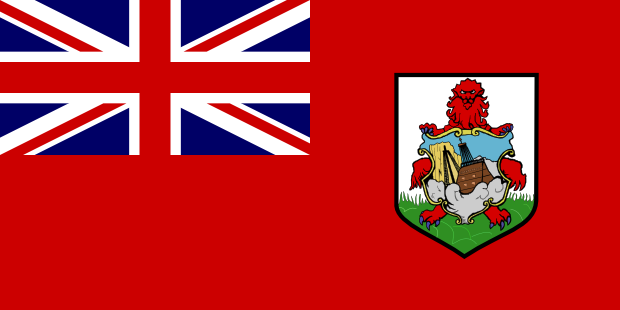
Flag is available in resolutions
| Icon 88x44 |  |
| Icon 32x16 |  |
Bermuda
Bermuda: An Island Paradise of Intrigue and Beauty
Nestled in the vast expanse of the North Atlantic Ocean, approximately 650 miles east of Cape Hatteras, North Carolina, lies the captivating archipelago of Bermuda. This British Overseas Territory, a mere 21 square miles of land spread across numerous islands and islets, is a destination that conjures images of pristine pink-sand beaches, turquoise waters, and a unique blend of British charm and Caribbean flair. Its allure extends far beyond its picturesque landscapes, encompassing a rich history, a distinctive culture, and a surprisingly robust economy. Bermuda is not just a vacation spot; its a world unto itself, a jewel box of natural beauty and human endeavor. The islands are volcanic in origin, rising from the seabed, and their formation has resulted in a distinctive topography characterized by rolling hills, dramatic cliffs, and sheltered coves. The climate is subtropical, offering warm, humid summers and mild winters, making it an attractive destination year-round, though the peak tourist season generally falls between April and October. The air is often perfumed with the scent of oleander and hibiscus, adding to the sensory delight of this island paradise. The very isolation of Bermuda has, in many ways, contributed to its unique character and preserved its distinctiveness.
The history of Bermuda is a fascinating tapestry woven with threads of discovery, colonization, shipwreck, and resilience. While indigenous peoples are not believed to have inhabited the islands, their existence was first officially recorded in 1503 by the Spanish explorer Juan de la Cosa. However, it was the English who truly left their indelible mark. In 1609, a fleet carrying settlers to Jamestown, Virginia, was shipwrecked off the coast of Bermuda during a hurricane. Among the survivors was Sir George Somers, whose subsequent exploration and report of the islands bounty led to their colonization by the Virginia Company in 1612. This marked the beginning of a long and complex relationship with the British Crown. Over the centuries, Bermuda developed as a strategic naval base, particularly for the Royal Navy, which established a significant presence that shaped the islands infrastructure and social fabric. The imposing fortifications, such as Fort St. Catherine’s and the Royal Naval Dockyard, stand as testaments to this era. The island also played a role in the American Revolutionary War, with Bermudians secretly supplying gunpowder to the Continental Army. The abolition of slavery in 1834 brought about significant social and economic shifts, and the island gradually transitioned towards a more diversified economy, though its reliance on external trade and tourism has remained a constant. The 20th century saw Bermuda further solidify its identity, navigating its relationship with the United Kingdom while fostering its own unique governance and cultural traditions. The legacy of its colonial past is evident in its architecture, legal system, and social customs, yet Bermuda has forged its own path, embracing modernity while cherishing its heritage.
The population of Bermuda, numbering around 64,000 according to recent estimates, is a vibrant mosaic of ethnicities, reflecting its diverse history. The majority of Bermudians are of African descent, descendants of enslaved people brought to the island during the colonial era. There are also significant populations of European descent, primarily British and Portuguese, as well as smaller communities of Asian and other backgrounds. This multicultural mix contributes to Bermudas rich cultural tapestry, evident in its music, food, and festivals. The official languages are English and Portuguese, with English being the most widely spoken. Bermudian society is known for its politeness, strong sense of community, and a generally high standard of living. The island’s social structure, while historically influenced by a class system, has evolved considerably. Education is highly valued, and Bermudians generally enjoy access to good healthcare and social services. The country has a relatively low crime rate, contributing to its reputation as a safe and welcoming destination. The concept of „Bermuda shorts,“ a sartorial staple, is more than just clothing; it’s a symbol of the island’s relaxed yet formal approach to life. The close-knit nature of the community is often highlighted, with many families having lived on the island for generations.
Despite its small size, Bermuda boasts a surprisingly dynamic and prosperous economy, largely driven by two key sectors: international business and tourism. The island has carved out a niche as a premier offshore financial center, attracting a significant number of global corporations, particularly in the insurance, reinsurance, and investment fund industries. The favorable tax environment, coupled with a stable political climate and a highly skilled workforce, has made Bermuda a sought-after location for businesses seeking to establish a presence in the Atlantic. This sector provides a substantial portion of the islands GDP and employment. Tourism, however, remains the lifeblood of Bermuda for many, drawing visitors from North America and Europe who are captivated by its natural beauty and luxurious offerings. The island’s tourism industry is geared towards a higher-end market, with a focus on luxury hotels, pristine beaches, and a range of activities from golf and water sports to historical exploration and fine dining. The government has made efforts to diversify the economy further, exploring opportunities in areas such as renewable energy and niche agricultural products, but the twin pillars of finance and tourism continue to dominate. The economic resilience of Bermuda, even in the face of global economic fluctuations, is a testament to its strategic positioning and adaptable economic policies.
Bermudas tourist attractions are as diverse as they are beautiful, offering something for every type of traveler. The iconic pink-sand beaches of Horseshoe Bay, Elbow Beach, and Jobson’s Cove are world-renowned, their unique color derived from crushed coral and shells. These beaches provide idyllic settings for sunbathing, swimming, and simply soaking in the breathtaking scenery. Beyond the beaches, the island is steeped in history and culture. The historic town of St. Georges, a UNESCO World Heritage Site, transports visitors back in time with its well-preserved colonial architecture, narrow cobblestone streets, and charming shops and restaurants. The Royal Naval Dockyard is another must-visit, offering a glimpse into Bermudas maritime past with its museums, artisan shops, and the striking National Museum of Bermuda. For nature enthusiasts, the Bermuda Botanical Gardens provide a tranquil escape, showcasing a stunning collection of flora, while the Crystal Caves and Fantasy Caves offer an otherworldly experience with their illuminated stalactites and stalagmites. Water sports are immensely popular, with opportunities for snorkeling, diving, sailing, and kayaking in the crystal-clear waters. The golf courses in Bermuda are also world-class, attracting avid golfers with their challenging layouts and stunning ocean views. The islands culinary scene is a delightful fusion of British, Caribbean, and international influences, with fresh seafood being a particular highlight. From the vibrant Gombey dancers to the lively local markets, Bermuda offers a rich cultural experience that complements its natural splendor. The „Bermuda Triangle“ mystique, while largely a myth, adds an extra layer of intrigue to the island’s allure, drawing curious visitors eager to explore the region that has captured the imagination of many. The island’s commitment to preserving its natural environment and historical sites ensures that these attractions will continue to captivate visitors for generations to come.
In conclusion, Bermuda is far more than just a tropical getaway. It is a land of contrasts and captivating beauty, a place where history whispers from ancient fortifications, where the economy thrives on global connections, and where the warmth of its people is as inviting as its sun-drenched shores. Its unique geographical isolation has fostered a distinct cultural identity, and its strategic importance has shaped its historical trajectory. Whether one is drawn by the allure of its famous pink beaches, the promise of world-class financial services, or the simple desire for an escape to a truly enchanting corner of the world, Bermuda delivers an unforgettable experience, a testament to the enduring charm of this Atlantic jewel.
Information about Bermuda
The information comes from the publication CIA The World Factbook.
Automated text translation, excuse errors, please!
Country Bermuda is situated in a location / continent North America. Bermuda has an area of 54 km2 and 69 080 residents. The highest point has a height 76 above sea level. and it is called Town Hill. The lowest point is located at the level of 0 above sea level and it is named Atlantic Ocean. System of government is overseas territory of the UK.The capital city is Hamilton. Bermuda has the international abbreviation BD.
Bermuda - economy
Total gross domestic product (GDP) is 4 500 000 000 $. Total gross domestic product per capita in purchasing power parity is 69 900 $. GDP grows by 4.60 % a year. Inflation (consumer price index) is equal to 2.70 % a year. Bermuda have 38 360 working-age population (from a total population 69 080 people). Unemployment is at 2.10 %. and 0,11 % GDP to army. The total amount of foreign debt is 160 000 000 USD.
Bermuda - demography
As suggested above, Bermuda has 69 080 people. Population growth is in the amount 0.57 % per year. Number of children born per 1000 population per year is 11.42.Every mother has average 1.97 children. The infant mortality rate is 2.47 .Average estimated life expectancy makes 80.82 years. Mortality is 7.74 people per 1000 population per year.
Bermuda - transport and telecommunications
Bermuda has 447 km of roads and 1 airports. There is registered 139 ships.
Number of active mobile phones (sim card) in the country Bermuda is 88 200. Number of active fixed telephone lines is 57 800. Bermuda has 54 000 internet users, who have the available 20 527 Internet connections. Bermuda has been assigned a domain first Choose range .bm.
Bermuda - energetics
Bermuda consumes a year 645 200 000 kWh of electricity. Annual electricity production is 686 400 000 kWh in power plants with a total installed electrical capacity 165 000 kW. Bermuda exports 0 kWh and imports 0 kWh of electricity per year Energy mix of power generation is as follows: fossil fuels: 100 %, nuclear energy: 0 %, renewable: 0.0 %, hydropower: 0.0 %.
Keywords: all flags, list of flags, transport, flags of countries in the world, information, energetics, Flags of countries, demography, flag, Flag of Bermuda, flag states, telecommunications, economy, list of countries, world countries, national flags, Bermuda, politic.