Canada
Flag of Canada
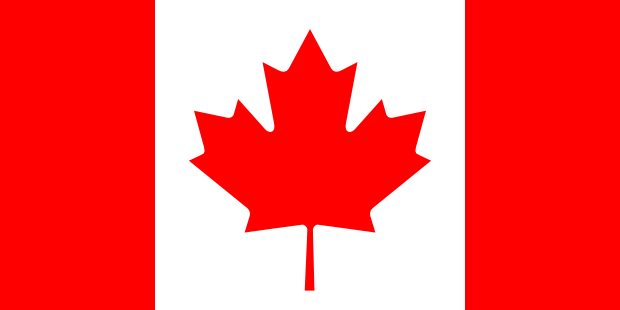
Flag is available in resolutions
| Icon 88x44 |  |
| Icon 32x16 |  |
Canada
Canada: A Vast Tapestry of Nature, Culture, and Opportunity
Canada, the second-largest country in the world by total area, is a land of unparalleled natural beauty, rich cultural diversity, and a dynamic economy. Spanning from the Atlantic to the Pacific and north to the Arctic Ocean, it is a nation defined by its immense landscapes, from snow-capped mountains and vast forests to pristine lakes and rugged coastlines. This article will delve into the multifaceted essence of Canada, exploring its demographics, historical trajectory, geographical wonders, industrial strengths, and the myriad of tourist attractions that draw visitors from across the globe.
The population of Canada, though spread across a colossal territory, is relatively small, numbering just over 38 million people. The majority of Canadians reside within 100 miles of the U.S. border, with major population centres concentrated in southern Ontario, Quebec, and the Pacific coast of British Columbia. This demographic distribution is a testament to Canada’s climate, with the northern regions being largely uninhabited due to their extreme cold. Canada is a multicultural mosaic, a proud legacy of its immigration policies that have welcomed people from every corner of the world. This diversity is not just a statistical fact; it is woven into the fabric of Canadian society, influencing its cuisine, arts, festivals, and everyday life. The two official languages, English and French, reflect the country’s colonial past and the enduring presence of Francophone culture, particularly in Quebec, where French is the primary language. Indigenous peoples, comprising First Nations, Inuit, and Métis communities, are the original inhabitants of this land and their rich histories, traditions, and ongoing contributions are an integral part of Canada’s identity. The concept of “multiculturalism” is enshrined in Canadian policy, promoting the preservation and celebration of diverse cultural heritages within a unified national framework. This commitment to inclusivity has shaped Canada into a society that generally values tolerance, equality, and mutual respect, though like any nation, it faces ongoing challenges in achieving these ideals fully for all its citizens.
Canada’s history is a compelling narrative of exploration, settlement, and nation-building. Indigenous peoples have inhabited the land for millennia, developing complex societies and intricate relationships with their environment long before European arrival. The Age of Exploration brought European powers, primarily France and Britain, vying for control of valuable resources, particularly the fur trade. The French established settlements in New France, while the British solidified their presence along the Atlantic coast. The Seven Years’ War, culminating in the British victory in 1763, led to French cession of New France to Britain. The subsequent decades saw the gradual development of distinct British and French colonial societies, with ongoing tensions and efforts towards reconciliation. The formation of the Dominion of Canada in 1867, through the Confederation of British North American colonies, marked a pivotal moment in the country’s journey towards self-governance. The subsequent expansion westward, fueled by the construction of the Canadian Pacific Railway, opened up vast territories and led to the incorporation of new provinces. The 20th century witnessed Canada’s growing role on the international stage, its contributions to both World Wars, and the deepening of its independent identity. Key milestones include the Statute of Westminster in 1931, granting Canada legislative equality with Britain, and the patriation of the Constitution in 1982, which brought Canada’s highest law fully under domestic control. The nation’s history is also marked by the complex and often painful legacy of its relationship with Indigenous peoples, including the establishment of residential schools and the ongoing process of reconciliation and self-determination.
Geographically, Canada is a land of extraordinary contrasts and immense scale. Its territory is divided into ten provinces and three territories, each with its unique physiographic characteristics. The western provinces, British Columbia and Alberta, are dominated by the majestic Rocky Mountains, offering breathtaking vistas of snow-capped peaks, alpine meadows, and turquoise lakes. Eastward, the vast Prairies – Saskatchewan, Manitoba, and parts of Alberta – are characterized by rolling grasslands, fertile agricultural lands, and an endless sky, supporting Canada’s role as a global breadbasket. Ontario and Quebec, the most populous provinces, are home to the Great Lakes, the St. Lawrence River, and the Canadian Shield, a massive geological formation of ancient rock that underlies much of eastern and central Canada, rich in mineral resources and dotted with countless lakes and forests. The Atlantic provinces – Newfoundland and Labrador, Prince Edward Island, Nova Scotia, and New Brunswick – boast rugged coastlines, picturesque fishing villages, and a maritime heritage. To the north lie the vast and sparsely populated territories: Yukon, Northwest Territories, and Nunavut. These regions encompass the Arctic tundra, immense glaciers, and unique ecosystems, facing the profound challenges and opportunities of a warming climate. Canada’s extensive coastline, the longest in the world, provides access to three oceans, influencing its climate, economy, and biodiversity. The country is also home to an astonishing array of wildlife, from polar bears and caribou in the Arctic to moose and bears in its forests, and diverse marine life along its coasts.
Canada’s economy is robust and diversified, with significant contributions from natural resources, manufacturing, services, and technology. The country is a major producer and exporter of oil, natural gas, timber, minerals, and agricultural products, with resource extraction playing a crucial role in many regional economies. The manufacturing sector is well-developed, particularly in automotive, aerospace, and machinery. The service sector, encompassing finance, healthcare, education, and retail, is the largest contributor to Canada’s GDP and employment. In recent decades, Canada has also seen significant growth in its technology and innovation sectors, with hubs emerging in cities like Toronto, Vancouver, and Waterloo. The country benefits from a stable political and economic environment, a highly educated workforce, and strong trade relationships, particularly with the United States through the North American Free Trade Agreement (NAFTA), now replaced by the United States-Mexico-Canada Agreement (USMCA). While resource-based industries remain vital, there is a growing emphasis on knowledge-based industries and sustainable development. The Canadian dollar is a freely traded currency, and the country’s banking system is considered one of the most stable in the world.
Canada offers an unparalleled wealth of tourist attractions, catering to every imaginable interest. Nature enthusiasts are drawn to the majestic Rocky Mountains, with Banff and Jasper National Parks offering world-class hiking, skiing, and wildlife viewing. The rugged beauty of the Pacific coast, particularly Vancouver Island, provides opportunities for whale watching and exploring ancient rainforests. For those seeking urban experiences, cities like Toronto, Canada’s largest metropolis, boast a vibrant arts scene, diverse culinary offerings, and iconic landmarks such as the CN Tower. Montreal, with its European charm and rich cultural heritage, offers a unique blend of French and Canadian influences, while Quebec City captivates with its historic Old Town, a UNESCO World Heritage site. The vastness of the Canadian Shield offers endless opportunities for wilderness adventures, including canoeing, fishing, and camping in pristine lakes and forests. In the North, the Aurora Borealis, or Northern Lights, is a spectacular natural phenomenon that draws visitors to witness its ethereal dance across the night sky. The historical significance of sites like the Plains of Abraham in Quebec City or the Fortress of Louisbourg in Nova Scotia provides a glimpse into Canada’s colonial past. From the vibrant festivals of its multicultural cities to the serene solitude of its wilderness, Canada promises an unforgettable travel experience, a testament to its enduring allure as a land of immense natural beauty and diverse human endeavour.
Information about Canada
The information comes from the publication CIA The World Factbook.
Automated text translation, excuse errors, please!
Country Canada is situated in a location / continent North America. Canada has an area of 9 984 670 km2 and 34 300 083 residents. The highest point has a height 5 959 above sea level. and it is called Mount Logan. The lowest point is located at the level of 0 above sea level and it is named Atlantic Ocean. System of government is Federal Republic, Commonwealth member country and the date of independence July 1, 1867. The capital city is Ottawa. Canada has the international abbreviation CA.
Canada - economy
Total gross domestic product (GDP) is 1 414 000 000 000 $. Total gross domestic product per capita in purchasing power parity is 41 100 $. GDP grows by 2.50 % a year. Inflation (consumer price index) is equal to 2.90 % a year. Canada have 18 670 000 working-age population (from a total population 34 300 083 people). Unemployment is at 7.50 %. Canada issued 10.90 % GDP to healt care and 1,10 % GDP to army. The public debt of the country is 87.40 % GDP. The total amount of foreign debt is 1 181 000 000 000 USD.
Canada - demography
As suggested above, Canada has 34 300 083 people. Population growth is in the amount 0.78 % per year. Number of children born per 1000 population per year is 10.28.Every mother has average 1.59 children. The infant mortality rate is 4.85 and maternal mortality 12.00 deaths per 100,000 births. Average estimated life expectancy makes 81.48 years. Mortality is 8.09 people per 1000 population per year.
Canada - transport and telecommunications
Canada has 1 042 300 km of roads, 46 552 km of railway lines and 1 453 airports. The total length of waterways (navigable rivers, canals, etc.) is 636 km. There is registered 181 ships.
Number of active mobile phones (sim card) in the country Canada is 25 858 000. Number of active fixed telephone lines is 16 438 000. Canada has 26 960 000 internet users, who have the available 8 515 000 Internet connections. Canada has been assigned a domain first Choose range .ca.
Canada - energetics
Canada consumes a year 504 800 000 000 kWh of electricity. Annual electricity production is 580 600 000 000 kWh in power plants with a total installed electrical capacity 131 500 000 kW. Canada exports 43 910 000 000 kWh and imports 18 790 000 000 kWh of electricity per year Energy mix of power generation is as follows: fossil fuels: 28.8 %, nuclear energy: 10.1 %, renewable: 3.9 %, hydropower: 57.0 %. The country Canada is harvested annually 3 592 000 barrels of oil.
Keywords: list of flags, information, energetics, flag, flags of countries in the world, world countries, national flags, list of countries, demography, Flag of Canada, Canada, transport, telecommunications, economy, Flags of countries, all flags, flag states, politic.