Bolivia
Flag of Bolivia
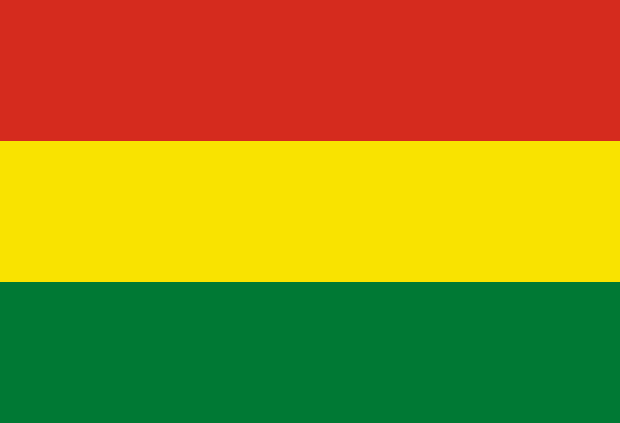
Flag is available in resolutions
| Icon 88x60 |  |
| Icon 32x22 |  |
Bolivia
Bolivia: A Land of Contrasts and Enduring Spirit
Bolivia, a landlocked nation nestled in the heart of South America, is a country of breathtaking natural beauty and profound historical significance. Its vast and varied landscapes range from the soaring peaks of the Andes to the steamy Amazonian rainforest, creating a tapestry of ecosystems that support a rich biodiversity and a resilient human population. For centuries, this land has been shaped by indigenous cultures, colonial powers, and the ongoing quest for national identity and progress. Understanding Bolivia means delving into its complex tapestry of ethnicities, its tumultuous past, its diverse geography, and its evolving economic landscape, all of which contribute to its unique and captivating allure.
The demographic makeup of Bolivia is a testament to its deep indigenous roots and its colonial history. The majority of Bolivians identify as indigenous, with the Quechua and Aymara peoples being the most prominent groups. These ancient cultures have maintained their languages, traditions, and social structures, often coexisting with and influencing the dominant mestizo culture. The mestizos, of mixed European and indigenous ancestry, form a significant portion of the population, particularly in urban centers. A smaller but influential European minority, primarily of Spanish descent, also contributes to the nation’s cultural mosaic. This ethnic diversity is not merely a statistical fact; it is a living, breathing aspect of Bolivian society, evident in its vibrant festivals, its distinct regional cuisines, and the ongoing dialogue about cultural preservation and representation. The country’s official languages reflect this diversity, with Spanish being the administrative language, alongside numerous indigenous languages recognized by the constitution. This linguistic richness underscores the importance of respecting and celebrating the various cultural heritages that have shaped Bolivia into the nation it is today.
Bolivia’s history is a long and often turbulent narrative, marked by periods of great prosperity and profound struggle. The region was once the heartland of the Inca Empire, and remnants of this magnificent civilization can still be found, most notably at the ruins of Tiwanaku, a pre-Inca civilization that predates the Incas and holds immense archaeological importance. The arrival of the Spanish conquistadors in the 16th century ushered in a new era, characterized by the exploitation of vast silver mines, particularly in Potosí, which became one of the wealthiest cities in the world during the colonial period. This wealth, however, came at a terrible human cost, with indigenous populations subjected to brutal labor and disease. Following independence from Spain in 1825, Bolivia embarked on a journey of nation-building, often fraught with political instability, military coups, and border disputes, most notably the disastrous War of the Pacific in the late 19th century, which resulted in the loss of its coastline. The 20th century saw further political upheaval, including socialist revolutions and periods of military dictatorship, before the country began a transition towards democracy in the late 20th century. More recently, Bolivia has witnessed significant social and political change, including the election of its first indigenous president, Evo Morales, in 2006, which marked a pivotal moment in the country’s history and a renewed focus on indigenous rights and social justice. This rich and complex history continues to shape Bolivia’s present and future, influencing its national identity and its place in the global community.
The geography of Bolivia is nothing short of spectacular, presenting a dramatic range of landscapes that contribute to its unique character. Situated in the Andes Mountains, the country boasts some of the highest inhabited regions in the world. The western part of Bolivia is dominated by the Altiplano, a vast, high-altitude plateau that is home to the majority of the population and is punctuated by stunning salt flats, like the world-renowned Salar de Uyuni, and the deep blue waters of Lake Titicaca, the highest navigable lake in the world. This stark, windswept region is a land of extremes, with dramatic temperature fluctuations between day and night and a thin atmosphere that requires acclimatization. Moving eastward, the Andes gradually descend into fertile valleys and cloud forests, known as the Yungas, where coffee and coca are cultivated. Further east, the landscape transforms into the vast Amazonian lowlands, covering more than half of the country’s territory. This tropical region is characterized by dense rainforests, winding rivers, and abundant wildlife, offering a stark contrast to the arid highlands. This geographical diversity not only influences the climate and biodiversity but also shapes the lifestyles and economies of the people living in different regions, creating distinct cultural and economic zones within the country.
Bolivias economy, historically reliant on the extraction of natural resources, is undergoing a period of diversification and change. For centuries, silver mining was the engine of its economy, and while still relevant, the country’s mineral wealth extends to tin, zinc, lead, and copper. More recently, Bolivia has emerged as a significant producer of natural gas, which constitutes a substantial portion of its export revenue, particularly to neighboring Brazil and Argentina. Agriculture remains a vital sector, with crops like soybeans, quinoa, coffee, and coca being important for both domestic consumption and export. The country also possesses vast lithium reserves, which are increasingly seen as a strategic resource for the future of electric vehicle batteries. However, Bolivia faces persistent challenges, including widespread poverty, income inequality, and a reliance on commodity prices. The government has been investing in infrastructure, renewable energy, and tourism as avenues for economic growth and to reduce its dependence on natural resource extraction. The informal economy also plays a significant role, with many Bolivians engaged in small-scale trading and services. The ongoing efforts to balance resource exploitation with sustainable development and equitable distribution of wealth are central to Bolivia’s economic future.
Bolivia offers a wealth of tourist attractions, catering to a wide range of interests. The aforementioned Salar de Uyuni, the world’s largest salt flat, is an otherworldly landscape that transforms into a giant mirror during the wet season, offering surreal photographic opportunities. Lake Titicaca, shared with Peru, is not only a natural wonder but also a cultural heartland, home to indigenous communities who maintain ancient traditions and live on floating reed islands. The historic city of Potosí, a UNESCO World Heritage site, stands as a testament to the colonial era’s silver boom, with its well-preserved colonial architecture and the imposing Cerro Rico, the silver mountain that fueled its wealth and continues to be mined today. Sucre, the constitutional capital, is a charming colonial city renowned for its white-washed buildings and its vibrant atmosphere, offering a glimpse into Bolivia’s past and present. For adventure seekers, the Andes provide opportunities for trekking, mountaineering, and exploring breathtaking mountain scenery. The Amazonian lowlands, particularly the Madidi National Park, offer incredible biodiversity for ecotourism, with chances to spot jaguars, monkeys, and a myriad of bird species. The cultural heritage of Bolivia is also a major draw, with numerous festivals, indigenous markets, and opportunities to interact with local communities. From the dizzying heights of the Andes to the lush depths of the Amazon, Bolivia presents an unforgettable travel experience, rich in natural wonders and cultural encounters.
Information about Bolivia
The information comes from the publication CIA The World Factbook.
Automated text translation, excuse errors, please!
Country Bolivia is situated in a location / continent South America. Bolivia has an area of 1 098 581 km2 and 10 290 003 residents. The highest point has a height 6 542 above sea level. and it is called Nevado Sajama. The lowest point is located at the level of 90 above sea level and it is named Rio Paraguay. System of government is republic and the date of independence 6th August 1825. The capital city is La Paz (administrative capital). Bolivia has the international abbreviation BL.
Bolivia - economy
Total gross domestic product (GDP) is 51 560 000 000 $. Total gross domestic product per capita in purchasing power parity is 4 900 $. GDP grows by 5.10 % a year. Inflation (consumer price index) is equal to 9.90 % a year. Bolivia have 4 689 000 working-age population (from a total population 10 290 003 people). Unemployment is at 5.50 %. Bolivia issued 4.80 % GDP to healt care and 1,30 % GDP to army. The public debt of the country is 36.60 % GDP. The total amount of foreign debt is 5 491 000 000 USD.
Bolivia - demography
As suggested above, Bolivia has 10 290 003 people. Population growth is in the amount 1.66 % per year. Number of children born per 1000 population per year is 24.24.Every mother has average 2.93 children. The infant mortality rate is 40.94 and maternal mortality 180.00 deaths per 100,000 births. Average estimated life expectancy makes 67.90 years. Mortality is 6.76 people per 1000 population per year.
Bolivia - transport and telecommunications
Bolivia has 16 138 km of roads, 3 652 km of railway lines and 865 airports. The total length of waterways (navigable rivers, canals, etc.) is 10 000 km. There is registered 18 ships.
Number of active mobile phones (sim card) in the country Bolivia is 8 353 000. Number of active fixed telephone lines is 879 800. Bolivia has 1 103 000 internet users, who have the available 167 769 Internet connections. Bolivia has been assigned a domain first Choose range .bo.
Bolivia - energetics
Bolivia consumes a year 6 301 000 000 kWh of electricity. Annual electricity production is 6 611 000 000 kWh in power plants with a total installed electrical capacity 1 539 000 kW. Bolivia exports 0 kWh and imports 0 kWh of electricity per year Energy mix of power generation is as follows: fossil fuels: 67.6 %, nuclear energy: 0 %, renewable: 0.6 %, hydropower: 31.7 %. The country Bolivia is harvested annually 48 570 barrels of oil.
Keywords: flags of countries in the world, all flags, Bolivia, flag, world countries, telecommunications, list of flags, list of countries, economy, Flag of Bolivia, Flags of countries, demography, transport, flag states, information, energetics, national flags, politic.