Venezuela
Flag of Venezuela
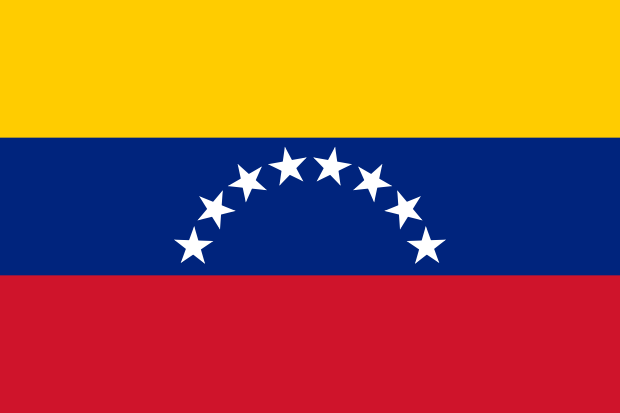
Flag is available in resolutions
| Icon 88x59 |  |
| Icon 32x21 |  |
Venezuela
Venezuela: A Land of Stark Contrasts and Untapped Potential
Venezuela, officially the Bolivarian Republic of Venezuela, is a nation situated on the northern coast of South America. It is a land of breathtaking natural beauty, vast natural resources, and a complex, often turbulent, history. From the towering peaks of the Andes to the sprawling Amazon rainforest, and the sun-drenched Caribbean islands, Venezuela’s geography is as diverse as its people. However, this South American gem has also been grappling with profound socio-economic and political challenges, making it a country of stark contrasts and a subject of intense global interest and concern. Understanding Venezuela requires delving into its rich tapestry of history, its diverse population, its abundant natural wealth, and the intricate web of factors that have shaped its present and continue to influence its future.
The population of Venezuela is a vibrant mosaic, a testament to centuries of migration and intermingling. The majority of Venezuelans are mestizos, a blend of European (primarily Spanish) and Indigenous ancestry. Significant populations of Afro-Venezuelans, descendants of enslaved Africans, are concentrated along the Caribbean coast, contributing to the nation’s rich musical and cultural heritage. There are also smaller, yet distinct, communities of Indigenous peoples, such as the Wayuu, the Yanomami, and the Warao, who maintain their unique traditions and languages, primarily in the remote regions of the Guiana Highlands and the Orinoco Delta. European immigration, particularly from Spain, Italy, Portugal, and Germany, has also left an indelible mark on Venezuelan society, influencing its cuisine, architecture, and social customs. This diverse ethnic and cultural makeup forms the bedrock of Venezuela’s identity, fostering a spirit of resilience and adaptability that has been tested time and again.
Venezuelas history is a dramatic narrative, marked by periods of colonial rule, independence struggles, and subsequent political upheavals. The region was inhabited by various Indigenous groups for millennia before the arrival of Christopher Columbus in 1498. Spanish colonization began in earnest in the 16th century, leading to the exploitation of Indigenous labor and the introduction of African slavery. The struggle for independence from Spain was a long and arduous process, spearheaded by iconic figures like Simón Bolívar, who envisioned a united Gran Colombia. Venezuela finally achieved independence in 1830, but the following decades were characterized by internal conflicts, caudillismo (rule by strongmen), and economic instability, largely driven by the fluctuating fortunes of its agricultural exports, particularly coffee and cocoa. The discovery of vast oil reserves in the early 20th century, however, fundamentally transformed Venezuela’s trajectory. Oil wealth brought unprecedented prosperity and modernization, but also laid the groundwork for the “rentier state” phenomenon, where the economy became heavily reliant on oil revenues, leading to a neglect of other economic sectors and a vulnerability to global oil price fluctuations. The mid-20th century saw a series of military dictatorships interspersed with brief periods of democratic rule. The late 1950s ushered in a more stable democratic era, marked by the establishment of a multiparty system. However, the deep-seated social and economic inequalities, exacerbated by the oil boom and bust cycles, continued to simmer beneath the surface, eventually paving the way for the rise of Hugo Chávez and the “Bolivarian Revolution” in 1999. Chávez’s populist policies, aimed at redistributing oil wealth and empowering the poor, were initially met with widespread support but also generated significant polarization and economic challenges. His successor, Nicolás Maduro, inherited a nation in deep crisis, facing hyperinflation, widespread shortages, and a severe humanitarian situation.
Geographically, Venezuela is a land of extraordinary diversity. It boasts the longest Caribbean coastline in South America, stretching for over 2,800 kilometers, dotted with pristine beaches, islands, and archipelagos like the Los Roques National Park, a diver’s paradise. Inland, the Andes Mountains dominate the western part of the country, home to Pico Bolívar, Venezuela’s highest peak, offering breathtaking vistas and opportunities for trekking and mountaineering. To the east of the Andes lies the vast Llanos, a sprawling tropical grassland region that is the heartland of Venezuela’s cattle ranching industry and a haven for wildlife. Further south, the Guiana Highlands, a region of ancient geological formations, rise dramatically, featuring the iconic tabletop mountains known as tepuis, including Mount Roraima, the inspiration for Arthur Conan Doyle’s novel “The Lost World.” This region is also the source of numerous waterfalls, most famously Angel Falls, the world’s highest uninterrupted waterfall, a truly awe-inspiring spectacle. The Amazon Basin, in the southernmost reaches of the country, is characterized by dense rainforests teeming with biodiversity, home to numerous Indigenous communities and a critical part of the global ecosystem. The Orinoco River, one of South America’s largest, flows through the heart of Venezuela, serving as a vital artery for transportation and a source of life for many communities.
Venezuelas economy has historically been overwhelmingly dependent on its immense oil reserves, the largest proven reserves in the world. For decades, oil revenues fueled the nation’s development, funded social programs, and positioned Venezuela as a significant player on the global energy stage. However, this extreme reliance on a single commodity has proven to be a double-edged sword. When oil prices are high, the economy thrives, but when they fall, the consequences are devastating. The nation’s industrial sector, outside of oil and petrochemicals, has historically been underdeveloped, with a lack of diversification making the economy vulnerable to external shocks. Agriculture, despite Venezuela’s fertile land and diverse climate, has also struggled to reach its full potential due to a combination of policy decisions, lack of investment, and infrastructure challenges. The current economic crisis has seen a dramatic decline in oil production, exacerbated by years of mismanagement, sanctions, and underinvestment in infrastructure and technology. Hyperinflation has eroded purchasing power, leading to widespread shortages of basic goods, including food and medicine, and a massive exodus of Venezuelans seeking better opportunities abroad. Efforts to diversify the economy and revitalize key sectors are ongoing, but the path to recovery is long and fraught with challenges.
Despite its current difficulties, Venezuela offers a wealth of tourist attractions that showcase its extraordinary natural beauty and cultural richness. The Caribbean coast, with its idyllic beaches and crystal-clear waters, is a major draw for sun-seekers and water sports enthusiasts. The Los Roques archipelago, a UNESCO World Heritage site, is a pristine marine park renowned for its vibrant coral reefs, abundant marine life, and tranquil turquoise lagoons, offering unparalleled opportunities for diving, snorkeling, and sailing. The Andes Mountains provide a dramatic backdrop for adventure tourism, with opportunities for hiking, climbing, and exploring charming colonial towns like Mérida, a vibrant university city nestled in the mountains. The Llanos region offers a unique ecotourism experience, with opportunities to observe a rich array of wildlife, including capybaras, caimans, capuchin monkeys, and a dazzling variety of bird species, often from horseback or in traditional llanero-style lodges. The Guiana Highlands, with its otherworldly tepuis and the majestic Angel Falls, is a dream destination for intrepid travelers and nature lovers. Exploring these ancient geological wonders requires a spirit of adventure and often involves flights or boat journeys to reach these remote and breathtaking locations. The historical cities, such as Coro with its well-preserved colonial architecture, also offer a glimpse into Venezuela’s past. However, the current socio-economic situation has significantly impacted the tourism sector, with safety concerns and limited infrastructure posing challenges for international visitors. Nevertheless, the inherent beauty and natural wonders of Venezuela remain, a testament to the country’s enduring allure.
In conclusion, Venezuela is a land of profound beauty and immense potential, shaped by a complex history and a diverse population. Its natural resources are vast, its landscapes are awe-inspiring, and its people possess a spirit of resilience. However, the nation is currently navigating a period of immense hardship, grappling with the consequences of economic mismanagement and political instability. The future of Venezuela hinges on its ability to overcome these challenges, to diversify its economy, to foster political stability, and to harness its abundant resources for the benefit of all its citizens. The world watches with a mixture of hope and concern as Venezuela strives to find its way towards a more prosperous and stable future, a future that its extraordinary natural endowments and its vibrant people undoubtedly deserve.
Information about Venezuela
The information comes from the publication CIA The World Factbook.
Automated text translation, excuse errors, please!
Country Venezuela is situated in a location / continent South America. Venezuela has an area of 912 050 km2 and 28 047 938 residents. The highest point has a height 5 007 above sea level. and it is called Pico Bolivar (La Columna). The lowest point is located at the level of 0 above sea level and it is named Caribbean Sea. System of government is Federal Republic and the date of independence July 5, 1811. The capital city is Caracas. Venezuela has the international abbreviation VE.
Venezuela - economy
Total gross domestic product (GDP) is 378 900 000 000 $. Total gross domestic product per capita in purchasing power parity is 12 700 $. GDP grows by 4.20 % a year. Inflation (consumer price index) is equal to 26.10 % a year. Venezuela have 13 320 000 working-age population (from a total population 28 047 938 people). Unemployment is at 8.20 %. and 1,20 % GDP to army. The public debt of the country is 34.90 % GDP. The total amount of foreign debt is 89 600 000 000 USD.
Venezuela - demography
As suggested above, Venezuela has 28 047 938 people. Population growth is in the amount 1.47 % per year. Number of children born per 1000 population per year is 19.88.Every mother has average 2.40 children. The infant mortality rate is 20.18 and maternal mortality 92.00 deaths per 100,000 births. Average estimated life expectancy makes 74.08 years. Mortality is 5.20 people per 1000 population per year.
Venezuela - transport and telecommunications
Venezuela has 96 155 km of roads, 806 km of railway lines and 492 airports. The total length of waterways (navigable rivers, canals, etc.) is 7 100 km. There is registered 53 ships.
Number of active mobile phones (sim card) in the country Venezuela is 27 880 000. Number of active fixed telephone lines is 7 083 000. Venezuela has 8 918 000 internet users, who have the available 888 028 Internet connections. Venezuela has been assigned a domain first Choose range .ve.
Venezuela - energetics
Venezuela consumes a year 85 850 000 000 kWh of electricity. Annual electricity production is 123 100 000 000 kWh in power plants with a total installed electrical capacity 24 850 000 kW. Venezuela exports 633 000 000 kWh and imports 260 000 000 kWh of electricity per year Energy mix of power generation is as follows: fossil fuels: 41.1 %, nuclear energy: 0 %, renewable: 0.0 %, hydropower: 58.9 %. The country Venezuela is harvested annually 2 453 000 barrels of oil.
Keywords: energetics, all flags, Venezuela, Flag of Venezuela, information, flag states, flags of countries in the world, transport, Flags of countries, national flags, flag, list of countries, list of flags, economy, telecommunications, demography, world countries, politic.