Colombia
Flag of Colombia
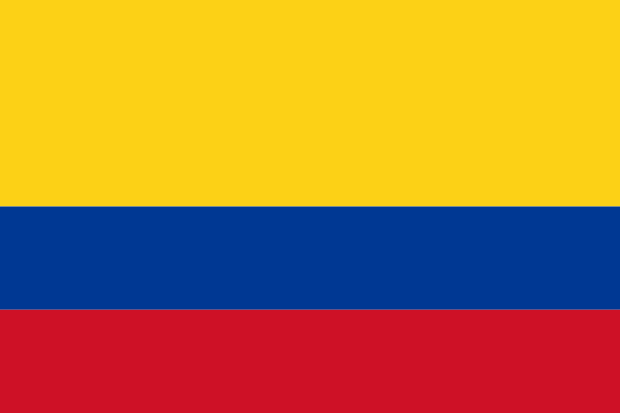
Flag is available in resolutions
| Icon 88x59 |  |
| Icon 32x21 |  |
Colombia
Colombia: A Tapestry of Biodiversity, Culture, and Resilience
Colombia, officially the Republic of Colombia, is a South American nation renowned for its astonishing biodiversity, vibrant culture, and a history marked by both profound challenges and remarkable resilience. Nestled in the northwestern corner of the continent, it is the only South American country with coastlines on both the Caribbean Sea and the Pacific Ocean, a geographical advantage that has shaped its history, economy, and cultural mosaic. With an estimated population of over 50 million people, Colombia is one of the most populous countries in Latin America, a diverse and dynamic society forged from the confluence of indigenous heritage, Spanish colonial influence, and African traditions. This rich admixture is reflected in its languages, music, cuisine, and the very spirit of its people. The nations geography is as varied as its population, ranging from the snow-capped peaks of the Andes Mountains to the humid Amazon rainforest, the arid deserts of La Guajira, and the lush Caribbean coastlines. This geographical diversity has fostered an unparalleled array of ecosystems, making Colombia a global hotspot for biodiversity, home to an estimated 10% of the worlds known species.
The history of Colombia is a compelling narrative of ancient civilizations, colonial conquest, and the enduring struggle for independence and national identity. Before the arrival of Europeans, the region was inhabited by numerous indigenous groups, including the Muisca, Tayrona, and Quimbaya civilizations, known for their sophisticated craftsmanship, intricate social structures, and advanced agricultural practices. The arrival of the Spanish in the late 15th century marked a dramatic turning point, ushering in an era of colonization, exploitation, and the profound disruption of indigenous societies. The Spanish established settlements, introduced Christianity, and built a colonial administration, laying the foundations for the modern Colombian state. The struggle for independence from Spain began in the early 19th century, fueled by the ideals of Simón Bolívar, the Liberator. After years of conflict, Colombia, along with Ecuador, Panama, and Venezuela, formed Gran Colombia in 1819, a short-lived republic that ultimately dissolved. Colombia then emerged as a sovereign nation, facing internal conflicts and political instability throughout the 19th and 20th centuries. The latter half of the 20th century was particularly turbulent, marked by political violence, the rise of powerful drug cartels, and an protracted armed conflict between the government, guerrilla groups, and paramilitary organizations. Despite these immense challenges, Colombia has demonstrated an extraordinary capacity for recovery and transformation. The signing of a peace agreement with the FARC guerrilla group in 2016 was a watershed moment, offering a beacon of hope for lasting peace and reconciliation. The country is now actively engaged in rebuilding its institutions, fostering economic development, and addressing the lingering effects of decades of conflict.
Geographically, Colombia is a land of dramatic contrasts and breathtaking beauty. The Andes Mountains dominate the western part of the country, splitting into three distinct ranges: the Cordillera Occidental, the Cordillera Central, and the Cordillera Oriental. These mountains are home to some of the highest peaks in South America, including Pico Cristóbal Colón and Pico Simón Bolívar, and are crucial for water resources and biodiversity. Between the western and central ranges lies the fertile Cauca River valley, a major agricultural region. To the east of the Andes, the land slopes down into the vast plains of the Llanos Orientales, a region of grasslands and savannas that transitions into the Amazon rainforest in the south. The Caribbean coast in the north offers pristine beaches, coral reefs, and vibrant coastal cities like Cartagena and Santa Marta. The Pacific coast, in contrast, is characterized by dense rainforests, rugged coastlines, and a rich Afro-Colombian culture, with cities like Buenaventura. Colombias strategic location also grants it access to the Amazon River basin, the worlds largest river system, and the San Andrés and Providencia archipelago in the Caribbean Sea, known for its stunning coral reefs and clear waters. This immense geographical diversity has resulted in a staggering array of ecosystems, from páramos (high-altitude grasslands) and cloud forests to tropical dry forests and mangrove swamps, contributing to Colombias status as a megadiverse country.
The Colombian economy has undergone significant transformations over the years, moving from a primarily agrarian base to a more diversified industrial and service-oriented economy. Historically, agriculture has been a cornerstone, with coffee being the most iconic export product, earning Colombia the moniker the land of coffee. Other important agricultural exports include bananas, flowers, sugar cane, and palm oil. The country also possesses significant mineral wealth, including emeralds, gold, coal, and petroleum. The extraction and export of these resources play a crucial role in the national economy. In recent decades, Colombia has made strides in developing its industrial sector, with manufacturing focusing on textiles, chemicals, food processing, and beverages. The service sector, particularly tourism, finance, and telecommunications, has also seen substantial growth. The government has actively promoted foreign investment and sought to integrate Colombia into the global economy through trade agreements. Despite economic progress, challenges remain, including income inequality, informal employment, and the need for continued investment in infrastructure and education to foster more inclusive and sustainable growth. The countrys natural resources, while a significant economic asset, also present challenges related to environmental management and sustainable resource extraction.
Colombias cultural landscape is as rich and varied as its geography, a vibrant fusion of indigenous, European, and African influences. The country is a global leader in biodiversity, and this natural wealth is deeply intertwined with its cultural expressions. Indigenous traditions persist, particularly in remote regions, with distinct languages, rituals, and artistic practices. Spanish colonial heritage is evident in its architecture, religious traditions, and the Spanish language, which is spoken by virtually all Colombians. African influences are most pronounced along the Caribbean and Pacific coasts, contributing to the rhythmic beats of cumbia and vallenato music, the vibrant colors of its festivals, and the rich culinary traditions. Colombian music is world-renowned, with genres like cumbia, vallenato, salsa, and champeta captivating audiences globally. Dance is an integral part of Colombian life, with lively performances a common sight at festivals and social gatherings. Colombian literature has produced internationally acclaimed authors, such as Gabriel García Márquez, whose magical realism brought Colombian storytelling to a global stage. The countrys visual arts scene is dynamic, with a history of both traditional crafts and contemporary artistic innovation. Colombian cuisine is a delightful exploration of diverse regional flavors, from the bandeja paisa in the Andean region to the sancocho de pescado on the coast and the exotic fruits of the Amazon. Festivals and celebrations are a vital part of Colombian culture, offering a glimpse into the countrys joyous spirit and deep-seated traditions. The Barranquilla Carnival, the second-largest carnival in the world, is a spectacular display of music, dance, and elaborate costumes. Religious holidays are also widely celebrated, often with a blend of Catholic traditions and local customs.
Colombias tourism potential is immense, drawing visitors with its diverse landscapes, rich history, and vibrant culture. The Caribbean coast is a major draw, with the historic walled city of Cartagena, a UNESCO World Heritage site, offering colonial architecture, charming streets, and a lively atmosphere. The nearby Rosario Islands and San Andrés provide idyllic beaches and opportunities for diving and snorkeling. The Andes region is renowned for its coffee country, where visitors can explore coffee plantations, learn about the cultivation process, and savor some of the worlds finest coffee. The Cocora Valley, with its towering wax palms, the national tree, is a breathtaking natural wonder. The colonial city of Salento and the charming town of Filandia offer a glimpse into traditional paisa culture. Medellín, once notorious for its past, has transformed into a modern and vibrant city, known for its innovative urban planning, its cable car system offering panoramic views, and its lively nightlife. The Amazon rainforest in the south offers unparalleled opportunities for ecotourism, with opportunities to explore the jungle, encounter diverse wildlife, and learn about indigenous communities. The Pacific coast, though less developed for mass tourism, is a haven for nature lovers and those seeking authentic cultural experiences, particularly in towns like Nuquí and Bahía Solano, known for whale watching. For history buffs, the Ciudad Perdida (Lost City), an ancient indigenous settlement, offers a challenging but rewarding trek. The Tayrona National Natural Park, with its stunning beaches and lush jungle, is another popular destination. The Colombian government has made significant investments in improving infrastructure and security, making Colombia an increasingly attractive and accessible destination for travelers seeking adventure, culture, and natural beauty. The emphasis on sustainable tourism is growing, aiming to preserve the countrys natural and cultural heritage for future generations.
In conclusion, Colombia is a country of extraordinary beauty, profound history, and an indomitable spirit. From its unparalleled biodiversity and diverse ecosystems to its rich cultural tapestry and the resilience of its people, Colombia offers a compelling and multifaceted experience. The nations journey from a history marked by conflict to one of peace and progress is a testament to its strength and determination. As Colombia continues to embrace its potential, it stands as a vibrant testament to the enduring power of nature, culture, and the human spirit.
Information about Colombia
The information comes from the publication CIA The World Factbook.
Automated text translation, excuse errors, please!
Country Colombia is situated in a location / continent South America. Colombia has an area of 1 138 910 km2 and 45 239 079 residents. The highest point has a height 5 775 above sea level. and it is called Pico Cristobal Colon. The lowest point is located at the level of 0 above sea level and it is named Pacific Ocean. System of government is republic and the date of independence July 20, 1810. The capital city is Bogota. Colombia has the international abbreviation CO.
Colombia - economy
Total gross domestic product (GDP) is 478 000 000 000 $. Total gross domestic product per capita in purchasing power parity is 10 400 $. GDP grows by 5.90 % a year. Inflation (consumer price index) is equal to 3.40 % a year. Colombia have 22 450 000 working-age population (from a total population 45 239 079 people). Unemployment is at 10.80 %. Colombia issued 6.40 % GDP to healt care and 3,40 % GDP to army. The public debt of the country is 44.60 % GDP. The total amount of foreign debt is 68 760 000 000 USD.
Colombia - demography
As suggested above, Colombia has 45 239 079 people. Population growth is in the amount 1.13 % per year. Number of children born per 1000 population per year is 17.23.Every mother has average 2.12 children. The infant mortality rate is 15.92 and maternal mortality 92.00 deaths per 100,000 births. Average estimated life expectancy makes 74.79 years. Mortality is 5.29 people per 1000 population per year.
Colombia - transport and telecommunications
Colombia has 141 374 km of roads, 874 km of railway lines and 862 airports. The total length of waterways (navigable rivers, canals, etc.) is 24 725 km. There is registered 12 ships.
Number of active mobile phones (sim card) in the country Colombia is 46 200 000. Number of active fixed telephone lines is 7 127 000. Colombia has 22 538 000 internet users, who have the available 4 281 000 Internet connections. Colombia has been assigned a domain first Choose range .co.
Colombia - energetics
Colombia consumes a year 46 390 000 000 kWh of electricity. Annual electricity production is 56 280 000 000 kWh in power plants with a total installed electrical capacity 13 540 000 kW. Colombia exports 1 294 000 000 kWh and imports 8 220 000 000 kWh of electricity per year Energy mix of power generation is as follows: fossil fuels: 32.9 %, nuclear energy: 0 %, renewable: 0.4 %, hydropower: 66.6 %. The country Colombia is harvested annually 932 100 barrels of oil.
Keywords: all flags, world countries, national flags, information, Flag of Colombia, flag states, telecommunications, Colombia, energetics, list of flags, flags of countries in the world, flag, Flags of countries, economy, list of countries, transport, demography, politic.