Afghanistan
Flag of Afghanistan
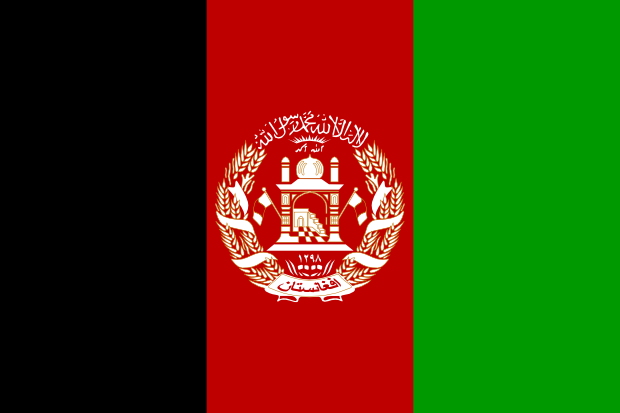
Flag is available in resolutions
| Icon 88x59 |  |
| Icon 32x21 |  |
Afghanistan
Afghanistan: A Land of Mountains, History, and Resilience
Afghanistan, officially the Islamic Emirate of Afghanistan, is a landlocked country situated at the crossroads of Central and South Asia. Its strategic location has profoundly shaped its tumultuous history, making it a melting pot of cultures and a perennial pawn in geopolitical games. The countrys geography is dominated by the formidable Hindu Kush mountain range, which cleaves the nation into distinct regions and presents immense challenges for infrastructure and transportation. This rugged terrain has historically fostered a strong sense of regional identity and a fierce spirit of independence among its diverse population. The estimated population of Afghanistan is around 40 million people, a figure that fluctuates due to ongoing conflict and displacement. The Pashtuns form the largest ethnic group, followed by Tajiks, Hazaras, Uzbeks, and other smaller communities. This ethnic mosaic contributes to a rich tapestry of languages, customs, and traditions, though it has also been a source of internal friction throughout the country’s history. The official languages are Pashto and Dari, both Indo-Iranian languages. The vast majority of the population adheres to Islam, with Sunni Islam being the dominant branch. Religious and ethnic identities are often intertwined, playing a significant role in the social and political landscape of Afghanistan. The country’s economy is largely agrarian, with a significant portion of the population engaged in subsistence farming and animal husbandry. Despite its rich mineral resources, including iron ore, copper, and precious stones, Afghanistan has struggled to develop a robust industrial sector due to decades of conflict, lack of investment, and underdeveloped infrastructure. The informal economy, including the cultivation of opium poppy, plays a substantial role, though it is also a source of international concern and instability.
The history of Afghanistan is a saga of empires rising and falling, invasions, and a persistent struggle for self-determination. Its strategic position along ancient trade routes, including parts of the Silk Road, attracted conquerors and traders for millennia. From Alexander the Greats campaigns in the 4th century BCE to the Mongol invasions led by Genghis Khan in the 13th century, and later the Mughal Empire, Afghanistan has been a battleground and a cultural bridge. The modern history of Afghanistan is particularly marked by external interventions. The Great Game, a 19th-century geopolitical struggle between the British and Russian empires for influence in Central Asia, saw Afghanistan emerge as a buffer state, though it suffered significant territorial losses. The 20th century brought further upheaval. A period of monarchy was followed by a republic in the 1970s, which was then overthrown by a communist coup in 1978. This triggered a Soviet invasion in 1979, leading to a protracted and devastating war. The Afghan mujahideen, supported by various international powers including the United States, fought against the Soviet occupation, eventually forcing their withdrawal in 1989. The subsequent collapse of the Soviet-backed government led to a brutal civil war in the early 1990s, characterized by factional fighting and widespread destruction. It was out of this chaos that the Taliban emerged, seizing control of Kabul in 1996 and establishing their austere Islamic emirate. Their rule was marked by severe human rights abuses and the harboring of al-Qaeda, leading to the US-led invasion in 2001 following the September 11th attacks. This intervention aimed to dismantle al-Qaeda and remove the Taliban from power, ushering in a new era of international engagement and nation-building efforts. For two decades, Afghanistan was the focus of a massive international military and civilian presence, with the aim of establishing a stable, democratic government and rebuilding the country. However, the insurgency by the Taliban persisted, and in August 2021, following the withdrawal of international forces, the Taliban rapidly regained control of the country, marking a significant turning point and raising profound questions about the future of Afghanistan.
Afghanistans geography is as dramatic as its history. The Hindu Kush mountains, often referred to as the “spine of Afghanistan,” dominate the landscape. These towering peaks, some exceeding 7,000 meters, are snow-capped for much of the year and present formidable natural barriers, dividing the country into distinct regions with different climates and ecological zones. To the north lie fertile plains and deserts, while the south is characterized by arid steppes and desert landscapes. The country is crisscrossed by numerous rivers, many of which originate in the Hindu Kush and are vital for irrigation and agriculture, though water scarcity is a growing concern in many areas. Major rivers include the Helmand, the Hari Rud, and the Kabul River. The climate varies significantly across the country, ranging from cold, snowy winters in the mountains to hot, dry summers in the lowlands. Extreme weather events, such as droughts and flash floods, are common and pose significant challenges to the agricultural sector and the livelihoods of the rural population. The country’s mineral wealth is substantial, with estimated reserves of iron ore, copper, gold, lithium, and rare earth elements, but their exploitation has been severely hampered by instability and the lack of adequate infrastructure and investment. The rugged terrain makes infrastructure development, such as roads and railways, incredibly difficult and expensive, further isolating many communities and hindering economic development. The majority of the population lives in rural areas, relying on agriculture, which is often subsistence-based and highly vulnerable to environmental changes and conflict.
Despite the pervasive challenges, Afghanistan possesses a rich cultural heritage and unique natural beauty that could, under different circumstances, attract significant tourism. The country boasts a long history of artistic and architectural achievements, though many of these have been damaged or destroyed by decades of conflict. Historically, sites like the ancient city of Balkh, believed to be the birthplace of Zoroastrianism, and the magnificent Buddhas of Bamiyan, tragically destroyed by the Taliban in 2001, stand as testaments to Afghanistans deep past. The capital city, Kabul, a vibrant and bustling metropolis, offers glimpses into the countrys diverse culture, with its bustling bazaars, historical mosques, and museums, such as the National Museum of Afghanistan, which houses a remarkable collection of pre-Islamic artifacts. The city of Herat, in the west, is renowned for its Timurid architecture, particularly the magnificent Musalla complex and the Citadel of Herat. The northern city of Mazar-i-Sharif is home to the Shrine of Ali, a significant pilgrimage site for Shia Muslims. For adventure seekers, the Pamir Mountains in the Wakhan Corridor offer breathtaking landscapes, remote villages, and opportunities for trekking, though access is extremely challenging and requires careful planning and security considerations. The country’s diverse ethnic groups contribute to a rich tapestry of traditional music, dance, cuisine, and crafts, including intricate carpet weaving, pottery, and metalwork. However, the current security situation and political instability severely limit any substantial tourism industry. Travel to Afghanistan is fraught with risks, and most international visitors are limited to aid workers, journalists, and individuals with specific humanitarian or business purposes. The potential for tourism remains largely untapped, awaiting a prolonged period of peace and stability.
The industrial sector in Afghanistan is nascent and underdeveloped, heavily reliant on agriculture and the informal economy. The country’s industrial base is small, with limited manufacturing capacity. The primary industries that exist are often small-scale operations focused on processing agricultural products, such as textiles, food processing, and the production of cement and construction materials. The mining sector holds significant potential, with vast reserves of minerals, but its development has been severely hampered by a lack of investment, security concerns, and inadequate infrastructure. Foreign investment in mining has been hesitant due to the unstable environment. The informal economy, including the cultivation of opium poppy, plays a substantial role in the livelihoods of many Afghans, particularly in rural areas. While providing income, this illicit trade also fuels corruption, instability, and organized crime, posing a significant challenge to the government and international efforts to combat drug trafficking. Efforts to diversify the economy and develop legitimate industries have been ongoing but have faced immense obstacles. The government has sought to attract investment in sectors such as renewable energy, mining, and telecommunications, but progress has been slow. The lack of a skilled workforce, limited access to capital, and the pervasive insecurity continue to hinder industrial growth. The country’s economy is heavily dependent on foreign aid, which has been a crucial source of support but also creates a reliance that can be detrimental to long-term sustainable development. Rebuilding and diversifying the industrial base is a monumental task that requires sustained peace, significant investment, and a stable political environment.
The future of Afghanistan remains uncertain, a complex interplay of internal dynamics and external influences. The withdrawal of international forces and the return of the Taliban to power have ushered in a new phase, marked by humanitarian challenges, economic hardship, and international isolation. The Taliban government faces the immense task of governing a country ravaged by decades of conflict, with a shattered economy and a population in desperate need of basic services. International recognition of the Taliban regime remains limited, and sanctions and aid restrictions continue to impact the country’s economy. The humanitarian crisis is severe, with millions facing food insecurity and poverty. The international community is grappling with how to provide humanitarian assistance without legitimizing the Taliban regime. The rights of women and girls, which saw some improvements during the post-2001 era, have been significantly curtailed under Taliban rule, raising international condemnation. The potential for the resurgence of extremist groups remains a concern, both for Afghanistan and the wider region. Despite the daunting challenges, the resilience of the Afghan people is undeniable. Their history is a testament to their ability to endure and adapt. The path forward for Afghanistan will likely be long and arduous, requiring a delicate balance of internal reconciliation, effective governance, and a pragmatic approach from the international community to address the humanitarian needs and promote stability, albeit under a vastly different political landscape. The country’s rich history, diverse culture, and strategic location ensure that Afghanistan will continue to be a focal point of regional and international attention, a land of enduring spirit facing an uncertain dawn.
Information about Afghanistan
The information comes from the publication CIA The World Factbook.
Automated text translation, excuse errors, please!
Country Afghanistan is situated in a location / continent South Asia. Afghanistan has an area of 652 230 km2 and 30 419 928 residents. The highest point has a height 7 485 above sea level. and it is called Nowshak. The lowest point is located at the level of 258 above sea level and it is named Amu Darya. System of government is Islamic Republic of and the date of independence 19th August 1919. The capital city is Kabul. Afghanistan has the international abbreviation AF.
Afghanistan - economy
Total gross domestic product (GDP) is 30 110 000 000 $. Total gross domestic product per capita in purchasing power parity is 1 000 $. GDP grows by 5.70 % a year. Inflation (consumer price index) is equal to 7.70 % a year. Afghanistan have 15 000 000 working-age population (from a total population 30 419 928 people). Unemployment is at 35.00 %. Afghanistan issued 7.40 % GDP to healt care and 1,90 % GDP to army. The total amount of foreign debt is 1 280 000 000 USD.
Afghanistan - demography
As suggested above, Afghanistan has 30 419 928 people. Population growth is in the amount 2.22 % per year. Number of children born per 1000 population per year is 39.30.Every mother has average 5.64 children. The infant mortality rate is 121.63 and maternal mortality 460.00 deaths per 100,000 births. Average estimated life expectancy makes 49.72 years. Mortality is 14.59 people per 1000 population per year.
Afghanistan - transport and telecommunications
Afghanistan has 42 150 km of roads and 52 airports. The total length of waterways (navigable rivers, canals, etc.) is 1 200 km.
Number of active mobile phones (sim card) in the country Afghanistan is 17 558 000. Number of active fixed telephone lines is 13 500. Afghanistan has 1 000 000 internet users, who have the available 121 Internet connections. Afghanistan has been assigned a domain first Choose range .af.
Afghanistan - energetics
Afghanistan consumes a year 2 226 000 000 kWh of electricity. Annual electricity production is 913 100 000 kWh in power plants with a total installed electrical capacity 489 100 kW. Afghanistan exports 0 kWh and imports 1 377 000 000 kWh of electricity per year Energy mix of power generation is as follows: fossil fuels: 23.5 %, nuclear energy: 0 %, renewable: 0.0 %, hydropower: 76.5 %.
Keywords: Flags of countries, demography, flag, information, list of countries, Afghanistan, telecommunications, all flags, list of flags, Flag of Afghanistan, national flags, world countries, economy, flags of countries in the world, flag states, energetics, transport, politic.