Sri Lanka
Flag of Sri Lanka
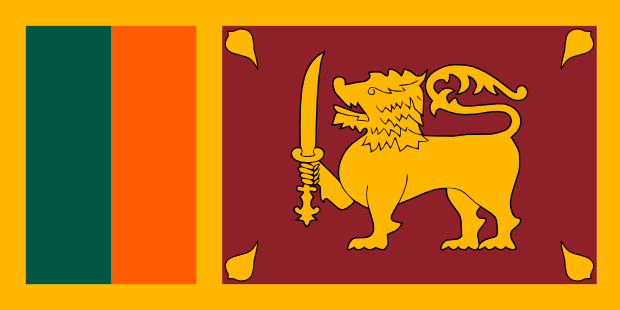
Flag is available in resolutions
| Icon 88x44 |  |
| Icon 32x16 |  |
Sri Lanka
Sri Lanka, the teardrop-shaped island nation nestled in the Indian Ocean, is a land of remarkable diversity and profound historical significance. Often referred to as the “Pearl of the Indian Ocean,” its allure lies in a captivating blend of ancient civilizations, vibrant cultures, stunning natural landscapes, and a burgeoning economy. From the mist-shrouded highlands to the sun-drenched southern coast, Sri Lanka offers an experience that is both enriching and unforgettable, drawing visitors from across the globe to explore its many facets. Its strategic location has historically made it a vital trading post, influencing its cultural tapestry and its interactions with the wider world. The island’s rich biodiversity, coupled with its ancient heritage, positions it as a unique destination that appeals to a wide spectrum of interests.
The population of Sri Lanka is a fascinating mosaic, reflecting centuries of migration and intermingling. The Sinhalese, who constitute the majority, are predominantly Buddhists and speak Sinhala. Alongside them live the Tamils, primarily Hindus, whose language is Tamil. There are also significant Muslim and Burgher communities, each contributing to the island’s unique cultural mosaic. This ethnic and religious diversity, while a source of richness, has also, at times, been a source of tension and conflict, most notably the protracted civil war that ended in 2009. However, in recent decades, there has been a concerted effort towards reconciliation and national unity, fostering a more inclusive society. The vibrant religious festivals, the diverse culinary traditions, and the array of languages spoken on the island are all testaments to this rich human tapestry. Understanding these demographic nuances is crucial to appreciating the complexities and the resilience of Sri Lankan society. The demographic makeup has shaped its social structures, its political landscape, and its cultural expressions, making it a truly multi-layered nation.
Sri Lanka’s history is as ancient and layered as its landscapes. Archaeological evidence points to human habitation dating back over 125,000 years. The island’s recorded history begins with the arrival of Prince Vijaya from India in the 5th century BCE, marking the genesis of the Sinhalese civilization. Buddhism was introduced in the 3rd century BCE by Mahinda, the son of Emperor Ashoka, and it has since played a pivotal role in shaping the island’s culture, art, and social fabric. Ancient kingdoms like Anuradhapura and Polonnaruwa flourished, leaving behind magnificent ruins of stupas, palaces, and irrigation systems that stand as testaments to their advanced civilization. Later, the island experienced periods of colonial rule, first by the Portuguese, then the Dutch, and finally the British, who granted it independence in 1948. Each colonial power left its indelible mark on the island’s architecture, legal systems, and administrative structures. The struggle for independence was a significant period, uniting various communities under a common goal, though the post-independence era has seen its own set of challenges and triumphs. The ancient kingdoms, with their sophisticated urban planning and water management systems, offer a glimpse into a highly developed past, predating many contemporary civilizations.
Geographically, Sri Lanka is an island of stunning contrasts. Its central highlands are a verdant expanse of rolling tea plantations, mist-covered mountains, and cascading waterfalls, offering a cooler climate and breathtaking vistas. Pidurutalagala, the highest peak, stands at 2,524 meters. The coastal plains, on the other hand, are characterized by golden sandy beaches, palm-fringed lagoons, and vibrant coral reefs. The island is surrounded by the Indian Ocean, with its coastline stretching for over 1,340 kilometers. Rivers like the Mahaweli, the longest, crisscross the island, providing vital water resources for agriculture and power generation. Sri Lanka’s diverse ecosystems support a rich array of flora and fauna, including elephants, leopards, and a multitude of bird species, making it a haven for wildlife enthusiasts. The island’s location also makes it susceptible to monsoons, which bring essential rainfall but can also lead to flooding. The dramatic shift in topography from the central highlands to the coastal plains creates distinct microclimates and ecological zones, each with its own unique characteristics.
The Sri Lankan economy has undergone significant transformation over the years, moving from a primarily agrarian base to a more diversified and service-oriented economy. Key sectors include agriculture, with tea, rubber, and coconuts being major exports. The textile and apparel industry is another significant contributor to the economy, with many factories employing a large workforce. Tourism, a vital foreign exchange earner, has seen substantial growth, attracting visitors with its cultural heritage, natural beauty, and adventure tourism opportunities. The IT and BPO (Business Process Outsourcing) sectors are also rapidly expanding, showcasing the island’s growing technological prowess. Remittances from Sri Lankans working abroad also play a crucial role in the national economy. The government has been focusing on developing infrastructure, promoting foreign investment, and fostering innovation to further bolster economic growth and create employment opportunities. Despite facing economic challenges, Sri Lanka demonstrates a strong capacity for recovery and adaptation, driven by its resilient workforce and diverse economic base.
Sri Lanka is a treasure trove of tourist attractions, catering to every kind of traveler. The ancient cities of Anuradhapura and Polonnaruwa, UNESCO World Heritage sites, offer a profound journey into the island’s glorious past, with their well-preserved ruins and intricate Buddhist art. Sigiriya, the “Lion Rock,” a magnificent rock fortress and palace complex, is an iconic symbol of Sri Lanka, renowned for its frescoes and its breathtaking views. The cultural triangle, encompassing these ancient cities, is a must-visit for history buffs. For nature lovers, the lush hill country around Nuwara Eliya, Ella, and Kandy, with its rolling tea estates and cascading waterfalls, provides a refreshing escape. Wildlife safaris in national parks like Yala and Udawalawe offer opportunities to spot elephants, leopards, and diverse birdlife. The southern coast is famous for its pristine beaches, such as Mirissa, Unawatuna, and Tangalle, offering opportunities for relaxation, water sports, and whale watching. The colonial charm of Galle Fort, a UNESCO World Heritage site, with its Dutch colonial architecture, boutique shops, and charming cafes, is another popular destination. Sri Lanka’s rich cultural tapestry is further exemplified by its vibrant festivals, including the Kandy Esala Perahera, a spectacular Buddhist procession. The diverse culinary scene, influenced by Indian, Dutch, and Malay flavors, is another highlight for visitors.
In conclusion, Sri Lanka is a captivating destination that offers a remarkable blend of history, culture, natural beauty, and economic dynamism. Its resilient people, its rich heritage, and its stunning landscapes continue to draw visitors seeking an authentic and enriching travel experience. The island’s journey from ancient kingdoms to a modern nation is a testament to its enduring spirit and its capacity for growth and adaptation. As Sri Lanka continues to evolve, it remains a jewel in the Indian Ocean, promising unforgettable memories for all who visit. The island’s commitment to preserving its heritage while embracing modernity positions it as a unique and inspiring destination on the global stage.
Information about Sri Lanka
The information comes from the publication CIA The World Factbook.
Automated text translation, excuse errors, please!
Country Sri Lanka is situated in a location / continent South Asia. Sri Lanka has an area of 65 610 km2 and 21 481 334 residents. The highest point has a height 2 524 above sea level. and it is called Pidurutalagala. The lowest point is located at the level of 0 above sea level and it is named Indian Ocean. System of government is republic and the date of independence 4th February 1948. The capital city is Colombo. Sri Lanka has the international abbreviation CE.
Sri Lanka - economy
Total gross domestic product (GDP) is 118 000 000 000 $. Total gross domestic product per capita in purchasing power parity is 5 700 $. GDP grows by 8.20 % a year. Inflation (consumer price index) is equal to 7.00 % a year. Sri Lanka have 8 307 000 working-age population (from a total population 21 481 334 people). Unemployment is at 4.20 %. Sri Lanka issued 4.00 % GDP to healt care .The public debt of the country is 79.40 % GDP. The total amount of foreign debt is 22 810 000 000 USD.
Sri Lanka - demography
As suggested above, Sri Lanka has 21 481 334 people. Population growth is in the amount 0.91 % per year. Number of children born per 1000 population per year is 17.04.Every mother has average 2.17 children. The infant mortality rate is 9.47 and maternal mortality 35.00 deaths per 100,000 births. Average estimated life expectancy makes 75.94 years. Mortality is 5.96 people per 1000 population per year.
Sri Lanka - transport and telecommunications
Sri Lanka has 91 907 km of roads, 1 449 km of railway lines and 18 airports. The total length of waterways (navigable rivers, canals, etc.) is 160 km. There is registered 21 ships.
Number of active mobile phones (sim card) in the country Sri Lanka is 18 319 000. Number of active fixed telephone lines is 3 608 000. Sri Lanka has 1 777 000 internet users, who have the available 8 652 Internet connections. Sri Lanka has been assigned a domain first Choose range .lk.
Sri Lanka - energetics
Sri Lanka consumes a year 9 268 000 000 kWh of electricity. Annual electricity production is 10 710 000 000 kWh in power plants with a total installed electrical capacity 2 646 000 kW. Sri Lanka exports 0 kWh and imports 0 kWh of electricity per year Energy mix of power generation is as follows: fossil fuels: 48.6 %, nuclear energy: 0 %, renewable: 0.2 %, hydropower: 51.3 %.
Keywords: Flags of countries, telecommunications, flags of countries in the world, economy, transport, all flags, list of countries, flag, energetics, Flag of Sri Lanka, demography, flag states, world countries, information, national flags, list of flags, Sri Lanka, politic.