Fiji
Flag of Fiji
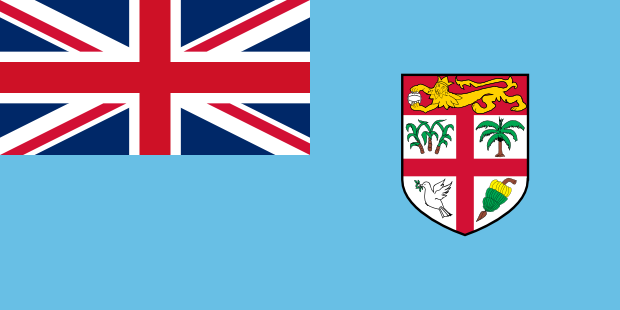
Flag is available in resolutions
| Icon 88x44 |  |
| Icon 32x16 |  |
Fiji
Fiji: An Archipelago of Enchantment
Fiji, officially the Republic of Fiji, is an island nation located in Melanesia, part of Oceania in the South Pacific Ocean. This captivating archipelago comprises more than 330 islands, of which about 110 are inhabited, and more than 500 islets, representing 1.3% of the Earth’s surface. The two most significant islands, Viti Levu and Vanua Levu, account for 83% of the total population. Viti Levu is home to the capital city, Suva, and the country’s major international airport at Nadi. Fiji’s geographical isolation, nestled between the equator and the Tropic of Capricorn, has fostered a unique blend of biodiversity and cultural heritage. Its strategic location has also played a pivotal role in its history, from ancient Polynesian migrations to its colonial past and its modern-day status as a popular tourist destination. The islands are characterized by volcanic origins, with rugged interiors covered in dense rainforests, fringed by coral reefs and pristine white-sand beaches. This dramatic topography contributes to Fiji’s breathtaking natural beauty and its diverse ecosystems, supporting a rich array of flora and fauna. The surrounding turquoise waters teem with marine life, making Fiji a world-renowned destination for diving and snorkeling. The climate is tropical marine, with a warm and humid season from November to April and a cooler, drier season from May to October. This consistent warmth, coupled with abundant sunshine, further enhances its allure as a tropical paradise.
The history of Fiji is a tapestry woven with threads of ancient settlement, colonial rule, and the eventual struggle for independence. The islands were first settled by Melanesian peoples thousands of years ago, likely around 3,500 years ago, who brought with them distinct cultural practices and traditions. Polynesian voyagers also made their way to the islands, contributing to the diverse genetic and cultural makeup of the Fijian people. For centuries, Fiji remained relatively isolated, developing its own unique societal structures and customs, including intricate chieftainship systems and a rich oral tradition. The first European contact occurred in 1643 when Dutch explorer Abel Tasman sighted the islands, but it wasnt until the late 18th century that significant European presence began to emerge. British explorer James Cook visited in 1774, and later, in 1804, the first sandalwood traders arrived, marking the beginning of a period of increased external influence. The mid-19th century saw the arrival of missionaries, who played a significant role in converting the indigenous population to Christianity and in documenting Fijian customs. However, this period was also marked by intertribal warfare and the notorious practice of cannibalism, which, while a stark part of its historical narrative, is often sensationalized and does not represent the entirety of Fijian culture. By the late 19th century, the increasing lawlessness and the desire for stability led to the cession of Fiji to the British Crown in 1874, establishing it as a British Crown Colony. Under British rule, Fiji saw the introduction of a plantation economy, primarily focused on sugar cane, which led to the importation of indentured laborers from India. This influx of Indian workers profoundly shaped Fiji’s demographic landscape and its social and political dynamics, laying the groundwork for future ethnic tensions. Following World War II, Fiji gradually moved towards self-governance. In 1970, Fiji gained its independence from the United Kingdom, becoming a sovereign nation within the Commonwealth of Nations. The post-independence era has been marked by periods of political instability, including military coups in 1987 and 2000, largely driven by ethnic divisions between the indigenous Fijian and Indo-Fijian populations. Despite these challenges, Fiji has strived to build a cohesive national identity and has emerged as a key player in regional politics and diplomacy. The rich historical narrative of Fiji, from its ancient roots to its colonial legacy and its journey to nationhood, continues to inform its present-day identity and its aspirations for the future.
The population of Fiji is a vibrant mosaic of ethnicities, primarily consisting of indigenous Fijians (iTaukei) and Indo-Fijians. Indigenous Fijians, who constitute the majority of the population, are Melanesian people with strong cultural ties to their ancestral lands and traditions. Their society is traditionally structured around a complex system of chiefs and villages, with deep respect for elders and communal living. Indo-Fijians, descendants of indentured laborers brought from India during the British colonial era, primarily work in agriculture and commerce. Their presence has enriched Fiji’s cultural landscape with influences from Indian languages, religions, and cuisine. While these two main ethnic groups have historically coexisted, inter-ethnic relations have sometimes been strained, leading to periods of political tension. However, there are also significant populations of other ethnic groups, including Europeans, Chinese, and other Pacific Islanders, contributing to Fiji’s multicultural fabric. The official languages are English, Fijian, and Hindustani, reflecting the diverse linguistic heritage of the nation. English serves as the primary language of government and business, while Fijian and Hindustani are widely spoken within their respective communities. The population is predominantly Christian, with a significant Hindu minority and smaller communities of Muslims, Sikhs, and other faiths. This religious diversity is a testament to Fiji’s history of migration and cultural exchange. The Fijian people are renowned for their warmth, hospitality, and their strong sense of community. The concept of Bula, a greeting that embodies well-being and life, is central to their ethos and is readily extended to visitors. Life expectancy in Fiji is comparable to other developing nations, and the country faces challenges related to healthcare access and quality, particularly in remote areas. Education is a priority, with efforts to improve literacy rates and provide access to higher education. The demographic makeup of Fiji, with its blend of indigenous and immigrant populations, its linguistic diversity, and its religious tolerance, forms the unique and captivating character of this island nation.
Fiji’s economy, while historically reliant on agriculture, has increasingly diversified, with tourism emerging as its most significant sector. Sugar cane production, a legacy of the colonial era, remains an important agricultural export, though its dominance has waned. Other agricultural products include coconuts, ginger, kava, and tropical fruits. The fishing industry also plays a vital role, both for domestic consumption and for export. In recent decades, Fiji has actively promoted its tourism industry, capitalizing on its stunning natural beauty, pristine beaches, crystal-clear waters, and vibrant coral reefs. The archipelago attracts millions of visitors annually, drawn to its luxurious resorts, world-class diving and snorkeling opportunities, and its unique cultural experiences. The tourism sector is a major employer and a significant contributor to foreign exchange earnings, supporting numerous businesses from hospitality and transportation to handicraft production. Beyond tourism, Fiji has made strides in developing its manufacturing sector, focusing on light industries such as garments, food processing, and handicrafts. The country also boasts a growing services sector, including telecommunications and financial services. Efforts are underway to promote sustainable development and to diversify the economy further, reducing its reliance on external factors such as fluctuating commodity prices and global tourism trends. The government actively seeks foreign investment and encourages the development of new industries, aiming to create employment opportunities and improve the standard of living for its citizens. The economic landscape of Fiji is a dynamic interplay between its traditional agricultural roots and its burgeoning modern industries, with tourism serving as the undeniable engine of its prosperity.
The allure of Fiji extends far beyond its economic landscape, captivating visitors with a wealth of tourist attractions that showcase its natural splendor and rich cultural heritage. The Mamanuca and Yasawa Islands are perhaps the most iconic, a string of idyllic islands renowned for their powdery white-sand beaches, turquoise lagoons, and world-class surfing breaks. These islands offer a quintessential tropical escape, with opportunities for swimming, sunbathing, snorkeling, and diving amidst vibrant coral gardens teeming with marine life. For those seeking a more adventurous experience, the interior of Viti Levu, the largest island, offers lush rainforests, cascading waterfalls, and challenging hiking trails. The heart of Viti Levu is home to the Garden of the Sleeping Giant, a botanical garden showcasing an impressive collection of orchids, and the Koroyanitu National Heritage Park, offering opportunities to explore traditional Fijian villages and learn about their way of life. Suva, the capital city, provides a glimpse into modern Fijian life, with its bustling markets, colonial architecture, and the Fiji Museum, which houses an impressive collection of artifacts detailing the nation’s history and cultural heritage. The Sigatoka Sand Dunes National Park on the Coral Coast of Viti Levu is another significant attraction, featuring ancient burial sites and offering breathtaking panoramic views of the coastline. For diving enthusiasts, the Bligh Water, also known as the Bligh Triangle, is a marine protected area renowned for its exceptional biodiversity and its dramatic underwater topography, attracting divers from around the globe. The vibrant coral reefs, home to an astonishing array of fish, sharks, and other marine creatures, make Fiji a premier destination for underwater exploration. Beyond the natural wonders, Fiji offers a rich tapestry of cultural experiences. Visitors can witness traditional Fijian ceremonies, such as the meke, a captivating performance of song and dance, and participate in a kava ceremony, a ritualistic sharing of a mildly intoxicating drink made from the root of the kava plant, which is deeply ingrained in Fijian social customs. Exploring the local markets, interacting with the friendly locals, and immersing oneself in the laid-back island lifestyle are all integral parts of the Fijian experience. Fiji truly offers something for every traveler, from the intrepid adventurer to the relaxation seeker, all set against a backdrop of unparalleled natural beauty and a welcoming cultural embrace.
Information about Fiji
The information comes from the publication CIA The World Factbook.
Automated text translation, excuse errors, please!
Country Fiji is situated in a location / continent Oceania. Fiji has an area of 18 274 km2 and 890 057 residents. The highest point has a height 1 324 above sea level. and it is called Tomanivi. The lowest point is located at the level of 0 above sea level and it is named Pacific Ocean. System of government is republic and the date of independence 10th October 1970. The capital city is Suva (on Viti Levu). Fiji has the international abbreviation FJ.
Fiji - economy
Total gross domestic product (GDP) is 4 186 000 000 $. Total gross domestic product per capita in purchasing power parity is 4 700 $. GDP grows by 2.00 % a year. Inflation (consumer price index) is equal to 8.70 % a year. Fiji have 335 000 working-age population (from a total population 890 057 people). Unemployment is at 7.60 %. Fiji issued 9.70 % GDP to healt care and 1,90 % GDP to army. The public debt of the country is 48.80 % GDP. The total amount of foreign debt is 258 700 000 USD.
Fiji - demography
As suggested above, Fiji has 890 057 people. Population growth is in the amount 0.77 % per year. Number of children born per 1000 population per year is 20.70.Every mother has average 2.58 children. The infant mortality rate is 10.73 and maternal mortality 26.00 deaths per 100,000 births. Average estimated life expectancy makes 71.59 years. Mortality is 5.93 people per 1000 population per year.
Fiji - transport and telecommunications
Fiji has 3 440 km of roads, 597 km of railway lines and 28 airports. The total length of waterways (navigable rivers, canals, etc.) is 203 km. There is registered 11 ships.
Number of active mobile phones (sim card) in the country Fiji is 727 000. Number of active fixed telephone lines is 129 800. Fiji has 114 200 internet users, who have the available 22 754 Internet connections. Fiji has been assigned a domain first Choose range .fj.
Fiji - energetics
Fiji consumes a year 753 400 000 kWh of electricity. Annual electricity production is 869 100 000 kWh in power plants with a total installed electrical capacity 219 100 kW. Fiji exports 0 kWh and imports 0 kWh of electricity per year Energy mix of power generation is as follows: fossil fuels: 54.8 %, nuclear energy: 0 %, renewable: 6.4 %, hydropower: 38.8 %.
Keywords: information, economy, demography, list of flags, Fiji, flags of countries in the world, telecommunications, national flags, flag states, world countries, all flags, list of countries, Flags of countries, flag, transport, Flag of Fiji, energetics, politic.