Palau
Flag of Palau
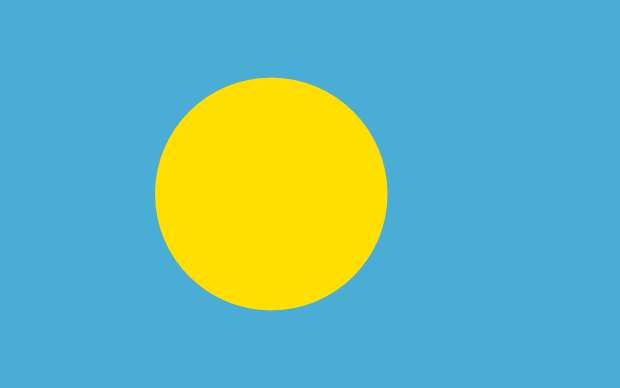
Flag is available in resolutions
| Icon 88x55 |  |
| Icon 32x20 |  |
Palau
Palau: An Archipelago of Enchanting Beauty and Rich Heritage
Nestled in the western Pacific Ocean, the Republic of Palau is a captivating archipelago that beckons with its pristine natural beauty, vibrant marine life, and a history deeply intertwined with the ocean. Comprising over 300 islands and islets, many of them uninhabited, Palau is a testament to the raw power and delicate balance of nature. Its remoteness has, in many ways, preserved its unique ecosystems and cultural heritage, making it a dream destination for nature lovers, divers, and those seeking an escape from the ordinary. The very name Palau conjures images of emerald islands fringed with white sandy beaches, surrounded by turquoise waters teeming with an astonishing diversity of marine creatures. It’s a place where ancient traditions blend seamlessly with modern aspirations, creating a society that is both resilient and welcoming.
The geography of Palau is its most striking feature. The archipelago is divided into several island groups, with the larger islands of Babeldaob, Koror, Peleliu, and Angaur forming the core of the nation. Babeldaob, the largest island, is characterized by rolling hills, dense rainforests, and dramatic limestone formations. It is also home to the nations highest point, Mount Ngelchebes. The Rock Islands, a UNESCO World Heritage site, are perhaps Palau’s most iconic geographical marvel. These mushroom-shaped limestone islets, covered in lush vegetation, rise dramatically from the sea, creating a surreal and breathtaking seascape. The waters surrounding these islands are incredibly rich and diverse, forming a complex network of coral reefs, seagrass beds, and mangrove forests. This intricate marine environment supports an astonishing array of biodiversity, from tiny, colorful nudibranchs to majestic manta rays and whale sharks. The countrys commitment to marine conservation is evident in its vast protected marine areas, which are crucial for the survival of these precious ecosystems. The sheer abundance of marine life makes Palau a world-renowned destination for diving and snorkeling, offering encounters with barracuda, turtles, sharks, and countless species of reef fish.
The history of Palau is a long and complex tapestry woven with threads of indigenous settlement, colonial rule, and eventual independence. Archaeological evidence suggests that the islands were first settled by people from the Philippines or Indonesia as early as 3000 years ago. These early inhabitants developed a sophisticated society, with complex social structures and a deep understanding of their environment. For centuries, Palau remained largely isolated, its people relying on the bounty of the ocean and the fertile land for their sustenance. European explorers first reached Palau in the 16th century, but significant contact and colonization did not occur until the late 19th century. Spain claimed sovereignty over Palau in 1885, but soon sold the islands to Germany in 1899 as part of the Spanish–American War settlement. The German colonial period, though relatively short, saw some development of infrastructure and resource extraction. Following World War I, Japan was granted a mandate over Palau by the League of Nations. Under Japanese rule, Palau experienced significant economic development, particularly in fishing and agriculture, and the population grew considerably. During World War II, Palau became a strategic stronghold for the Japanese military, and the Battle of Peleliu, a particularly brutal and costly engagement, took place on one of the islands. After World War II, Palau became part of the Trust Territory of the Pacific Islands, administered by the United States. This period saw a gradual transition towards self-governance, culminating in Palau’s declaration of independence in 1994. The nations modern history is marked by its commitment to environmental protection and its efforts to balance economic development with the preservation of its natural and cultural heritage.
The population of Palau is relatively small, numbering just over 18,000 people. The majority of the population resides on the island of Koror, the former capital and commercial hub. The Palauan people are known for their warmth, hospitality, and strong sense of community. The official languages are Palauan and English, with English being widely spoken and used in government and business. The culture of Palau is rich and diverse, influenced by its Austronesian roots and historical interactions with various colonial powers. Traditional Palauan society was organized around a complex system of clans and chiefs, with a strong emphasis on respect for elders and community well-being. Traditional arts and crafts, such as weaving, carving, and storytelling, continue to be practiced and passed down through generations. The Palauan diet traditionally consists of fish, taro, breadfruit, and coconut, reflecting the countrys reliance on its natural resources. While modern influences are present, traditional customs and values remain deeply ingrained in Palauan life. The nation’s commitment to its heritage is evident in its efforts to preserve traditional knowledge and practices, ensuring that they remain a vibrant part of Palauan identity.
The economy of Palau is heavily reliant on tourism and fisheries. The pristine natural environment, particularly its world-class diving sites, attracts a significant number of international visitors. The tourism sector provides employment for many Palauans and is a crucial source of foreign exchange. The government has invested in developing tourism infrastructure, including hotels, resorts, and transportation services, while also striving to promote sustainable tourism practices that minimize environmental impact. Fisheries are another vital component of the Palauan economy, both for domestic consumption and for export. The country’s vast Exclusive Economic Zone provides access to abundant fish stocks, and efforts are underway to manage these resources sustainably. Other sectors contributing to the economy include agriculture, which primarily serves domestic needs, and a growing service sector. The Palauan government is actively seeking to diversify its economy and reduce its reliance on external aid, exploring opportunities in areas such as renewable energy and information technology. The nations commitment to environmental stewardship is also seen as an economic asset, attracting eco-conscious tourists and investors.
Palau offers an abundance of tourist attractions, each promising a unique and unforgettable experience. The Rock Islands Southern Lagoon is an absolute must-see, with its surreal landscape of mushroom-shaped islets and crystal-clear waters. Snorkeling and diving here are unparalleled, with opportunities to explore vibrant coral gardens and encounter a dazzling array of marine life. Jellyfish Lake is another extraordinary natural wonder, where millions of stingless jellyfish migrate daily, creating a mesmerizing spectacle. Visitors can swim amongst these gentle creatures, a truly unique and humbling experience. For history enthusiasts, the Palau National Museum in Koror offers a fascinating glimpse into the countrys past, showcasing artifacts and exhibits on its indigenous culture, colonial history, and World War II legacy. The Japanese Lighthouse on Koror provides panoramic views of the surrounding islands and a poignant reminder of Palau’s historical connections. Divers will find paradise in sites like Blue Corner, renowned for its strong currents and abundant shark and barracuda populations, and German Channel, a popular spot for observing manta rays. Peleliu, the site of the infamous World War II battle, also offers historical insights with its preserved battle sites and memorials. Beyond the well-known attractions, Palau’s smaller islands and remote atolls offer opportunities for pristine beach relaxation, kayaking through secluded coves, and experiencing the untouched beauty of the Pacific. The sheer natural beauty and the profound sense of tranquility that permeates Palau make it a destination that captivates the soul and leaves an indelible mark on every visitor. The countrys dedication to preserving its natural wonders ensures that future generations will be able to experience the magic of this extraordinary archipelago.
Information about Palau
The information comes from the publication CIA The World Factbook.
Automated text translation, excuse errors, please!
Country Palau is situated in a location / continent Oceania. Palau has an area of 459 km2 and 21 032 residents. The highest point has a height 242 above sea level. and it is called Mount Ngerchelchuus. The lowest point is located at the level of 0 above sea level and it is named Pacific Ocean. System of government is republic and the date of independence First October 1994. The capital city is Melekeok. Palau has the international abbreviation PS.
Palau - economy
Total gross domestic product (GDP) is 164 000 000 $. Total gross domestic product per capita in purchasing power parity is 8 100 $. Inflation (consumer price index) is equal to 2.70 % a year. Palau have 9 777 working-age population (from a total population 21 032 people). Unemployment is at 4.20 %. Palau issued 11.20 % GDP to healt care .The total amount of foreign debt is 0 USD.
Palau - demography
As suggested above, Palau has 21 032 people. Population growth is in the amount 0.36 % per year. Number of children born per 1000 population per year is 10.79.Every mother has average 1.72 children. The infant mortality rate is 12.10 .Average estimated life expectancy makes 72.06 years. Mortality is 7.89 people per 1000 population per year.
Palau - transport and telecommunications
Palau has 3 airports.
Number of active mobile phones (sim card) in the country Palau is 15 400. Number of active fixed telephone lines is 6 900. Palau have 4 Internet connections. Palau has been assigned a domain first Choose range .pw.
Palau - energetics
.
Keywords: Palau, telecommunications, flag states, Flag of Palau, Flags of countries, list of flags, world countries, demography, information, flag, energetics, economy, flags of countries in the world, list of countries, national flags, transport, all flags, politic.