Micronesia, Federated States of
Flag of Micronesia, Federated States of
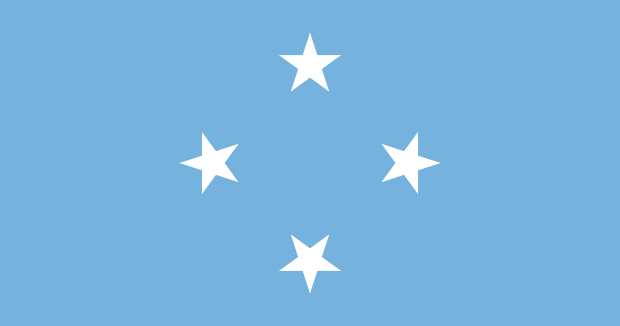
Flag is available in resolutions
| Icon 88x46 |  |
| Icon 32x17 |  |
Micronesia, Federated States of
The Federated States of Micronesia (FSM), a sprawling archipelago nation in the western Pacific Ocean, presents a captivating blend of ancient traditions and modern aspirations. Comprising over 600 islands, atolls, and islets spread across an immense maritime territory, the FSM is a testament to the resilience and ingenuity of its people. Its geography, history, and culture are intrinsically linked to the vast ocean that surrounds it, shaping its identity and influencing its development. Understanding the FSM requires delving into its diverse islands, its complex past, and the unique challenges and opportunities it faces in the 21st century.
Geographically, the Federated States of Micronesia is a nation of islands, a characteristic that defines its very existence. The country is divided into four states: Yap, Chuuk (formerly Truk), Pohnpei, and Kosrae, each with its own distinct island groups and geological formations. Yap, located in the west, is known for its iconic stone money, large islands with mountainous interiors, and a rich cultural heritage that has remained remarkably preserved. Chuuk, the most populous state, is an expansive lagoon surrounded by a ring of coral islands, famous for its World War II shipwrecks, which have become a mecca for divers. Pohnpei, often referred to as the “Garden of the Pacific,” is the largest and most mountainous island, boasting lush rainforests, impressive waterfalls, and the enigmatic ruins of Nan Madol, a UNESCO World Heritage site. Kosrae, the easternmost state, is a single volcanic island characterized by its verdant slopes, coral reefs, and a slower pace of life. The sheer distances between these island states, often hundreds of kilometers of open ocean, present significant logistical challenges for transportation, communication, and governance. This vastness, however, also contributes to the unique ecosystems found across the FSM, with a rich biodiversity both on land and in the surrounding marine environments. The reliance on the ocean for sustenance, livelihoods, and cultural practices is a constant thread running through the fabric of FSM society.
The history of the Federated States of Micronesia is a long and complex tapestry woven from indigenous traditions, colonial encounters, and the pursuit of self-determination. For millennia, the islands were inhabited by skilled mariners and farmers who developed sophisticated societies and unique cultural practices. Archaeological evidence points to a long history of settlement, with evidence of early Polynesian and Melanesian migrations. The arrival of Europeans in the 16th century marked the beginning of a period of foreign influence. Spain claimed sovereignty over the islands, followed by Germany, and then Japan, each leaving their mark on the political and economic landscape. The Japanese colonial administration, from the early 20th century until the end of World War II, significantly developed infrastructure and introduced new technologies, but also exploited the islands’ resources. Following World War II, the FSM became part of the Trust Territory of the Pacific Islands, administered by the United States under a United Nations mandate. This period was crucial in the development of local governance and education systems. In 1986, the Federated States of Micronesia achieved full independence, entering into a Compact of Free Association with the United States, which provides significant financial and defense assistance. This compact has been instrumental in the FSM’s development, but also creates a complex relationship with its former administering power. The legacy of these historical periods continues to shape the FSM’s identity, its economy, and its relationships with other nations.
The population of the Federated States of Micronesia is characterized by its diversity, with distinct cultural groups inhabiting each of the four states. While the official language is English, a number of indigenous languages are spoken, including Yapese, Chuukese, Pohnpeian, and Kosraean, reflecting the unique heritage of each island. The total population is relatively small, with most of the inhabitants concentrated on the larger islands. The people of FSM are known for their strong sense of community, their deep connection to their ancestral lands, and their rich oral traditions. Traditional customs and social structures, such as the importance of family, respect for elders, and communal decision-making, remain influential in daily life. However, like many small island developing states, the FSM faces demographic challenges, including a relatively young population, out-migration for educational and economic opportunities, and the impacts of climate change on coastal communities. The cultural heritage of the FSM is a vibrant and living entity, expressed through traditional music, dance, storytelling, and intricate handicraft. The preservation and promotion of these cultural traditions are seen as vital for maintaining national identity in an increasingly globalized world.
The economy of the Federated States of Micronesia is heavily reliant on external assistance, primarily from the United States through the Compact of Free Association. This funding plays a critical role in supporting public services, infrastructure development, and government operations. Beyond this significant external support, the FSM’s economy is characterized by a combination of subsistence agriculture and fishing, along with a nascent private sector. Tuna fishing is a major source of revenue, with the FSM actively managing its exclusive economic zone to ensure sustainable fishing practices and generate licensing fees. Other industries include tourism, which has the potential for significant growth, particularly given the FSM’s natural beauty and unique cultural attractions. However, the development of tourism is often hindered by the vast distances between islands, limited infrastructure, and the need for increased international connectivity. Agriculture is largely for subsistence, with staple crops such as taro, breadfruit, and bananas being cultivated. The limited land area on many islands and the challenges of soil fertility can constrain agricultural productivity. The FSM is also vulnerable to external economic shocks and natural disasters, which can have a significant impact on its fragile economy. Efforts are underway to diversify the economy, promote small and medium-sized enterprises, and enhance the sustainability of its natural resources.
The Federated States of Micronesia offers a wealth of tourist attractions, appealing to those seeking pristine natural beauty, rich cultural experiences, and a respite from the modern world. The islands are renowned for their breathtaking marine environments, including vibrant coral reefs teeming with diverse marine life, making them ideal destinations for diving and snorkeling. Chuuk Lagoon, with its underwater graveyard of World War II shipwrecks, is a world-famous diving site, attracting enthusiasts from around the globe who come to explore these historical relics. Pohnpei’s lush interior provides opportunities for hiking through rainforests, discovering hidden waterfalls, and exploring the ancient ruins of Nan Madol, a remarkable testament to pre-colonial engineering and societal organization. The enigmatic stone city, built on a series of artificial islets, offers a glimpse into a sophisticated past. Yap is a cultural gem, where visitors can witness the traditional lifestyle, including the iconic stone money (Rai), and experience the unique customs and warm hospitality of the Yapese people. The island of Kosrae, with its pristine beaches and well-preserved natural environment, offers a more tranquil escape, perfect for relaxation and exploring its beautiful coral reefs. While tourism is a growing sector, the FSM’s remoteness and the logistical challenges of inter-island travel mean that it remains a destination for the more adventurous traveler. However, for those who make the journey, the rewards are immense: an unspoiled paradise, a rich cultural heritage, and an authentic encounter with a unique corner of the world.
In conclusion, the Federated States of Micronesia is a nation defined by its intimate relationship with the ocean, its diverse cultural heritage, and its ongoing journey towards sustainable development. Its scattered geography, a source of both beauty and challenge, has shaped its history and its people. From the ancient stone money of Yap to the sunken treasures of Chuuk Lagoon, from the verdant mountains of Pohnpei to the tranquil shores of Kosrae, the FSM offers a compelling narrative of resilience, tradition, and the pursuit of a brighter future. As it navigates the complexities of its economic dependence, the impacts of climate change, and the preservation of its unique identity, the Federated States of Micronesia stands as a remarkable example of a small island nation striving for self-sufficiency and cultural continuity in a rapidly changing world. Its story is one that deserves to be told, understood, and appreciated for its inherent beauty and the enduring spirit of its people.
Information about Micronesia, Federated States of
The information comes from the publication CIA The World Factbook.
Automated text translation, excuse errors, please!
Country Micronesia, Federated States of is situated in a location / continent Oceania. Micronesia, Federated States of has an area of 702 km2 and 106 487 residents. The highest point has a height 791 above sea level. and it is called Dolohmwar (Totolom). The lowest point is located at the level of 0 above sea level and it is named Pacific Ocean. System of government is Federal Republic and the date of independence Third November 1986. The capital city is Palikir. Micronesia, Federated States of has the international abbreviation FM.
Micronesia, Federated States of - economy
Total gross domestic product (GDP) is 238 100 000 $. Total gross domestic product per capita in purchasing power parity is 2 200 $. GDP grows by 0.30 % a year. Inflation (consumer price index) is equal to 2.20 % a year. Micronesia, Federated States of have 16 360 working-age population (from a total population 106 487 people). Unemployment is at 22.00 %. Micronesia, Federated States of issued 3.90 % GDP to healt care .The total amount of foreign debt is 60 800 000 USD.
Micronesia, Federated States of - demography
As suggested above, Micronesia, Federated States of has 106 487 people. Population growth is in the amount -0.34 % per year. Number of children born per 1000 population per year is 21.85.Every mother has average 2.68 children. The infant mortality rate is 23.51 and maternal mortality 100.00 deaths per 100,000 births. Average estimated life expectancy makes 71.80 years. Mortality is 4.31 people per 1000 population per year.
Micronesia, Federated States of - transport and telecommunications
Micronesia, Federated States of has 240 km of roads and 6 airports. There is registered 3 ships.
Number of active mobile phones (sim card) in the country Micronesia, Federated States of is 27 500. Number of active fixed telephone lines is 8 500. Micronesia, Federated States of has 17 000 internet users, who have the available 4 638 Internet connections. Micronesia, Federated States of has been assigned a domain first Choose range .fm.
Micronesia, Federated States of - energetics
Micronesia, Federated States of consumes a year 178 600 000 kWh of electricity. Annual electricity production is 192 000 000 kWh .Micronesia, Federated States of exports 0 kWh and imports 0 kWh of electricity per year.
Keywords: national flags, Flags of countries, telecommunications, Micronesia, Federated States of, economy, list of countries, flag states, demography, Flag of Micronesia, Federated States of, all flags, flag, list of flags, flags of countries in the world, world countries, transport, information, energetics, politic.