Cook Islands
Flag of Cook Islands
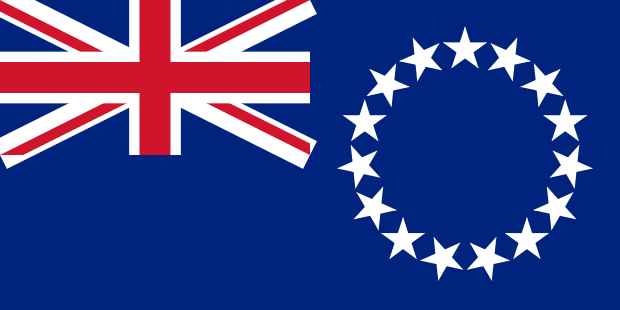
Flag is available in resolutions
| Icon 88x44 |  |
| Icon 32x16 |  |
Cook Islands
The Cook Islands: A Pacific Paradise of Culture, History, and Natural Splendor
Nestled in the vast expanse of the South Pacific Ocean, the Cook Islands are a mesmerizing archipelago that embodies the quintessential image of a tropical paradise. This self-governing island nation, in free association with New Zealand, comprises fifteen islands scattered across an area of approximately 2.2 million square kilometers of ocean. With their pristine white-sand beaches, crystal-clear turquoise lagoons, lush volcanic peaks, and vibrant coral reefs, the Cook Islands offer an unparalleled escape from the everyday. Beyond their breathtaking natural beauty, these islands are steeped in a rich Polynesian heritage, a captivating history, and a burgeoning economy driven by tourism and agriculture. Understanding the essence of the Cook Islands requires delving into its diverse geographical features, its fascinating historical trajectory, the unique characteristics of its population, and the economic activities that sustain its way of life.
Geographically, the Cook Islands are divided into two distinct groups: the Southern Group and the Northern Group. The Southern Group, where the majority of the population resides and the most developed islands are located, consists of eight islands, including the vibrant capital island of Rarotonga and the popular tourist destination of Aitutaki. These islands are generally volcanic in origin, characterized by fertile soil, mountainous interiors, and fringing coral reefs that create stunning lagoons. Rarotonga, the largest and most populous island, is a dramatic volcanic cone rising steeply from the ocean, with its interior covered in dense rainforest and its coastline encircled by a coral reef. Aitutaki, often lauded as one of the most beautiful islands in the world, boasts an iconic lagoon, a breathtaking horseshoe-shaped atoll, dotted with uninhabited motus (small islets) that are perfect for snorkeling, kayaking, and simply soaking in the idyllic scenery. The Northern Group, on the other hand, comprises seven atolls, which are low-lying coral islands formed on submerged volcanic foundations. These islands are much drier, more remote, and less populated, their existence dictated by the rhythm of the ocean and the bounty of the sea. Their isolation has preserved a more traditional way of life, offering a glimpse into a more untouched Polynesian existence. The geographical diversity between the two groups contributes significantly to the unique character and appeal of the entire archipelago, offering a spectrum of experiences for visitors and residents alike.
The history of the Cook Islands is a tapestry woven with threads of Polynesian exploration, European contact, and colonial influence. The islands were first settled by Polynesians who navigated across the vast Pacific Ocean in impressive double-hulled canoes, likely arriving between 800 and 1200 AD. These early settlers brought with them their culture, traditions, and agricultural practices, establishing a complex societal structure. The first European contact occurred in 1774 when Captain James Cook sighted the islands, naming some of them after himself. However, sustained European interaction and influence didnt begin until the early 19th century with the arrival of missionaries and traders. In 1888, the islands became a British Protectorate at the request of the island chiefs, who sought protection from foreign annexation. This led to the formation of the Cook Islands Federation. In 1901, the Cook Islands were annexed by New Zealand, becoming a part of its territory. For decades, they were administered by New Zealand, with a gradual move towards self-governance. In 1965, the Cook Islands achieved internal self-government, and in 1973, they entered into a relationship of free association with New Zealand. This arrangement grants the Cook Islands full legislative and executive autonomy, while New Zealand retains responsibility for their defense and external affairs, and its citizens hold New Zealand citizenship. This historical journey has shaped the modern identity of the Cook Islands, blending ancient Polynesian customs with contemporary global influences.
The population of the Cook Islands is predominantly of Polynesian descent, with strong ties to their ancestral heritage. The total population is relatively small, numbering around 17,000 people, with the majority residing on Rarotonga. The people of the Cook Islands, known as Cook Islanders or Mori of the Cook Islands, are renowned for their warmth, hospitality, and deep sense of community. Their culture is vibrant and deeply rooted in traditional practices, including intricate weaving, carving, traditional dance and music, and storytelling. The concept of ‘mana’ – a spiritual power or prestige – is central to their worldview and influences social interactions and respect. While English and Cook Islands Mori are the official languages, the latter is spoken by a significant portion of the population, particularly outside of the main tourist hubs. The close relationship with New Zealand has also led to a significant diaspora, with many Cook Islanders living and working in New Zealand, sending remittances back home and maintaining strong cultural connections. This outward migration, while impacting the resident population, also serves as a vital economic link and a conduit for cultural exchange. The islanders take immense pride in their heritage, actively working to preserve and promote their traditions through cultural festivals, educational programs, and the ongoing practice of their ancestral arts.
The economy of the Cook Islands is heavily reliant on tourism, which forms the backbone of its prosperity. The islands stunning natural beauty, pristine beaches, and vibrant marine life attract visitors from around the globe, eager to experience the tranquility and adventure of this Pacific paradise. The tourism sector generates significant foreign exchange earnings and provides employment for a substantial portion of the population, particularly in hospitality, transportation, and retail. Beyond tourism, agriculture plays a crucial role, with exports of copra (dried coconut meat), pearls, and fresh produce contributing to the economy. The unique black pearls from the Cook Islands are highly prized internationally for their iridescent luster and are a significant export commodity. Fisheries also provide a source of income and sustenance, with local communities relying on the abundant marine resources. Remittances from Cook Islanders living abroad, particularly in New Zealand and Australia, are another vital component of the economy, helping to support families and stimulate local spending. The government is actively working to diversify the economy and explore opportunities in areas such as renewable energy and sustainable fisheries, aiming to build a more resilient and self-sufficient economic future.
The tourist attractions of the Cook Islands are as diverse as they are captivating. Rarotonga, with its dramatic volcanic interior, offers a wealth of opportunities for exploration. The Cross-Island Track, a challenging hike through the lush rainforest, rewards trekkers with breathtaking panoramic views. The island’s coastline is dotted with beautiful beaches, perfect for swimming, sunbathing, and water sports. The vibrant capital, Avarua, offers a glimpse into local life with its bustling markets, charming shops, and historical sites. Aitutaki, however, is often considered the crown jewel for many visitors. Its legendary lagoon is a snorkeler’s and diver’s dream, teeming with colorful coral and diverse marine life. Boat tours to the uninhabited motus, such as One Foot Island, are a must-do, offering pristine beaches and the chance to enjoy a traditional island barbecue. Beyond these popular destinations, the outer islands offer a more secluded and authentic experience. Atiu, known for its ancient limestone caves and unique birdlife, provides a glimpse into a more rugged and untouched landscape. Mauke, the “Garden Island,” is famous for its vibrant flora and tranquil atmosphere. The Cook Islands offer a truly immersive experience, allowing visitors to connect with nature, immerse themselves in a rich culture, and create memories that will last a lifetime. The islands represent not just a destination, but a feeling – a sense of peace, wonder, and profound connection to the natural world and its enduring human spirit.
Information about Cook Islands
The information comes from the publication CIA The World Factbook.
Automated text translation, excuse errors, please!
Country Cook Islands is situated in a location / continent Oceania. Cook Islands has an area of 236 km2 and 10 777 residents. The highest point has a height 652 above sea level. and it is called Te Manga. The lowest point is located at the level of 0 above sea level and it is named Pacific Ocean. The capital city is Avarua. Cook Islands has the international abbreviation CW.
Cook Islands - economy
Total gross domestic product (GDP) is 183 200 000 $. Total gross domestic product per capita in purchasing power parity is 9 100 $. GDP grows by 0.10 % a year. Inflation (consumer price index) is equal to 2.10 % a year. Cook Islands have 6 820 working-age population (from a total population 10 777 people). Unemployment is at 13.10 %. Cook Islands issued 4.40 % GDP to healt care .The total amount of foreign debt is 141 000 000 USD.
Cook Islands - demography
As suggested above, Cook Islands has 10 777 people. Population growth is in the amount -3.14 % per year. Number of children born per 1000 population per year is 15.22.Every mother has average 2.35 children. The infant mortality rate is 15.30 .Average estimated life expectancy makes 74.92 years. Mortality is 7.61 people per 1000 population per year.
Cook Islands - transport and telecommunications
Cook Islands has 320 km of roads and 11 airports. There is registered 35 ships.
Number of active mobile phones (sim card) in the country Cook Islands is 7 800. Number of active fixed telephone lines is 7 200. Cook Islands has 6 000 internet users, who have the available 3 565 Internet connections. Cook Islands has been assigned a domain first Choose range .ck.
Cook Islands - energetics
Cook Islands consumes a year 28 950 000 kWh of electricity. Annual electricity production is 31 130 000 kWh in power plants with a total installed electrical capacity 8 090 kW. Cook Islands exports 0 kWh and imports 0 kWh of electricity per year Energy mix of power generation is as follows: fossil fuels: 98.9 %, nuclear energy: 0 %, renewable: 1.1 %, hydropower: 0.0 %.
Keywords: flag states, Flags of countries, all flags, list of countries, demography, flag, information, economy, transport, flags of countries in the world, list of flags, Flag of Cook Islands, world countries, Cook Islands, national flags, telecommunications, energetics, politic.