New Zealand
Flag of New Zealand
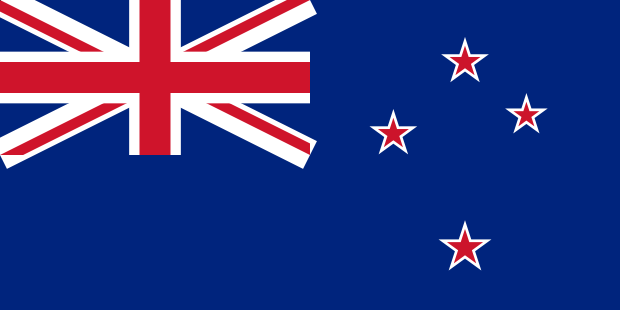
Flag is available in resolutions
| Icon 88x44 |  |
| Icon 32x16 |  |
New Zealand
New Zealand: A Land of Dramatic Landscapes and Rich Heritage
New Zealand, a sovereign island country in the southwestern Pacific Ocean, is a land of breathtaking natural beauty and a unique cultural tapestry. Comprising two major landmasses, the North Island and the South Island, along with numerous smaller islands, it is a nation that captivates the imagination with its diverse geography, from volcanic mountains and geothermal wonders to pristine beaches and ancient forests. The country’s remoteness has fostered a distinct identity, shaped by both its indigenous Mori heritage and the influences of European settlement. With a population that is as diverse as its landscapes, New Zealand offers a compelling blend of tradition and modernity, a place where adventure and tranquility coexist harmoniously.
The geographical configuration of New Zealand is truly remarkable. The North Island, shaped somewhat like a tadpole, is characterized by its volcanic activity. It is home to the Taupo Volcanic Zone, a region dotted with active volcanoes, geysers, hot springs, and mud pools, most notably in Rotorua, a city renowned for its geothermal attractions and as a centre of Mori culture. The island also boasts rolling hills, fertile farmlands, and a long, indented coastline featuring beautiful beaches and picturesque bays. The South Island, larger and more mountainous, is dominated by the Southern Alps, a majestic mountain range that stretches along its western side. These dramatic peaks, including Aoraki/Mount Cook, the countrys highest point, are often snow-capped and provide a stunning backdrop for a multitude of outdoor pursuits. Fjords, such as Milford Sound and Doubtful Sound, carved by ancient glaciers, are iconic features of the southwestern coast, offering awe-inspiring vistas of sheer cliffs and cascading waterfalls. The countrys climate varies from subtropical in the north to temperate in the south, with a generally mild, sunny, and breezy weather pattern, though it can experience significant rainfall, especially on the west coast of the South Island.
The human history of New Zealand is a fascinating narrative of exploration, settlement, and cultural evolution. The first inhabitants were the Mori, Polynesian navigators who arrived in canoes between 1300 and 1350 AD. They developed a rich and complex society with distinct tribal structures, intricate art forms, and a deep spiritual connection to the land, which they called Aotearoa, meaning “Land of the Long White Cloud.” European contact began with the Dutch explorer Abel Tasman in 1642, but it was the British explorer James Cook who charted the islands in 1769-1770. Significant European settlement began in the early 19th century, leading to the signing of the Treaty of Waitangi in 1840 between Mori chiefs and the British Crown. This treaty, intended to establish British sovereignty while protecting Mori rights, has been a cornerstone of New Zealands history and remains a subject of ongoing discussion and interpretation. The colonial era saw the development of agriculture, infrastructure, and the establishment of a parliamentary democracy. New Zealand gained dominion status within the British Empire in 1907 and full legislative independence in 1947. The latter half of the 20th century witnessed a growing assertion of Mori rights and cultural revitalization, alongside significant economic and social changes. Today, New Zealand is a multicultural society, with a strong sense of national identity that embraces both its indigenous roots and its more recent immigrant heritage.
The population of New Zealand is approximately 5.2 million people, with the majority residing on the North Island, particularly in the Auckland metropolitan area, the country’s largest city. The population is predominantly of European descent, known as Pkeh, with a significant and growing Mori population. Other ethnic groups, including those of Asian and Pacific Islander descent, also contribute to the nations multicultural character. The official languages are English and Mori, with English being the most widely spoken. New Zealanders, often referred to as Kiwis, are generally known for their friendly, laid-back, and egalitarian nature. The country’s relatively small population density contributes to its reputation for open spaces and a connection to the natural environment.
New Zealands economy is diverse and robust, heavily reliant on international trade. Historically, agriculture has been a cornerstone, with dairy farming, sheep and beef farming, and horticulture being major export earners. The country is a leading global exporter of dairy products, wool, and lamb. In recent decades, other sectors have gained prominence. Tourism is a significant industry, drawing millions of visitors annually to its stunning landscapes and adventure activities. The film industry has also flourished, with New Zealand serving as a popular filming location for major international productions, most notably Peter Jacksons The Lord of the Rings and The Hobbit trilogies, which showcased the country’s dramatic scenery to a global audience. Technology and innovation are also growing areas, with a focus on areas such as software development, biotechnology, and renewable energy. The country’s commitment to sustainability is evident in its high proportion of renewable energy sources, primarily hydroelectric and geothermal power.
New Zealand offers an unparalleled array of tourist attractions, catering to a wide range of interests. For nature enthusiasts and adventurers, the South Island is a paradise. Queenstown, known as the Adventure Capital of the World, offers bungee jumping, skydiving, white-water rafting, and skiing. Fiordland National Park, a UNESCO World Heritage site, is a must-visit for its dramatic fjords, hiking trails, and boat cruises. The glaciers of Franz Josef and Fox Glacier provide opportunities for heli-hiking and ice climbing. The West Coast’s rugged coastline, Punakaiki Pancake Rocks, and the ancient temperate rainforests are also major draws. The North Island presents its own unique charms. Rotorua is a hub for Mori culture, with opportunities to witness traditional performances, visit marae (meeting grounds), and experience a hangi (traditional feast cooked in an earth oven). The geothermal parks, like Te Puia and Wai-O-Tapu, with their bubbling mud pools and vibrant silica terraces, are spectacular. Auckland, the largest city, offers a vibrant urban experience with its harbour, museums, and diverse culinary scene. The Coromandel Peninsula, with its stunning beaches like Cathedral Cove, and the volcanic landscapes of Tongariro National Park, home to the Tongariro Alpine Crossing, one of the worlds best day hikes, are also popular destinations. Wellington, the capital city, is a cultural and political centre, boasting excellent museums, art galleries, and a thriving café culture.
Beyond the well-trodden paths, New Zealand offers numerous other points of interest. The Bay of Islands in the north is renowned for its beautiful beaches, marine life, and historical significance as the site of the first European settlement. The Abel Tasman National Park, on the northern tip of the South Island, is famous for its golden beaches, clear turquoise waters, and coastal walking tracks. For those interested in geology and unique landscapes, the Catlins region in the southeast of the South Island offers rugged coastlines, waterfalls, and opportunities to spot wildlife like seals and penguins. Further afield, Stewart Island, New Zealands third-largest island, offers a more remote and wild experience, with abundant birdlife and opportunities for hiking and stargazing. The country’s commitment to conservation is evident in its numerous national parks and protected areas, ensuring that its natural heritage is preserved for future generations.
In conclusion, New Zealand is a country that truly offers something for everyone. Its dramatic and diverse geography provides a stunning backdrop for adventure and exploration, while its rich history and vibrant culture, deeply rooted in Mori traditions and shaped by European settlement, offer a unique and compelling experience. From the geothermal wonders of the North Island to the majestic peaks of the South Island, and from the bustling cities to the remote wilderness, New Zealand is a land of enchantment, a place where the spirit of adventure meets the tranquility of nature. Its friendly people, strong economy, and commitment to preserving its natural beauty make it a truly special destination on the world stage.
Information about New Zealand
The information comes from the publication CIA The World Factbook.
Automated text translation, excuse errors, please!
Country New Zealand is situated in a location / continent Oceania. New Zealand has an area of 267 710 km2 and 4 327 944 residents. The highest point has a height 3 754 above sea level. and it is called Aoraki-Mount Cook. The lowest point is located at the level of 0 above sea level and it is named Pacific Ocean. System of government is Republic, Commonwealth member country and the date of independence 26th September 1907. The capital city is Wellington. New Zealand has the international abbreviation NZ.
New Zealand - economy
Total gross domestic product (GDP) is 123 800 000 000 $. Total gross domestic product per capita in purchasing power parity is 28 000 $. GDP grows by 1.40 % a year. Inflation (consumer price index) is equal to 4.00 % a year. New Zealand have 2 364 000 working-age population (from a total population 4 327 944 people). Unemployment is at 6.50 %. New Zealand issued 9.70 % GDP to healt care .The public debt of the country is 35.70 % GDP. The total amount of foreign debt is 85 650 000 000 USD.
New Zealand - demography
As suggested above, New Zealand has 4 327 944 people. Population growth is in the amount 0.86 % per year. Number of children born per 1000 population per year is 13.57.Every mother has average 2.07 children. The infant mortality rate is 4.72 and maternal mortality 15.00 deaths per 100,000 births. Average estimated life expectancy makes 80.71 years. Mortality is 7.20 people per 1000 population per year.
New Zealand - transport and telecommunications
New Zealand has 93 911 km of roads, 4 128 km of railway lines and 122 airports. There is registered 15 ships.
Number of active mobile phones (sim card) in the country New Zealand is 4 820 000. Number of active fixed telephone lines is 1 880 000. New Zealand has 3 400 000 internet users, who have the available 3 028 000 Internet connections. New Zealand has been assigned a domain first Choose range .nz.
New Zealand - energetics
New Zealand consumes a year 38 960 000 000 kWh of electricity. Annual electricity production is 43 400 000 000 kWh in power plants with a total installed electrical capacity 9 482 000 kW. New Zealand exports 0 kWh and imports 0 kWh of electricity per year Energy mix of power generation is as follows: fossil fuels: 30 %, nuclear energy: 0 %, renewable: 13.3 %, hydropower: 56.7 %. The country New Zealand is harvested annually 49 730 barrels of oil.
Keywords: national flags, New Zealand, demography, flag, information, Flags of countries, flags of countries in the world, economy, list of flags, world countries, transport, all flags, telecommunications, energetics, list of countries, flag states, Flag of New Zealand, politic.