Samoa
Flag of Samoa
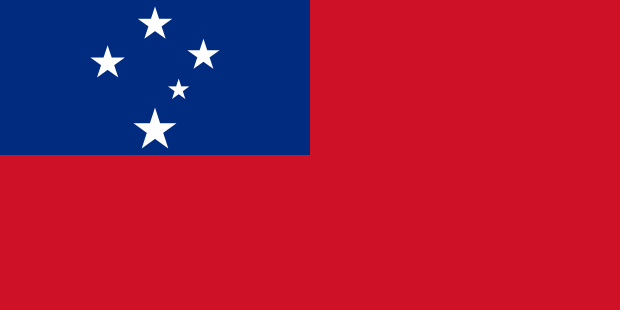
Flag is available in resolutions
| Icon 88x44 |  |
| Icon 32x16 |  |
Samoa
Here is a 5000-character article about Samoa, written in English, with the requested formatting:
Samoa: The Heart of Polynesia
Samoa, officially the Independent State of Samoa, is a sovereign state comprising an archipelago of two main islands, Savai’i and Upolu, and several smaller uninhabited islets. Nestled in the heart of Polynesia, this island nation embodies the spirit of Pacific paradise with its lush rainforests, pristine beaches, and vibrant cultural heritage. For centuries, Samoa has been a cradle of Polynesian civilization, a place where ancient traditions seamlessly blend with the rhythms of modern life. The islands’ dramatic volcanic landscapes, sculpted by millennia of geological activity, offer a breathtaking backdrop to the warm hospitality of its people, known as Samoans. The archipelago lies in the South Pacific Ocean, roughly halfway between Hawaii and New Zealand, positioning it as a vital hub in the region. Its strategic location has influenced its history, drawing the attention of various colonial powers before it finally achieved independence in 1962, becoming the first Polynesian nation to do so. The Samoan way of life, deeply rooted in community and respect for elders, is a defining characteristic that permeates every aspect of society, from family structures to governance. The islands are a testament to the enduring strength of Polynesian culture, a living museum of traditions passed down through generations.
The population of Samoa is predominantly of Polynesian descent, with Samoans constituting over 90% of the inhabitants. The remaining population includes a small number of people of mixed European and Asian heritage. Samoan society is structured around the traditional village system, known as a ‘aiga’, which is a large extended family that functions as the basic social and economic unit. The matai system, a unique form of chieftainship, plays a crucial role in Samoan life. Each ‘aiga’ is headed by a matai, a chief who holds significant authority and responsibility for the welfare of the family and the village. Matai are elected by the family members and their leadership is based on consensus and respect. This system ensures social cohesion and provides a framework for decision-making and resource management. The Samoan language, Gagana Samoa, is widely spoken alongside English, which serves as the official language for government and business. The cultural richness of Samoa is further expressed through its traditional arts, including intricate wood carving, tapa cloth making, and the captivating Samoan dance, ‘fa’ataupati’ or the slap dance, which tells stories through rhythmic movements and chants. The strong sense of community and shared identity is a cornerstone of Samoan culture, fostering a spirit of solidarity and mutual support.
Samoa’s history is as rich and layered as its volcanic soil. The islands were first settled by Melanesian peoples over 3,000 years ago, and since then, have been a significant center for Polynesian expansion and cultural development. Archaeological evidence suggests extensive maritime exploration and trade networks connecting Samoa to other Pacific islands. For centuries, Samoa remained relatively isolated from the outside world, allowing its unique culture and social structures to flourish. The arrival of European explorers in the 18th century marked the beginning of a new era. Dutch explorer Jacob Roggeveen was the first European to sight the islands in 1722. Later, French explorer Louis-Antoine de Bougainville visited in 1768 and named them the Navigator Islands, due to the Samoans’ skilled seamanship. The 19th century saw increasing European influence, with missionaries arriving to spread Christianity, which has since become the dominant religion. Germany, Great Britain, and the United States vied for control of the islands, leading to a period of political instability and division. In 1900, Germany annexed Western Samoa, while the United States took control of American Samoa. Following World War I, Western Samoa was administered by New Zealand under a League of Nations mandate. The Samoan people actively campaigned for self-governance, culminating in the Mau movement, a non-violent protest that played a pivotal role in the push for independence. Finally, on January 1, 1962, Western Samoa gained its independence, becoming the first Polynesian nation to do so. It later changed its name to Samoa in 1997. The historical narrative of Samoa is one of resilience, cultural preservation, and a determined pursuit of self-determination.
Geographically, Samoa is characterized by its dramatic volcanic origins. The islands are mountainous, with the highest peak being Mount Silisili on Savai’i, reaching an elevation of 1,858 meters. Upolu, the more populated island, is home to the capital city, Apia, and features a rugged coastline with numerous bays and inlets. The interior of both islands is covered in dense tropical rainforest, teeming with diverse flora and fauna. Volcanic activity has shaped the landscape, creating fertile soils that support a rich agricultural sector. The coastline is fringed with coral reefs, providing vibrant marine ecosystems and stunning snorkeling and diving opportunities. Samoa lies within the tropics, enjoying a warm and humid climate year-round. The islands experience two main seasons: a wet season from November to April, characterized by heavy rainfall and tropical storms, and a dry season from May to October, with less humidity and more sunshine. The geological formations, including lava fields and ancient craters, offer a glimpse into the islands’ fiery past. The natural beauty of Samoa is a significant draw, with its cascading waterfalls, verdant valleys, and crystal-clear lagoons.
The economy of Samoa is primarily driven by agriculture, tourism, and remittances from Samoans working abroad. Agriculture remains the backbone of the economy, with key crops including taro, coconut, breadfruit, and bananas. These are cultivated for both subsistence and export. Coconut products, such as desiccated coconut and coconut oil, are important export commodities. The tourism sector has grown significantly in recent years, attracting visitors with its natural beauty, cultural experiences, and tranquil atmosphere. The government actively promotes eco-tourism and cultural tourism, aiming to preserve the environment and the unique Samoan way of life. Remittances from overseas Samoans, particularly those in New Zealand and Australia, play a crucial role in the national economy, providing a significant source of foreign exchange and supporting families. Small-scale manufacturing, including the production of handicrafts and processed food, also contributes to the economy. The government is committed to sustainable development, seeking to balance economic growth with environmental protection and the preservation of cultural heritage. Efforts are underway to diversify the economy and attract foreign investment, with a focus on renewable energy and niche agricultural products.
Samoa offers a wealth of tourist attractions, catering to a variety of interests. The To Sua Ocean Trench on Upolu is arguably Samoa’s most iconic natural wonder. This stunning swimming hole, formed from a collapsed lava tube, features turquoise waters surrounded by lush vegetation and dramatic cliffs. Visitors can descend a ladder to swim in the refreshing pool, a truly unforgettable experience. The Papapapaitai Falls, also on Upolu, are a series of majestic waterfalls cascading into a picturesque pool, offering a perfect spot for a refreshing dip amidst nature. For those seeking pristine beaches, Lalomanu Beach on Upolu is renowned for its soft white sand and crystal-clear waters, ideal for swimming and relaxation. Savai’i, the larger and less developed island, offers a more rugged and authentic experience. Visitors can explore the Afu Aau Waterfalls, a series of beautiful cascades hidden within the rainforest, and witness the impressive Paia Sa’u Lava Fields, remnants of ancient volcanic eruptions. The Falealupo Rainforest Canopy Walkway provides a unique perspective on the island’s lush ecosystem, allowing visitors to walk amongst the treetops. For a glimpse into Samoan history and culture, a visit to the Robert Louis Stevenson Museum in Apia, the former home of the renowned author, is a must. The Palolo Deep Marine Reserve offers exceptional snorkeling and diving opportunities, showcasing the vibrant coral reefs and diverse marine life of Samoa’s waters. The capital city, Apia, with its bustling markets, colonial architecture, and friendly atmosphere, provides a glimpse into modern Samoan life. The overall appeal of Samoa lies in its untouched natural beauty, its rich cultural tapestry, and the genuine warmth of its people, offering a truly immersive and authentic Pacific island experience.
Information about Samoa
The information comes from the publication CIA The World Factbook.
Automated text translation, excuse errors, please!
Country Samoa is situated in a location / continent Oceania. Samoa has an area of 2 831 km2 and 194 320 residents. The highest point has a height 1 857 above sea level. and it is called Mauga Silisili (Savaii). The lowest point is located at the level of 0 above sea level and it is named Pacific Ocean. System of government is republic and the date of independence First January 1962. The capital city is Apia. Samoa has the international abbreviation WS.
Samoa - economy
Total gross domestic product (GDP) is 1 104 000 000 $. Total gross domestic product per capita in purchasing power parity is 6 000 $. GDP grows by 2.10 % a year. Inflation (consumer price index) is equal to 5.20 % a year. Samoa have 66 270 working-age population (from a total population 194 320 people). Samoa issued 7.00 % GDP to healt care .The total amount of foreign debt is 235 500 000 USD.
Samoa - demography
As suggested above, Samoa has 194 320 people. Population growth is in the amount 0.60 % per year. Number of children born per 1000 population per year is 22.10.Every mother has average 3.13 children. The infant mortality rate is 21.85 and maternal mortality 100.00 deaths per 100,000 births. Average estimated life expectancy makes 72.66 years. Mortality is 5.34 people per 1000 population per year.
Samoa - transport and telecommunications
Samoa has 2 337 km of roads and 4 airports. There is registered 2 ships.
Number of active mobile phones (sim card) in the country Samoa is 167 400. Number of active fixed telephone lines is 35 300. Samoa has 9 000 internet users, who have the available 18 074 Internet connections. Samoa has been assigned a domain first Choose range .ws.
Samoa - energetics
Samoa consumes a year 96 910 000 kWh of electricity. Annual electricity production is 104 200 000 kWh in power plants with a total installed electrical capacity 41 100 kW. Samoa exports 0 kWh and imports 0 kWh of electricity per year Energy mix of power generation is as follows: fossil fuels: 70.6 %, nuclear energy: 0 %, renewable: 0.2 %, hydropower: 29.2 %.
Keywords: flags of countries in the world, demography, flag, information, list of countries, Flags of countries, economy, Flag of Samoa, world countries, flag states, energetics, Samoa, transport, telecommunications, national flags, list of flags, all flags, politic.