Kiribati
Flag of Kiribati
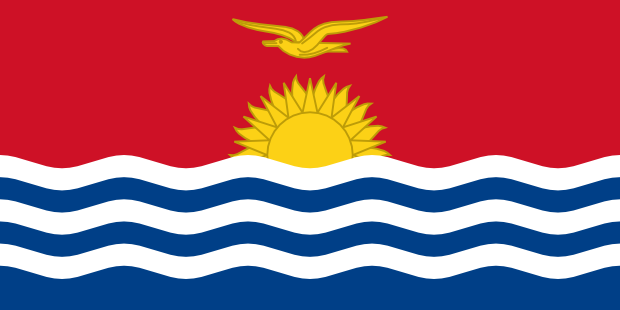
Flag is available in resolutions
| Icon 88x44 |  |
| Icon 32x16 |  |
Kiribati
Kiribati: A Nation Adrift in the Pacific
Kiribati, a nation composed of thirty-three coral atolls and one raised coral island, stands as a testament to the resilience and unique challenges faced by low-lying island states in the vast expanse of the Pacific Ocean. Scattered across an immense area of over three million square kilometers, this archipelago nation straddles the equator and the International Date Line, a geographical quirk that places it as the first country in the world to welcome each new day. This unique positioning, while holding a certain novelty, also underscores the profound vulnerability of Kiribati to the escalating impacts of climate change. The very existence of this nation, with its rich cultural heritage and enduring spirit, is increasingly threatened by rising sea levels, coastal erosion, and more frequent extreme weather events. Understanding Kiribati requires delving into its fascinating geography, its layered history, the livelihoods of its people, and the burgeoning, albeit fragile, tourism industry that offers a glimpse into its captivating world.
The geography of Kiribati is its defining characteristic and, paradoxically, its greatest threat. The nation is divided into three main island groups: the Gilbert Islands, the Phoenix Islands, and the Line Islands. Each atoll is a low-lying ring of coral surrounding a central lagoon, with the highest points rarely exceeding a few meters above sea level. This topography makes the islands incredibly susceptible to the ingress of saltwater during high tides and storm surges, a phenomenon that is becoming more pronounced with global warming. The limited land area means that freshwater resources are scarce and easily contaminated by saltwater. The soil, derived from coral, is generally infertile, posing significant challenges for agriculture. Despite these limitations, the Kiribati people have, for centuries, developed ingenious methods of subsistence farming, relying on crops like taro, breadfruit, and pandanus, adapted to the saline environment. The surrounding ocean, however, is the true lifeblood of Kiribati, providing abundant seafood that forms the cornerstone of the national diet and economy. The vast distances between the islands, coupled with the scattered nature of its territory, also present significant logistical and administrative hurdles for the government.
The history of Kiribati is a tapestry woven from ancient Polynesian migrations, colonial encounters, and the pursuit of independence. The islands were first settled by Micronesians over 3,000 years ago, who navigated the vast Pacific in sophisticated outrigger canoes. They developed a complex social structure, rich oral traditions, and a deep understanding of their marine environment. European contact began in the 17th century, with explorers like Ferdinand Magellan passing through the region. Over time, the islands became increasingly embroiled in the colonial ambitions of European powers, particularly Britain. In the late 19th century, the Gilbert Islands and the Ellice Islands (now Tuvalu) were declared a British protectorate, later becoming the Gilbert and Ellice Islands Colony. Phosphate mining, particularly on Banaba, brought significant economic activity but also environmental degradation and social disruption. During World War II, Kiribati, then known as the Gilbert Islands, became a crucial battleground, most notably with the Battle of Tarawa, a brutal confrontation that left a lasting scar on the islands and their people. Following the war, a movement for self-determination gained momentum. In 1979, the Gilbert Islands achieved independence as the Republic of Kiribati, comprising the Gilbert Islands, the Phoenix Islands, and the Line Islands. This independence marked a significant milestone, but it also ushered in new challenges as the young nation grappled with its economic viability and the looming specter of climate change.
The population of Kiribati, numbering around 120,000 people, is predominantly of Micronesian descent, with a strong sense of community and shared cultural identity. The majority of the population resides on the most populous island, Tarawa, which also serves as the nations capital. Life in Kiribati is deeply intertwined with traditional customs and social structures. Family ties are strong, and the concept of ‘kaainanga’ – extended family and community – plays a vital role in daily life. The Kiribati language, a form of Gilbertese, is spoken by most of the population, though English is also an official language and is used in government and education. The people are known for their warmth, hospitality, and their enduring connection to the ocean. However, the nation faces significant demographic challenges, including a high birth rate and limited economic opportunities, which contribute to a substantial proportion of the population living in poverty. The increasing impacts of climate change are also beginning to force difficult decisions about migration and the future of their homeland.
The economy of Kiribati is heavily reliant on a few key sectors, with fishing and remittances from overseas workers being the most significant contributors. The nation holds exclusive economic rights over a vast swathe of the Pacific, and the sale of fishing licenses to foreign fleets generates substantial revenue. However, this reliance on external sources makes the economy vulnerable to global market fluctuations and the sustainability of fish stocks. Copra, the dried kernel of the coconut, is another traditional export, though its economic importance has diminished over time. The government is actively seeking to diversify the economy, with tourism emerging as a sector with considerable potential. However, the remoteness of the islands, limited infrastructure, and the ongoing threat of climate change present significant challenges to the development of a robust tourism industry. Microfinance initiatives and small-scale entrepreneurship are also being encouraged to foster local economic growth. The government also depends heavily on international aid to fund development projects and address the impacts of climate change.
Despite the challenges, Kiribati offers a unique and compelling tourist experience for those seeking an authentic escape from the ordinary. The allure lies in its pristine, untouched natural beauty, its vibrant marine life, and its rich cultural heritage. The islands provide exceptional opportunities for diving and snorkeling, with vibrant coral reefs teeming with diverse marine species. The crystal-clear waters of the lagoons offer a serene environment for swimming and kayaking. For those interested in history, Tarawa, particularly South Tarawa, bears the remnants of World War II, offering a poignant glimpse into the past. The Japanese Peace Memorial and the remnants of defensive fortifications serve as stark reminders of the islands wartime significance. Beyond the historical sites, the true magic of Kiribati lies in experiencing the daily life of its people. Visitors can immerse themselves in the local culture by attending traditional dances, learning about traditional crafts, and interacting with the welcoming communities. The slower pace of life, the stunning sunsets, and the vast, unpolluted night skies offer a profound sense of tranquility. However, responsible tourism is paramount. Visitors are encouraged to respect local customs, minimize their environmental footprint, and support local businesses. The nation’s vulnerability to climate change also means that understanding and appreciating the delicate balance of this island paradise is an integral part of the visitor experience.
The future of Kiribati is inextricably linked to the global response to climate change. The nation is on the front lines of this existential threat, with rising sea levels already inundating coastal areas, contaminating freshwater sources, and eroding valuable land. The Kiribati government has been a vocal advocate on the international stage, pleading for urgent action to reduce greenhouse gas emissions and provide support for adaptation and mitigation efforts. Discussions about potential relocation of populations and the future of their sovereignty are ongoing and deeply concerning. Yet, despite these profound challenges, the spirit of the Kiribati people remains indomitable. They continue to find innovative ways to adapt to their changing environment, drawing strength from their culture, their community, and their deep connection to their ancestral lands. Kiribati stands as a powerful symbol of the interconnectedness of our planet and the urgent need for global cooperation to address the shared challenges of our time. Its story is a stark reminder that the fate of this remote island nation is, in many ways, a microcosm of the broader challenges facing humanity in the 21st century.
Information about Kiribati
The information comes from the publication CIA The World Factbook.
Automated text translation, excuse errors, please!
Country Kiribati is situated in a location / continent Oceania. Kiribati has an area of 811 km2 and 101 998 residents. The highest point has a height 81 above sea level. and it is called bezejmenné místo on Banaba. The lowest point is located at the level of 0 above sea level and it is named Pacific Ocean. System of government is republic and the date of independence July 12, 1979. The capital city is Tarawa. Kiribati has the international abbreviation KR.
Kiribati - economy
Total gross domestic product (GDP) is 606 700 000 $. Total gross domestic product per capita in purchasing power parity is 5 800 $. GDP grows by 1.80 % a year. Inflation (consumer price index) is equal to 0.20 % a year. Kiribati have 7 870 working-age population (from a total population 101 998 people). Unemployment is at 2.00 %. Kiribati issued 3.30 % GDP to healt care .The total amount of foreign debt is 10 000 000 USD.
Kiribati - demography
As suggested above, Kiribati has 101 998 people. Population growth is in the amount 1.23 % per year. Number of children born per 1000 population per year is 22.45.Every mother has average 2.71 children. The infant mortality rate is 37.68 and maternal mortality 9.00 deaths per 100,000 births. Average estimated life expectancy makes 64.76 years. Mortality is 7.31 people per 1000 population per year.
Kiribati - transport and telecommunications
Kiribati has 670 km of roads and 19 airports. The total length of waterways (navigable rivers, canals, etc.) is 5 km. There is registered 77 ships.
Number of active mobile phones (sim card) in the country Kiribati is 13 800. Number of active fixed telephone lines is 8 500. Kiribati has 7 800 internet users, who have the available 328 Internet connections. Kiribati has been assigned a domain first Choose range .ki.
Kiribati - energetics
Kiribati consumes a year 19 530 000 kWh of electricity. Annual electricity production is 21 000 000 kWh in power plants with a total installed electrical capacity 6 000 kW. Kiribati exports 0 kWh and imports 0 kWh of electricity per year Energy mix of power generation is as follows: fossil fuels: 100 %, nuclear energy: 0 %, renewable: 0.0 %, hydropower: 0.0 %.
Keywords: list of countries, telecommunications, Kiribati, national flags, Flag of Kiribati, information, flag, all flags, demography, economy, Flags of countries, flags of countries in the world, energetics, transport, flag states, world countries, list of flags, politic.