French Polynesia
Flag of French Polynesia
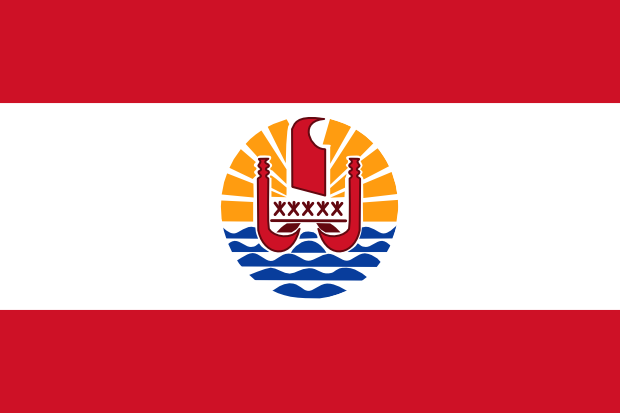
Flag is available in resolutions
| Icon 88x59 |  |
| Icon 32x21 |  |
French Polynesia
French Polynesia: A Symphony of Islands in the South Pacific
French Polynesia, a vast overseas collectivity of France nestled in the heart of the South Pacific Ocean, is a breathtaking archipelago that evokes images of idyllic paradise. Composed of 118 islands and atolls spread across an immense oceanic expanse, it is a land of dramatic volcanic peaks, vibrant coral reefs, and turquoise lagoons that shimmer under the equatorial sun. This exotic destination, renowned for its unparalleled natural beauty and rich cultural heritage, beckons travelers with promises of adventure, relaxation, and an immersion into a unique island way of life. The sheer scale of French Polynesia is staggering, with its islands scattered over an area larger than Europe, yet its landmass is comparatively small, emphasizing the dominance of the ocean in its geography and identity.
The population of French Polynesia, numbering just over 280,000 people, is a vibrant tapestry woven from Polynesian, European, and Asian influences. The indigenous Polynesian people, primarily of Tahitian descent, form the majority, their ancestral connection to these islands deeply ingrained in their culture and traditions. French citizens also constitute a significant part of the population, a legacy of the colonial past, and their presence has contributed to the bilingualism and biculturalism that characterize the territory. Asian communities, particularly Chinese immigrants who arrived in the late 19th and early 20th centuries, have also played a vital role in shaping the economic and social landscape, bringing with them distinct culinary traditions and entrepreneurial spirit. The population is concentrated on a few main islands, with Tahiti, the largest and most populous island, serving as the administrative and economic hub. Life in French Polynesia is often characterized by a slower pace, a deep respect for nature, and a strong sense of community. The Polynesian culture, with its emphasis on family, hospitality, and artistic expression, continues to thrive, evident in the traditional music, dance, and crafts that are integral to island life.
The history of French Polynesia is a captivating narrative of exploration, colonization, and cultural exchange. For centuries, these islands were inhabited by skilled Polynesian navigators who, guided by the stars and ocean currents, embarked on epic voyages across the vast Pacific. These early settlers developed a sophisticated understanding of their environment, establishing complex social structures and rich oral traditions. The arrival of European explorers in the 18th century marked a turning point. Captain James Cook made significant landings in the Society Islands, charting their coasts and documenting their unique flora and fauna. Missionaries soon followed, introducing Christianity and profoundly impacting the indigenous belief systems. The 19th century saw increasing European influence, culminating in the establishment of a French protectorate in 1842, which eventually led to French Polynesia becoming a French colony. The islands gained a degree of autonomy over time, and in 1957, they were granted the status of an overseas territory, and later, an overseas collectivity. The legacy of this colonial past is evident in the French language, legal system, and administrative structures that are still in place, yet the enduring spirit of Polynesian culture remains the heart and soul of the nation. The strategic importance of the islands, particularly during World War II, also played a role in their geopolitical standing.
Geographically, French Polynesia is a marvel of oceanic diversity. It is divided into five archipelagos, each with its own distinct character and geological formation. The Society Islands, the most famous and populated group, include the iconic islands of Tahiti and Bora Bora. These islands are characterized by high volcanic mountains, lush rainforests, and spectacular coral reefs that encircle serene lagoons. The Tuamotu Archipelago, a vast chain of low-lying coral atolls, offers a stark contrast, with its rings of sand and coral surrounding shallow, crystal-clear lagoons that are teeming with marine life. The Marquesas Islands, located further north, are known for their rugged, dramatic volcanic landscapes, steep cliffs, and a more remote, untamed beauty. The Gambier Islands, in the southeast, are characterized by their beautiful pearl-producing lagoons, while the Austral Islands, the southernmost group, experience a cooler climate and are home to unique flora and fauna. The vastness of the ocean between these island groups means that travel is primarily by air or sea, with inter-island flights being a common mode of transport, offering breathtaking aerial views of the scattered landmasses.
The economy of French Polynesia is heavily reliant on tourism, which is the primary driver of its prosperity. The allure of its pristine beaches, vibrant coral reefs, and luxurious resorts attracts visitors from across the globe, eager to experience its natural splendor. The tourism sector provides employment for a significant portion of the population, supporting a wide range of businesses, from hotels and restaurants to tour operators and handicraft vendors. Alongside tourism, pearl farming is another significant economic activity, particularly in the Tuamotu and Gambier archipelagos. Tahitian black pearls, renowned for their unique luster and exotic colors, are highly prized in the international market, contributing substantially to the territorys export earnings. Fishing also plays a vital role, providing both sustenance and an export commodity. Subsistence agriculture, focusing on taro, breadfruit, and coconuts, is practiced on many islands, supporting local communities. The French government also provides significant financial support, contributing to the infrastructure, education, and healthcare systems, underscoring the ongoing relationship between French Polynesia and its former colonial power.
French Polynesia boasts an array of tourist attractions that cater to every kind of traveler, from the adventurous explorer to the sun-seeking relaxation enthusiast. Bora Bora, often hailed as the “Pearl of the Pacific,” is perhaps the most iconic destination, with its legendary turquoise lagoon, overwater bungalows, and the majestic Mount Otemanu providing a dramatic backdrop. Visitors can indulge in snorkeling and diving in its vibrant coral gardens, embark on romantic sunset cruises, or simply unwind in unparalleled luxury. Tahiti, the largest island, offers a more diverse experience, from the bustling capital of Papeete with its vibrant markets and museums to the lush interior, home to dramatic waterfalls and ancient archaeological sites like the Marae Taputapuatea, a UNESCO World Heritage site that served as a significant ceremonial center for ancient Polynesian voyagers. Moorea, a short ferry ride from Tahiti, captivates with its jagged volcanic peaks, pineapple plantations, and serene bays, offering opportunities for hiking, dolphin watching, and exploring its charming villages. The Marquesas Islands provide a more rugged and authentic experience, attracting those seeking adventure and a deeper connection with Polynesian culture, with opportunities to explore ancient stone carvings, hike through dramatic landscapes, and witness traditional tattoo artistry. For those seeking tranquility and unparalleled underwater beauty, the Tuamotu atolls like Rangiroa and Fakarava offer world-class diving and snorkeling in their vast, pristine lagoons, home to an incredible diversity of marine life. The sheer variety of experiences, from the ultimate luxury of Bora Bora to the raw beauty of the Marquesas, ensures that French Polynesia holds a unique appeal for a global audience.
Information about French Polynesia
The information comes from the publication CIA The World Factbook.
Automated text translation, excuse errors, please!
Country French Polynesia is situated in a location / continent Oceania. French Polynesia has an area of 4 167 km2 and 274 512 residents. The highest point has a height 2 241 above sea level. and it is called Mont Orohena. The lowest point is located at the level of 0 above sea level and it is named Pacific Ocean. The capital city is Papeete. French Polynesia has the international abbreviation FP.
French Polynesia - economy
Total gross domestic product (GDP) is 4 718 000 000 $. Total gross domestic product per capita in purchasing power parity is 18 000 $. GDP grows by 2.70 % a year. Inflation (consumer price index) is equal to 1.10 % a year. French Polynesia have 116 000 working-age population (from a total population 274 512 people). Unemployment is at 11.70 %.
French Polynesia - demography
As suggested above, French Polynesia has 274 512 people. Population growth is in the amount 1.02 % per year. Number of children born per 1000 population per year is 15.92.Every mother has average 2.00 children. The infant mortality rate is 4.88 .Average estimated life expectancy makes 76.39 years. Mortality is 4.76 people per 1000 population per year.
French Polynesia - transport and telecommunications
French Polynesia has 2 590 km of roads and 53 airports. There is registered 12 ships.
Number of active mobile phones (sim card) in the country French Polynesia is 222 800. Number of active fixed telephone lines is 55 000. French Polynesia has 120 000 internet users, who have the available 37 360 Internet connections. French Polynesia has been assigned a domain first Choose range .pf.
French Polynesia - energetics
French Polynesia consumes a year 674 300 000 kWh of electricity. Annual electricity production is 725 000 000 kWh in power plants with a total installed electrical capacity 140 000 kW. French Polynesia exports 0 kWh and imports 0 kWh of electricity per year Energy mix of power generation is as follows: fossil fuels: 66.4 %, nuclear energy: 0 %, renewable: 0.0 %, hydropower: 33.6 %.
Keywords: flags of countries in the world, flag states, all flags, national flags, Flags of countries, Flag of French Polynesia, world countries, French Polynesia, telecommunications, flag, list of flags, energetics, transport, economy, information, list of countries, demography, politic.