Tuvalu
Flag of Tuvalu
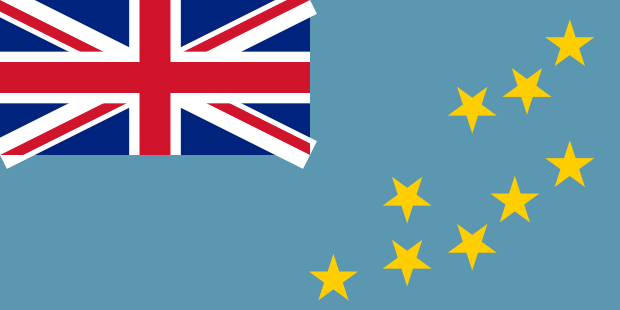
Flag is available in resolutions
| Icon 88x44 |  |
| Icon 32x16 |  |
Tuvalu
Tuvalu: A Nation Adrift in the Rising Tide
Tuvalu, a Polynesian island nation situated in the western Pacific Ocean, is a place of breathtaking natural beauty and profound vulnerability. Comprising nine coral atolls, it lies roughly halfway between Hawaii and Australia, a remote speck of land in an immense expanse of blue. Its very existence is a testament to the delicate balance of nature, and increasingly, a stark symbol of the existential threat posed by climate change. For Tuvalu, the rising sea levels are not an abstract scientific concept; they are a daily reality, a creeping inundation that threatens to erase its land and its culture from the face of the Earth. Understanding Tuvalu requires delving into its unique geography, its rich history, its resilient people, and the precarious future it faces.
The geography of Tuvalu is defined by its low-lying coral atolls. None of its islands rise more than a few meters above sea level, making them acutely susceptible to storm surges and coastal erosion. The total land area of Tuvalu is a mere 26 square kilometers, spread across an exclusive economic zone of over 750,000 square kilometers. This vast ocean territory is both a source of livelihood and a constant reminder of the surrounding immensity. The atolls themselves are characterized by narrow strips of land encircling lagoons, with sandy beaches and abundant coconut palms. The soil is generally poor, limiting agricultural potential, and the freshwater resources are scarce, relying primarily on rainwater catchment systems. The natural environment, while beautiful, is fragile, with coral reefs that are vital for the nation’s ecosystem and coastal protection facing threats from warming oceans and acidification. The isolation of Tuvalu also presents significant logistical challenges, impacting the import of goods, the export of its limited produce, and access to essential services.
The history of Tuvalu is deeply intertwined with its Polynesian heritage and its subsequent colonial past. The islands were settled by Polynesians centuries ago, who developed a unique culture and social structure based on kinship and tradition. Archaeological evidence suggests settlement dates back at least 2,000 years. For millennia, Tuvalu remained largely isolated, its people living in harmony with their environment, developing sophisticated navigation techniques and sustainable resource management practices. The first documented European contact was in 1764 by French explorer Louis Antoine de Bougainville, who named the islands the Ellice Islands after a British politician, Edward Ellice. Over time, the islands became a British Protectorate in 1892, and later a colony. During World War II, the islands played a strategic role as a staging post for Allied forces, with significant military presence, particularly on Funafuti. Following the war, a growing sense of national identity emerged, and the Ellice Islands, along with the Gilbert Islands, were administered as the Gilbert and Ellice Islands Colony. In 1976, the islands voted to separate from the Gilbert Islands, and on October 1, 1978, Tuvalu achieved full independence from the United Kingdom. The name Tuvalu itself, meaning eight together in the Tuvaluan language, refers to the traditional grouping of the eight inhabited islands. The nation’s history is one of adaptation, resilience, and a strong sense of cultural preservation in the face of external influences and geographical constraints.
The population of Tuvalu is small, with an estimated population of around 11,000 people. The vast majority of the population are ethnic Tuvaluans, who share a common language, culture, and history. The Tuvaluan language is a Polynesian language, closely related to Samoan and Tokelauan. Society is traditionally structured around extended family units and village life, with strong community ties and a deep respect for elders. The capital and largest island is Funafuti, which is also the most populated. Life in Tuvalu is characterized by a slower pace, a strong connection to the sea, and a reliance on traditional livelihoods. Fishing remains a cornerstone of the economy and diet, providing a vital source of protein and income. Subsistence agriculture, primarily of taro, breadfruit, and bananas, supplements the diet, although the limited arable land and poor soil present challenges. The social fabric is strong, with community events, traditional dances, and religious services playing significant roles in daily life. The government of Tuvalu is a parliamentary democracy, with a prime minister as the head of government. The nation is a member of the Commonwealth of Nations. Despite the challenges, the Tuvaluan people possess a remarkable spirit of resilience and a deep love for their ancestral homeland.
The economy of Tuvalu is heavily reliant on external aid and remittances from Tuvaluans working abroad. Its limited natural resources and small landmass restrict the development of a diversified economy. The primary sources of government revenue include fishing licenses, the sale of postage stamps, and the registration of Tuvaluan ships. The Tuvalu Trust Fund, established in 1987 with contributions from various countries, provides a significant source of income through its investment returns. This fund was established to ensure the long-term financial stability of the nation and to support its development. Agriculture is primarily for subsistence, with some small-scale production of copra for export. Tourism, while offering potential, is underdeveloped due to the remoteness of the islands and limited infrastructure. The nation imports most of its food, fuel, and manufactured goods, making it highly vulnerable to global price fluctuations. Unemployment is a concern, particularly among young people, and many Tuvaluans seek employment overseas, particularly in the maritime industry, sending remittances back home. The nation faces significant challenges in developing sustainable economic activities that can support its growing population and address its unique environmental vulnerabilities.
Tuvalus tourist attractions are intrinsically linked to its natural environment and its unique cultural heritage. For those seeking an escape from the hustle and bustle of modern life, Tuvalu offers an unparalleled opportunity to experience pristine natural beauty and authentic Polynesian culture. The main attraction is undoubtedly the lagoon of Funafuti, a breathtaking expanse of turquoise water teeming with marine life. Snorkeling and diving in the lagoon reveal vibrant coral reefs, schools of tropical fish, and a chance to witness sea turtles and rays. The outer islands, such as Nanumea, Nui, and Vaitupu, offer a more remote and tranquil experience, with pristine beaches and opportunities for traditional fishing. Funafuti Conservation Area is a protected marine zone that safeguards the delicate coral ecosystems and provides a sanctuary for marine life. Visitors can explore the area by boat, kayak, or by simply relaxing on the white sandy shores. Cultural immersion is also a significant draw. Experiencing a traditional Tuvaluan dance performance, known as the Fatele, is a captivating way to connect with the nations rich heritage. Visitors can also learn about traditional crafts, such as weaving and canoe building, and engage with local communities. The Tuvalu National Library and Archives in Funafuti offers insights into the nations history and culture. While the infrastructure for mass tourism is limited, this very remoteness contributes to Tuvalus charm, offering a genuine and uncommercialized travel experience. However, the long-term viability of tourism, like all aspects of Tuvaluan life, is increasingly overshadowed by the looming threat of climate change.
The most pressing issue facing Tuvalu, and indeed the world, is climate change. As a low-lying island nation, Tuvalu is on the front lines of rising sea levels. Coastal erosion is a constant threat, with saltwater inundation damaging crops, contaminating freshwater sources, and forcing communities to relocate inland. King tides, once a predictable natural phenomenon, are becoming more frequent and severe, causing widespread flooding. The warming of the oceans also threatens the health of the coral reefs, which are vital for the nations ecosystem and coastal protection. The international community has recognized Tuvalus plight, with many developed nations pledging support and aid. However, the scale of the challenge is immense. Tuvalu has become a vocal advocate on the global stage, urging world leaders to take decisive action to reduce greenhouse gas emissions. The nation’s leaders have explored various adaptation strategies, including building seawalls, raising land levels, and developing drought-resistant crops. However, these are often temporary solutions to a problem that requires global cooperation. The prospect of climate-induced displacement is a grim reality for Tuvalu. Discussions are ongoing about potential migration pathways and the preservation of Tuvaluan culture in the event that the islands become uninhabitable. Tuvalus story is a poignant reminder of the unequal burden of climate change, with vulnerable nations bearing the brunt of a crisis largely created by more industrialized countries. The future of Tuvalu, a nation of immense beauty and profound spirit, hangs precariously in the balance, a stark warning to the world about the urgent need for collective action.
Information about Tuvalu
The information comes from the publication CIA The World Factbook.
Automated text translation, excuse errors, please!
Country Tuvalu is situated in a location / continent Oceania. Tuvalu has an area of 26 km2 and 10 619 residents. The highest point has a height 5 above sea level. and it is called bezejmenné místo. The lowest point is located at the level of 0 above sea level and it is named Pacific Ocean. System of government is and Africa, the Commonwealth member countries and the date of independence First October 1978. The capital city is Funafuti. Tuvalu has the international abbreviation TV.
Tuvalu - economy
Total gross domestic product (GDP) is 37 470 000 $. Total gross domestic product per capita in purchasing power parity is 3 400 $. GDP grows by 0.40 % a year. Inflation (consumer price index) is equal to 3.80 % a year. Tuvalu have 3 615 working-age population (from a total population 10 619 people). Tuvalu issued 9.90 % GDP to healt care .
Tuvalu - demography
As suggested above, Tuvalu has 10 619 people. Population growth is in the amount 0.73 % per year. Number of children born per 1000 population per year is 23.35.Every mother has average 3.08 children. The infant mortality rate is 33.55 .Average estimated life expectancy makes 65.11 years. Mortality is 9.13 people per 1000 population per year.
Tuvalu - transport and telecommunications
Tuvalu has 8 km of roads and 1 airports. There is registered 58 ships.
Number of active mobile phones (sim card) in the country Tuvalu is 2 500. Number of active fixed telephone lines is 1 600. Tuvalu has 4 200 internet users, who have the available 138 579 Internet connections. Tuvalu has been assigned a domain first Choose range .tv.
Tuvalu - energetics
.
Keywords: all flags, national flags, transport, telecommunications, flag, flag states, information, flags of countries in the world, list of countries, economy, energetics, demography, list of flags, Flag of Tuvalu, Tuvalu, Flags of countries, world countries, politic.