Marshall Islands
Flag of Marshall Islands
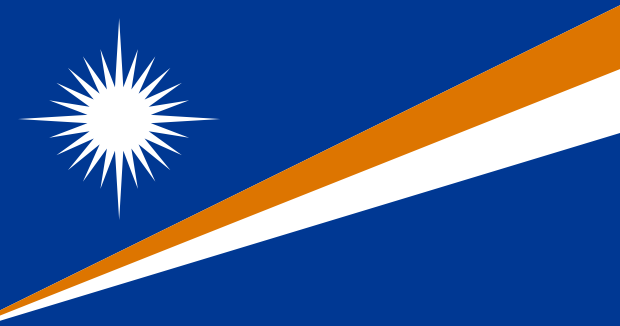
Flag is available in resolutions
| Icon 88x46 |  |
| Icon 32x17 |  |
Marshall Islands
The Marshall Islands: A Jewel in the Pacific’s Crown
The Marshall Islands, an archipelago nation in the central Pacific Ocean, represent a captivating blend of stunning natural beauty, profound historical significance, and a resilient culture deeply intertwined with the ocean. Comprising 29 atolls and five islands, this nation is spread across a vast expanse of water, making it one of the most geographically dispersed countries on Earth. For centuries, these islands served as a sanctuary for seafaring peoples, their lives shaped by the rhythm of the tides and the bounty of the coral reefs. Today, the Marshall Islands stand as a testament to the enduring spirit of its people, navigating the challenges of a changing world while holding fast to their unique heritage.
The geography of the Marshall Islands is its defining characteristic. Scattered across an area of approximately 1.9 million square kilometers, the islands themselves occupy a mere 181 square kilometers of land. This stark contrast between land and sea underscores the intimate relationship the Marshallese people have with their marine environment. The atolls, ring-shaped coral reefs enclosing lagoons, are the dominant landforms. These low-lying islands, rarely rising more than a few meters above sea level, are incredibly vulnerable to the impacts of climate change, particularly rising sea levels and increasingly frequent and intense storms. The two main island chains, Ralik and Ratak, are characterized by their sandy beaches, coconut palm groves, and vibrant coral reefs teeming with marine life. The lagoons, calm and protected, have historically provided safe harbors for canoes and fishing vessels, and continue to be the lifeblood of the communities. The sheer isolation of these islands has fostered a unique biodiversity, with many endemic species of plants and animals. However, this isolation also presents significant challenges for development, trade, and access to essential services. The constant threat of rising sea levels and coastal erosion is not an abstract concern but a daily reality for many Marshallese, forcing difficult conversations about adaptation, relocation, and the very future of their nation.
The history of the Marshall Islands is a rich tapestry woven with threads of ancient Polynesian migration, European exploration, and the dramatic geopolitical shifts of the 20th century. Archaeological evidence suggests that the islands were first settled by Micronesian peoples over 4,000 years ago. These skilled navigators and seafarers established complex societies, developing sophisticated systems of navigation, fishing, and resource management. For centuries, the islands remained largely isolated from the outside world, their inhabitants living in relative harmony with their environment. European contact began in the 16th century, with Spanish explorer Álvaro de Saavedra Cerón being the first to document the islands in 1529. However, sustained contact and colonization did not occur until much later. In the late 19th century, Germany claimed the islands as part of German New Guinea, establishing trading posts and beginning to exploit resources like copra. Following World War I, Japan took control of the islands under a League of Nations mandate. Under Japanese rule, the islands saw some development, particularly in infrastructure and fishing, but also experienced periods of harsh administration. The most profound and devastating chapter in the Marshall Islands’ history, however, began with the end of World War II. The United States established a military presence, and the islands became part of the Trust Territory of the Pacific Islands, administered by the U.S. under a United Nations mandate. This period, from 1947 to 1986, was marked by the infamous nuclear testing era. Between 1946 and 1958, the U.S. conducted 67 nuclear weapons tests, including the detonation of the Castle Bravo hydrogen bomb in 1954, which was 1,000 times more powerful than the bomb dropped on Hiroshima. The radioactive fallout from these tests had catastrophic consequences for the Marshallese people and their environment, leading to widespread contamination, displacement, and long-term health problems that persist to this day. The legacy of these tests continues to shape the nation’s political and social landscape, with ongoing calls for justice and reparations. The Marshall Islands gained full sovereignty in 1986 through a Compact of Free Association with the United States, a relationship that continues to define many aspects of its foreign policy and economic ties.
The economy of the Marshall Islands is primarily driven by a few key sectors, with a significant reliance on external aid and remittances. The service sector, particularly government administration and tourism, plays a crucial role. Fishing is another vital industry, both for subsistence and for export. The nation’s vast Exclusive Economic Zone (EEZ) is rich in tuna, and the sale of fishing licenses to foreign fleets generates substantial revenue. However, this reliance on foreign fishing fleets also raises concerns about sustainability and equitable benefit sharing. Coconut products, particularly copra, have historically been a significant export, though their importance has diminished over time. The agricultural sector, limited by the sandy soils and small land area, focuses on subsistence crops like taro, breadfruit, and bananas. The government is the largest employer, and a significant portion of the population relies on remittances from Marshallese citizens working abroad, particularly in the United States. The challenges facing the economy are numerous, including the high cost of imports, limited infrastructure, the geographical dispersion of the islands, and the ever-present threat of climate change impacting agriculture and coastal resources. Efforts are underway to diversify the economy, promote sustainable tourism, and improve infrastructure, but the path to economic self-sufficiency remains challenging.
Despite the economic and environmental challenges, the Marshall Islands offer a wealth of unique tourist attractions and cultural experiences. The pristine natural beauty of the atolls is a major draw for visitors seeking an escape from the hustle and bustle of modern life. The crystal-clear turquoise lagoons are ideal for snorkeling, diving, and other water sports, offering encounters with vibrant coral reefs and a diverse array of marine life, including colorful fish, sea turtles, and rays. The Bikini Atoll, a UNESCO World Heritage Site, is world-renowned for its exceptional diving opportunities, famously featuring the submerged wrecks of Japanese battleships from World War II, including the USS Arizona. Beyond the underwater wonders, the islands offer a glimpse into a traditional way of life. Visitors can experience the warmth and hospitality of the Marshallese people, learn about their ancient customs, and witness traditional crafts like weaving and canoe building. The Majuro Atoll, the capital and largest urban center, provides a more developed infrastructure, with hotels, restaurants, and cultural centers. The Arno Atoll offers a more remote and traditional experience, showcasing the natural beauty and cultural heritage of the outer islands. The history of the nuclear testing also draws a significant number of visitors interested in understanding this complex and poignant aspect of the nation’s past. Sites like the former U.S. missile testing range on Kwajalein Atoll, though largely restricted, offer a tangible connection to this era. The Marshall Islands represent a destination unlike any other, offering a profound connection with nature, a rich cultural immersion, and a compelling historical narrative.
The Marshallese culture is deeply rooted in a profound respect for the ocean and a strong sense of community. Traditional social structures, known as “wt” (clans), have historically played a significant role in organizing society and distributing resources. The Marshallese language, a Micronesian language, is spoken by the vast majority of the population. Oral traditions, including epic chants and stories, are vital for preserving history, genealogies, and cultural knowledge. Music and dance are integral to celebrations and ceremonies, often accompanied by traditional instruments. The Marshallese are known for their skill in navigation, a legacy passed down through generations, using stars, currents, and wave patterns to traverse the vast Pacific. The impact of Westernization and modernization is evident, particularly in urban areas, but traditional values and customs remain strong, especially in the outer islands. The Marshallese people are deeply spiritual, with a blend of traditional beliefs and Christianity influencing their worldview. The resilience of the Marshallese culture is remarkable, having weathered centuries of change and external influences, adapting and evolving while retaining its core identity. The challenges posed by climate change are now shaping the future of this culture, prompting discussions about preserving traditions in the face of potential displacement and environmental shifts. The strong sense of identity and community found in the Marshall Islands is a powerful force, enabling its people to face the future with determination and a deep connection to their heritage.
Information about Marshall Islands
The information comes from the publication CIA The World Factbook.
Automated text translation, excuse errors, please!
Country Marshall Islands is situated in a location / continent Oceania. Marshall Islands has an area of 181 km2 and 68 480 residents. The highest point has a height 10 above sea level. and it is called bezejmenné místo on Likiep. The lowest point is located at the level of 0 above sea level and it is named Pacific Ocean. System of government is republic and the date of independence 21st October 1986. The capital city is Majuro. Marshall Islands has the international abbreviation RM.
Marshall Islands - economy
Total gross domestic product (GDP) is 133 500 000 $. Total gross domestic product per capita in purchasing power parity is 2 500 $. GDP grows by -0.30 % a year. Inflation (consumer price index) is equal to 12.90 % a year. Marshall Islands have 14 680 working-age population (from a total population 68 480 people). Unemployment is at 36.00 %. Marshall Islands issued 2.50 % GDP to healt care .The total amount of foreign debt is 87 000 000 USD.
Marshall Islands - demography
As suggested above, Marshall Islands has 68 480 people. Population growth is in the amount 1.87 % per year. Number of children born per 1000 population per year is 28.14.Every mother has average 3.37 children. The infant mortality rate is 22.93 .Average estimated life expectancy makes 72.03 years. Mortality is 4.31 people per 1000 population per year.
Marshall Islands - transport and telecommunications
Marshall Islands has 2 028 km of roads and 15 airports. There is registered 1 593 ships.
Number of active mobile phones (sim card) in the country Marshall Islands is 3 800. Number of active fixed telephone lines is 4 400. Marshall Islands has 2 200 internet users, who have the available 3 Internet connections. Marshall Islands has been assigned a domain first Choose range .mh.
Marshall Islands - energetics
.
Keywords: flags of countries in the world, energetics, all flags, world countries, Marshall Islands, information, list of countries, list of flags, transport, economy, flag states, Flag of Marshall Islands, national flags, telecommunications, demography, flag, Flags of countries, politic.