Brunei
Flag of Brunei
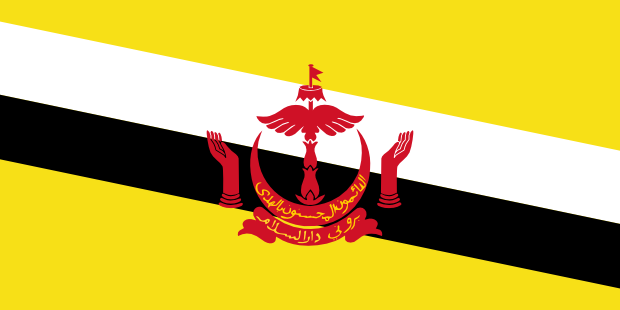
Flag is available in resolutions
| Icon 88x44 |  |
| Icon 32x16 |  |
Brunei
Brunei: The Sultanate of Serenity and Prosperity
Nestled on the northwestern coast of the island of Borneo, Brunei Darussalam, often simply referred to as Brunei, is a small but remarkably prosperous nation that often evokes images of lush rainforests, opulent palaces, and a deep-seated Islamic heritage. Despite its diminutive size, this Southeast Asian gem possesses a rich tapestry of history, a unique geographical landscape, and an economy heavily reliant on its abundant natural resources. Understanding Brunei requires delving into its fascinating past, appreciating its present-day socio-economic structure, and acknowledging its distinctive cultural identity, all of which contribute to its reputation as a tranquil and affluent sultanate.
The history of Brunei is a captivating narrative of rise and fall, of a once-mighty maritime empire that extended its influence across much of Borneo and the Philippines. Its golden age, particularly during the 15th and 16th centuries, saw it become a significant trading hub, attracting merchants from across Asia. The Sultanate was a powerful Islamic kingdom, and its sultans were revered figures. This period of dominance was gradually eroded by internal strife, the encroachment of European colonial powers, and the rise of regional rivals. The British influence began in the late 19th century, leading to a period of protectorate status, which ultimately saw Brunei retain its internal autonomy while Britain managed its foreign affairs and defense. This relationship continued until 1984, when Brunei gained full independence, marking a new chapter in its modern history. The transition to independence was remarkably smooth, largely due to the Sultans visionary leadership and the nations burgeoning wealth from oil and gas.
Geographically, Brunei is characterized by its tropical climate and its diverse landscapes. The country is divided into two unconnected parts by the Malaysian state of Sarawak, creating an enclave within Malaysian territory. The western part, where the capital Bandar Seri Begawan is located, is more populated and features rolling hills and coastal plains. The eastern part, known as Temburong, is largely undeveloped and is dominated by dense rainforests, making it a haven for biodiversity. Brunei’s coastline is dotted with pristine beaches and mangrove forests, while its interior is characterized by rugged mountains and extensive river systems. The country’s commitment to environmental conservation is evident in the preservation of these natural habitats, particularly the Temburong rainforest, which is a protected national park. The climate is consistently hot and humid, with distinct wet and dry seasons, influenced by the monsoon winds. This environment supports a rich variety of flora and fauna, making Brunei an attractive destination for nature enthusiasts and researchers alike.
The Bruneian economy is overwhelmingly driven by its vast reserves of oil and natural gas. This natural wealth has enabled the Sultanate to achieve one of the highest GDP per capita figures in the world and to provide its citizens with a generous welfare state, including free education and healthcare, and heavily subsidized housing. The government has made significant efforts to diversify the economy beyond its reliance on hydrocarbons, investing in sectors such as tourism, finance, and services. However, the oil and gas sector remains the bedrock of the nations prosperity, providing the substantial revenue that fuels its development projects and social programs. The state-owned oil company, Brunei Shell Petroleum, plays a pivotal role in this sector. Despite the economic advantages derived from its resources, Brunei faces the challenge of ensuring long-term sustainability and economic resilience as global energy markets evolve. The government actively seeks foreign investment and encourages the development of small and medium-sized enterprises to foster a more robust and diversified economic landscape.
The population of Brunei is relatively small, numbering just over 400,000 people. The majority of the population are ethnic Malays, who form the dominant cultural group and are deeply intertwined with the nations identity and governance. However, Brunei is also home to significant Chinese and indigenous communities, contributing to its multicultural fabric. Islam is the official religion and plays a central role in the daily lives and cultural practices of the majority of the population. The legal system is based on a dualistic approach, incorporating both common law and Sharia law, reflecting the countrys commitment to Islamic principles. The Bruneian people are known for their politeness, hospitality, and a strong sense of community. The government places a high priority on education and social welfare, ensuring that its citizens have access to quality services and opportunities. The official language is Malay, but English is widely spoken, particularly in business and education, reflecting the countrys historical ties and its engagement with the global community.
Brunei offers a unique array of tourist attractions that showcase its rich cultural heritage, natural beauty, and modern development. The most iconic landmark is the Omar Ali Saifuddien Mosque, an architectural masterpiece that stands as a symbol of Bruneis Islamic faith and prosperity. Its golden dome and elegant minaret are a breathtaking sight, especially when illuminated at night. Another significant religious site is the JameAsr Hassanil Bolkiah Mosque, the largest mosque in Brunei, renowned for its grandeur and intricate design. For a glimpse into the countrys royal history and opulence, a visit to the Istana Nurul Iman, the official residence of the Sultan, is a must, although access is restricted to specific times. The Royal Regalia Building houses a stunning collection of royal artifacts, including the chariot used in the Sultan’s coronation, offering insight into the monarchys grandeur. Beyond the architectural marvels, Bruneis natural landscapes beckon. The Ulu Temburong National Park, accessible by boat and canopy walkways, provides an immersive experience in the pristine rainforest, allowing visitors to witness the diverse flora and fauna, including proboscis monkeys and hornbills. A boat trip along the Brunei River offers a chance to see the traditional water villages, such as Kampong Ayer, a UNESCO World Heritage site, where houses are built on stilts over the water, offering a unique glimpse into a traditional way of life that has persisted for centuries. The vibrant markets, known as pasar malam, provide an opportunity to sample local delicacies and purchase handicrafts, further enriching the cultural experience.
In conclusion, Brunei Darussalam is a nation that defies its size with its remarkable wealth, serene atmosphere, and a profound respect for its traditions. Its history as a former maritime power, its strategic geographical location, its resource-driven economy, and its culturally rich and religiously devout population all contribute to its distinct identity. While the nation continues to navigate the complexities of economic diversification and global change, its commitment to the well-being of its citizens and the preservation of its natural and cultural heritage remains paramount. Brunei stands as a testament to how a small nation, blessed with abundant resources and guided by strong leadership, can achieve a high standard of living and maintain a unique and tranquil existence in the modern world.
Information about Brunei
The information comes from the publication CIA The World Factbook.
Automated text translation, excuse errors, please!
Country Brunei is situated in a location / continent East Asia. Brunei has an area of 5 765 km2 and 408 786 residents. The highest point has a height 1 850 above sea level. and it is called Bukit Pagon. The lowest point is located at the level of 0 above sea level and it is named South China Sea. System of government is kontituční monarchy (Sultanate) and the date of independence First January 1984. The capital city is Bandar Seri Begawan. Brunei has the international abbreviation BX.
Brunei - economy
Total gross domestic product (GDP) is 21 240 000 000 $. Total gross domestic product per capita in purchasing power parity is 50 000 $. GDP grows by 1.90 % a year. Inflation (consumer price index) is equal to 2.00 % a year. Brunei have 198 800 working-age population (from a total population 408 786 people). Unemployment is at 2.70 %. Brunei issued 3.00 % GDP to healt care and 4,50 % GDP to army. The total amount of foreign debt is 0 USD.
Brunei - demography
As suggested above, Brunei has 408 786 people. Population growth is in the amount 1.69 % per year. Number of children born per 1000 population per year is 17.74.Every mother has average 1.85 children. The infant mortality rate is 11.15 and maternal mortality 24.00 deaths per 100,000 births. Average estimated life expectancy makes 76.37 years. Mortality is 3.39 people per 1000 population per year.
Brunei - transport and telecommunications
Brunei has 2 971 km of roads and 1 airports. The total length of waterways (navigable rivers, canals, etc.) is 209 km. There is registered 9 ships.
Number of active mobile phones (sim card) in the country Brunei is 443 200. Number of active fixed telephone lines is 79 800. Brunei has 314 900 internet users, who have the available 49 403 Internet connections. Brunei has been assigned a domain first Choose range .bn.
Brunei - energetics
Brunei consumes a year 3 177 000 000 kWh of electricity. Annual electricity production is 3 395 000 000 kWh in power plants with a total installed electrical capacity 759 000 kW. Brunei exports 0 kWh and imports 0 kWh of electricity per year Energy mix of power generation is as follows: fossil fuels: 100 %, nuclear energy: 0 %, renewable: 0.0 %, hydropower: 0.0 %. The country Brunei is harvested annually 149 900 barrels of oil.
Keywords: national flags, economy, Flag of Brunei, transport, world countries, flag states, energetics, list of flags, Flags of countries, information, telecommunications, flags of countries in the world, list of countries, demography, all flags, Brunei, flag, politic.