Philippines
Flag of Philippines
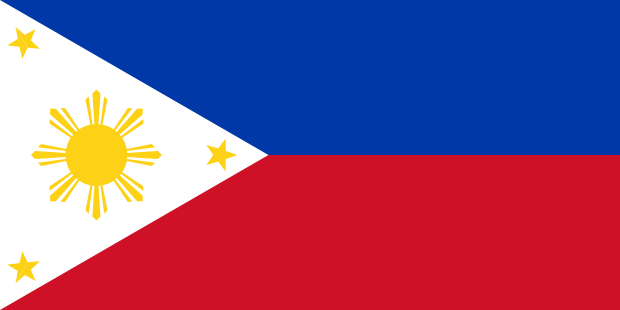
Flag is available in resolutions
| Icon 88x44 |  |
| Icon 32x16 |  |
Philippines
The Philippines: An Archipelago of Enchantment and Resilience
The Philippines, a captivating archipelago nation nestled in the western Pacific Ocean, is a land of breathtaking natural beauty, a rich tapestry of cultures, and a history marked by resilience and adaptation. Comprising over 7,000 islands, this Southeast Asian gem offers a kaleidoscope of experiences, from pristine white-sand beaches and vibrant coral reefs to mist-shrouded mountains and bustling metropolises. Its strategic location, though historically a crossroads for trade and cultural exchange, has also subjected it to a complex and often turbulent past, shaping its unique identity and the spirit of its people. Understanding the Philippines requires delving into its diverse geography, the intricate threads of its history, the dynamism of its economy, and the warmth of its inhabitants.
Geographically, the Philippines is a study in dramatic contrasts and stunning natural wonders. The archipelago is broadly divided into three major island groups: Luzon in the north, the Visayas in the center, and Mindanao in the south. Luzon, the largest and most populous island, is home to the nations capital, Manila, a sprawling metropolis that blends historical Spanish colonial architecture with modern skyscrapers. It also boasts volcanic landscapes like Mount Mayon, famous for its near-perfect cone, and the Banaue Rice Terraces, an ancient UNESCO World Heritage site carved into the mountainsides by indigenous peoples centuries ago. The Visayas are renowned for their postcard-perfect islands, including Boracay, with its powdery white sand and turquoise waters, and Palawan, consistently ranked among the worlds most beautiful islands, celebrated for its dramatic limestone cliffs, underground rivers, and vibrant marine life in places like El Nido and Coron. Mindanao, the second-largest island, presents a more rugged and diverse terrain, featuring active volcanoes like Mount Apo, the highest peak in the Philippines, lush rainforests, and a rich mosaic of indigenous cultures. The countrys extensive coastline, the fifth longest in the world, is a testament to its island nature, providing abundant opportunities for marine tourism and fishing. However, this geographical blessing also exposes the Philippines to significant natural hazards, including typhoons, earthquakes, and volcanic eruptions, a reality that has profoundly influenced the nations development and the resilience of its people.
The history of the Philippines is a long and intricate narrative, shaped by indigenous civilizations, foreign colonization, and the enduring struggle for self-determination. For centuries before the arrival of Europeans, the islands were home to various seafaring communities and small kingdoms that engaged in trade with China, India, and other parts of Southeast Asia. This era laid the foundation for a complex social structure and diverse cultural practices. The pivotal moment in Philippine history arrived in 1521 with the landing of Ferdinand Magellan, marking the beginning of Spanish colonization. For over 300 years, Spain exerted significant influence, introducing Christianity, a Latin alphabet, and a hierarchical social system. This period, while bringing some advancements, was also characterized by exploitation and resistance. The late 19th century saw the rise of a nationalist movement, culminating in the Philippine Revolution of 1896, led by figures like Jose Rizal and Emilio Aguinaldo. However, the dream of independence was short-lived. Following the Spanish-American War, the United States acquired the Philippines, leading to another period of colonial rule. The American era brought about significant infrastructure development, a public education system, and a gradual transition towards self-governance. World War II saw the Philippines become a major theater of conflict, with the Japanese occupation followed by liberation by Allied forces. The country finally gained full independence on July 4, 1946. The post-independence period has been marked by challenges, including political instability, economic development efforts, and the ongoing quest to forge a unified national identity from its diverse cultural heritage.
The Philippine economy is a dynamic and evolving landscape, characterized by a strong service sector, growing manufacturing capabilities, and a significant reliance on remittances from overseas Filipino workers. The service sector, particularly business process outsourcing (BPO), has become a major engine of growth, with the Philippines being a leading global destination for call centers, IT support, and other outsourced services. Tourism also plays a crucial role, attracting millions of visitors annually to its stunning natural attractions and vibrant cultural sites. Agriculture remains a vital part of the economy, with key products including rice, corn, coconuts, fruits, and sugar. The country is also rich in mineral resources, though their exploitation is often constrained by environmental concerns and logistical challenges. The manufacturing sector is expanding, encompassing electronics, garments, and food processing. However, the Philippine economy faces persistent challenges, including income inequality, high unemployment rates in certain regions, and vulnerability to external economic shocks. The government continues to focus on attracting foreign investment, improving infrastructure, and fostering inclusive growth to address these issues. The ingenuity and hard work of the Filipino people, both domestically and abroad, are central to the nations economic resilience and aspirations.
The cultural landscape of the Philippines is a vibrant mosaic, a testament to its history of trade, colonization, and indigenous traditions. The dominant religion is Roman Catholicism, a legacy of Spanish rule, which profoundly influences social customs, festivals, and daily life. However, pockets of Islam are prevalent in Mindanao, reflecting the regions pre-colonial trade links with the Malay world. The Filipino people are renowned for their warmth, hospitality, and strong family ties. The concept of bayanihan, a spirit of communal unity and cooperation, is deeply ingrained in their culture, evident in everything from community projects to helping neighbors in times of need. The arts flourish in the Philippines, with a rich tradition of music, dance, literature, and visual arts. Traditional folk dances, often depicting historical events or agricultural practices, are a colorful spectacle. The cuisine is a delightful fusion of indigenous flavors, Malay influences, and Spanish and Chinese culinary techniques, featuring dishes like adobo, sinigang, and lechon. Festivals, known as fiestas, are a cornerstone of Filipino life, often celebrated with religious processions, street parades, music, and abundant food, providing a joyous expression of community and faith. The linguistic diversity is also remarkable, with over 170 distinct languages and dialects spoken across the archipelago, though Tagalog, standardized as Filipino, serves as the national language.
For travelers seeking an unforgettable experience, the Philippines offers a plethora of tourist attractions that cater to every interest. Beach lovers will find paradise on islands like Boracay, Palawan, and Siargao, with their powdery sands, crystal-clear waters, and world-class diving and snorkeling opportunities. History buffs can explore the colonial charm of Intramuros in Manila, the centuries-old churches of Iloilo, and the historical sites of Vigan, a UNESCO World Heritage city that preserves Spanish colonial architecture. Adventure seekers can trek through the lush rice terraces of Banaue, explore the underground river in Puerto Princesa, or hike to the summit of Mount Apo for breathtaking panoramic views. Nature enthusiasts will be captivated by the unique geological formations of the Chocolate Hills in Bohol, the diverse marine ecosystems of Tubbataha Reefs Natural Park, and the endemic wildlife found in its national parks. The vibrant street life, bustling markets, and delicious local cuisine offer a true immersion into Filipino culture. From the majestic mountains to the serene beaches, the Philippines promises an enriching and awe-inspiring journey.
In conclusion, the Philippines is a nation that defies simple categorization. It is a land of unparalleled natural beauty, shaped by a complex history and inhabited by a people whose spirit of resilience, warmth, and adaptability is truly remarkable. Its geographical diversity, cultural richness, and economic dynamism combine to create a unique and captivating destination. While challenges persist, the enduring strength of the Filipino people and their unwavering optimism offer a compelling vision for the future of this enchanting archipelago.
Information about Philippines
The information comes from the publication CIA The World Factbook.
Automated text translation, excuse errors, please!
Country Philippines is situated in a location / continent East Asia. Philippines has an area of 300 000 km2 and 103 775 002 residents. The highest point has a height 2 954 above sea level. and it is called Mount Apo. The lowest point is located at the level of 0 above sea level and it is named Philippine Sea. System of government is republic and the date of independence 12th June 1898. The capital city is Manila. Philippines has the international abbreviation RP.
Philippines - economy
Total gross domestic product (GDP) is 395 400 000 000 $. Total gross domestic product per capita in purchasing power parity is 4 100 $. GDP grows by 3.70 % a year. Inflation (consumer price index) is equal to 4.80 % a year. Philippines have 40 000 000 working-age population (from a total population 103 775 002 people). Unemployment is at 7.00 %. Philippines issued 3.80 % GDP to healt care and 0,90 % GDP to army. The public debt of the country is 50.90 % GDP. The total amount of foreign debt is 72 270 000 000 USD.
Philippines - demography
As suggested above, Philippines has 103 775 002 people. Population growth is in the amount 1.87 % per year. Number of children born per 1000 population per year is 24.98.Every mother has average 3.15 children. The infant mortality rate is 18.75 and maternal mortality 99.00 deaths per 100,000 births. Average estimated life expectancy makes 71.94 years. Mortality is 4.98 people per 1000 population per year.
Philippines - transport and telecommunications
Philippines has 213 151 km of roads, 995 km of railway lines and 247 airports. The total length of waterways (navigable rivers, canals, etc.) is 3 219 km. There is registered 446 ships.
Number of active mobile phones (sim card) in the country Philippines is 87 256 000. Number of active fixed telephone lines is 6 782 000. Philippines has 8 278 000 internet users, who have the available 452 050 Internet connections. Philippines has been assigned a domain first Choose range .ph.
Philippines - energetics
Philippines consumes a year 51 300 000 000 kWh of electricity. Annual electricity production is 64 160 000 000 kWh in power plants with a total installed electrical capacity 15 580 000 kW. Philippines exports 0 kWh and imports 0 kWh of electricity per year Energy mix of power generation is as follows: fossil fuels: 66.1 %, nuclear energy: 0 %, renewable: 12.8 %, hydropower: 21.1 %. The country Philippines is harvested annually 26 640 barrels of oil.
Keywords: flag, list of flags, list of countries, economy, energetics, Philippines, Flags of countries, flag states, telecommunications, transport, all flags, flags of countries in the world, national flags, Flag of Philippines, information, world countries, demography, politic.