Malaysia
Flag of Malaysia
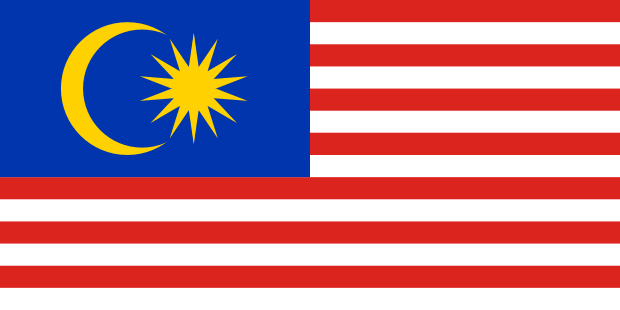
Flag is available in resolutions
| Icon 88x44 |  |
| Icon 32x16 |  |
Malaysia
Malaysia: A Tapestry of Cultures, Landscapes, and Economic Dynamism
Malaysia, a vibrant nation nestled in the heart of Southeast Asia, presents a captivating paradox. It is a land where ancient rainforests meet gleaming skyscrapers, where diverse ethnicities coexist harmoniously, and where a rich historical tapestry is woven with threads of colonialism, trade, and indigenous traditions. Its strategic location, straddling the Strait of Malacca, has long been a crucible for cultural exchange and economic prosperity, shaping its unique identity and propelling it onto the global stage. The country is divided into two distinct geographical regions: Peninsular Malaysia, also known as West Malaysia, and East Malaysia, situated on the island of Borneo. This geographical duality contributes to the immense diversity found within Malaysia, from the bustling metropolises of the peninsula to the untamed wilderness of Borneo.
The population of Malaysia is a remarkable mosaic, a testament to centuries of migration and settlement. The dominant ethnic groups are the Malays, who comprise the largest portion of the population and are considered the indigenous people of the land, followed by the Chinese and Indians, who arrived in significant numbers during the colonial era, primarily as laborers and traders. Beyond these major groups, Malaysia is home to a multitude of indigenous communities, particularly in East Malaysia, such as the Iban, Kadazan-Dusun, and Bidayuh. This ethnic diversity is mirrored in the countrys linguistic landscape, with Bahasa Malaysia (Malay) as the official language, but English widely spoken, especially in business and education. Furthermore, various Chinese dialects, Tamil, and numerous indigenous languages are spoken throughout the nation, enriching the cultural symphony. Religious adherence is also varied, with Islam being the official religion, but Buddhism, Christianity, Hinduism, and traditional indigenous beliefs also practiced freely, fostering an environment of religious tolerance. This intricate blend of ethnicities, languages, and religions forms the bedrock of Malaysian society, contributing to its unique customs, festivals, and culinary traditions.
Malaysias history is a compelling narrative of empires, trade, and colonial encounters. The Malay Archipelago has been a crossroads of civilizations for millennia, with early influences from Indian and Chinese traders and kingdoms. The rise of powerful maritime empires, such as the Srivijaya and Majapahit, left an indelible mark on the region. The arrival of Islam in the 15th century ushered in a new era, with the Malacca Sultanate becoming a prominent Islamic power and a vital trading hub. The strategic importance of the Strait of Malacca soon attracted European colonial powers. The Portuguese were the first to establish a presence in 1511, followed by the Dutch in 1641. However, it was the British who ultimately exerted the most significant influence, gradually consolidating their control over the Malay states and the Straits Settlements throughout the 19th and early 20th centuries. This period of British rule brought about significant economic and administrative changes, including the development of rubber plantations and tin mining, which reshaped the countrys economy and demographics. Following World War II and the Japanese occupation, the call for independence grew stronger. After a period of communist insurgency, Malaysia finally achieved its independence on August 31, 1957, as the Federation of Malaya. In 1963, it merged with Singapore, Sabah, and Sarawak to form Malaysia, though Singapore later separated in 1965. The post-independence era has been characterized by rapid economic development and nation-building efforts, aiming to foster unity among its diverse population and establish Malaysia as a modern, progressive nation.
Geographically, Malaysia is a land of striking contrasts and breathtaking natural beauty. Peninsular Malaysia, shaped like a human hand pointing south, is characterized by a central mountain range, the Titiwangsa Mountains, running north to south, flanked by fertile coastal plains. The west coast boasts a more developed and populated landscape, while the east coast retains a more traditional charm with fishing villages and pristine beaches. East Malaysia, comprising the states of Sabah and Sarawak on the island of Borneo, is a realm of ancient rainforests, towering mountains, and extensive cave systems. Mount Kinabalu, the highest peak in Southeast Asia, stands majestically in Sabah, a testament to the regions dramatic topography. The Borneo rainforest is one of the oldest and most biodiverse ecosystems on Earth, home to an incredible array of flora and fauna, including orangutans, proboscis monkeys, and a dazzling variety of birdlife. The coastline of both Peninsular and East Malaysia is dotted with idyllic islands, many of which have become world-renowned tourist destinations, offering crystal-clear waters, vibrant coral reefs, and opportunities for diving, snorkeling, and relaxation. The climate throughout Malaysia is equatorial, characterized by high temperatures, humidity, and abundant rainfall year-round, contributing to its lush vegetation and agricultural productivity.
Malaysias economy has undergone a remarkable transformation, evolving from an agrarian and commodity-based economy to one driven by manufacturing and services. The country is a major global producer of palm oil, rubber, and tin, commodities that have historically underpinned its economic growth. However, in recent decades, Malaysia has successfully diversified its economy, with a strong emphasis on electronics, electrical goods, textiles, and petrochemicals. The manufacturing sector plays a crucial role, attracting significant foreign investment and becoming a key engine of export growth. The services sector, including tourism, finance, and telecommunications, is also expanding rapidly, contributing to job creation and economic diversification. The government has implemented various economic development plans, such as Vision 2020, aimed at transforming Malaysia into a fully developed, high-income nation by the year 2020. While challenges remain, including income inequality and the need for continuous innovation, Malaysias economic trajectory has been impressive, positioning it as a dynamic and competitive player in the global economy.
The tourist attractions in Malaysia are as diverse as its population and landscapes, offering something for every type of traveler. For those seeking urban excitement, the capital city of Kuala Lumpur is a must-visit. Its iconic Petronas Twin Towers, once the tallest buildings in the world, dominate the skyline and offer breathtaking panoramic views. The city is a vibrant hub of shopping, dining, and cultural experiences, with attractions like the Batu Caves, a series of limestone caves housing Hindu temples, and the bustling markets of Chinatown and Little India. Further afield, historical cities like Malacca, a UNESCO World Heritage site, transport visitors back in time with its colonial architecture, charming streets, and rich maritime history. For nature enthusiasts, the pristine rainforests of Borneo beckon. The Kinabatangan River in Sabah offers unparalleled opportunities for wildlife spotting, with boat safaris revealing proboscis monkeys, pygmy elephants, and crocodiles. The islands of Langkawi, Penang, and the Perhentian Islands are renowned for their beautiful beaches, clear waters, and vibrant marine life, making them ideal for relaxation and water sports. The cultural tapestry of Malaysia is also a significant draw, with numerous festivals and celebrations throughout the year, showcasing the countrys multicultural heritage. From the vibrant celebrations of Hari Raya Aidilfitri and Chinese New Year to the colorful Thaipusam festival, visitors can immerse themselves in the joyous spirit of Malaysian traditions. The culinary scene is another major attraction, with a fusion of Malay, Chinese, and Indian flavors creating a unique and delicious gastronomic experience. From street food stalls to fine dining restaurants, Malaysia offers a culinary adventure that tantalizes the taste buds.
In conclusion, Malaysia is a nation that captivates with its rich cultural heritage, diverse landscapes, and burgeoning economy. It is a place where tradition and modernity coexist, where different ethnicities and religions blend harmoniously, and where the warmth of its people leaves an indelible impression on all who visit. Whether one is drawn to the bustling energy of its cities, the tranquility of its natural wonders, or the richness of its cultural tapestry, Malaysia offers an unforgettable journey of discovery.
Information about Malaysia
The information comes from the publication CIA The World Factbook.
Automated text translation, excuse errors, please!
Country Malaysia is situated in a location / continent East Asia. Malaysia has an area of 329 847 km2 and 29 179 952 residents. The highest point has a height 4 100 above sea level. and it is called Gunung Kinabalu. The lowest point is located at the level of 0 above sea level and it is named Indian Ocean. System of government is constitutional monarchy and the date of independence 31st August 1957. The capital city is Kuala Lumpur. Malaysia has the international abbreviation MY.
Malaysia - economy
Total gross domestic product (GDP) is 453 000 000 000 $. Total gross domestic product per capita in purchasing power parity is 15 800 $. GDP grows by 5.10 % a year. Inflation (consumer price index) is equal to 3.20 % a year. Malaysia have 11 910 000 working-age population (from a total population 29 179 952 people). Unemployment is at 3.10 %. Malaysia issued 8.00 % GDP to healt care and 2,03 % GDP to army. The public debt of the country is 53.20 % GDP. The total amount of foreign debt is 87 810 000 000 USD.
Malaysia - demography
As suggested above, Malaysia has 29 179 952 people. Population growth is in the amount 1.54 % per year. Number of children born per 1000 population per year is 20.74.Every mother has average 2.64 children. The infant mortality rate is 14.57 and maternal mortality 29.00 deaths per 100,000 births. Average estimated life expectancy makes 74.04 years. Mortality is 4.95 people per 1000 population per year.
Malaysia - transport and telecommunications
Malaysia has 98 721 km of roads, 1 849 km of railway lines and 117 airports. The total length of waterways (navigable rivers, canals, etc.) is 7 200 km. There is registered 315 ships.
Number of active mobile phones (sim card) in the country Malaysia is 36 661 000. Number of active fixed telephone lines is 4 243 000. Malaysia has 15 355 000 internet users, who have the available 363 007 Internet connections. Malaysia has been assigned a domain first Choose range .my.
Malaysia - energetics
Malaysia consumes a year 95 020 000 000 kWh of electricity. Annual electricity production is 112 000 000 000 kWh in power plants with a total installed electrical capacity 25 240 000 kW. Malaysia exports 105 000 000 kWh and imports 12 000 000 kWh of electricity per year Energy mix of power generation is as follows: fossil fuels: 91.7 %, nuclear energy: 0 %, renewable: 0.0 %, hydropower: 8.3 %. The country Malaysia is harvested annually 603 400 barrels of oil.
Keywords: list of flags, transport, demography, economy, Flags of countries, national flags, world countries, energetics, telecommunications, flag, Flag of Malaysia, list of countries, information, all flags, flag states, flags of countries in the world, Malaysia, politic.