Japan
Flag of Japan
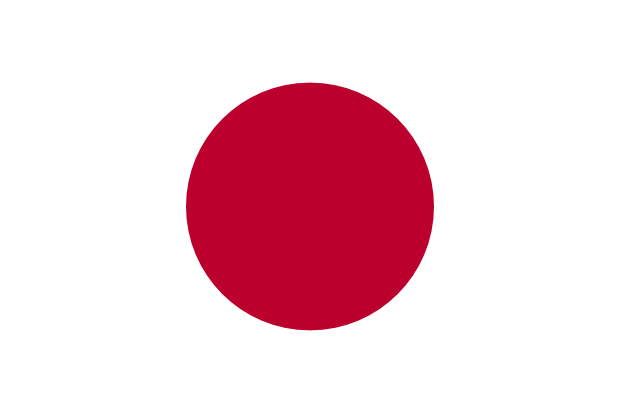
Flag is available in resolutions
| Icon 88x59 |  |
| Icon 32x21 |  |
Japan
Here is an article about Japan, approximately 5000 characters long, written in English with the specified formatting.
Japan: A Tapestry of Tradition and Innovation
Japan, an archipelago nation situated in East Asia, presents a captivating blend of ancient traditions and cutting-edge modernity. Its unique cultural heritage, shaped by centuries of isolation and subsequent rapid development, has resulted in a society that is both deeply respectful of its past and relentlessly focused on the future. From the serene temples of Kyoto to the neon-lit streets of Tokyo, Japan offers a diverse and enriching experience for all who visit or study its fascinating character. The nations geographical position, a chain of islands stretching from the Sea of Okhotsk in the north to the East China Sea in the south, has profoundly influenced its history, culture, and economy, fostering a distinct identity that resonates globally.
The Japanese population, numbering over 125 million, is one of the most homogeneous in the world, with a strong sense of national identity and unity. This demographic has historically contributed to a relatively stable society, though it now faces challenges such as an aging population and a declining birthrate, issues that are actively being addressed through various social and economic policies. The Japanese people are renowned for their diligence, politeness, and strong work ethic, values deeply ingrained in their culture. This societal structure, characterized by a collective spirit and a high degree of social cohesion, has been instrumental in the nation’s remarkable post-war recovery and its subsequent rise as a global economic powerhouse. The intricate social etiquette, known as “reigi,” plays a crucial role in daily life, emphasizing respect, harmony, and consideration for others, a cornerstone of Japanese interpersonal relationships.
The history of Japan is a long and complex narrative, marked by periods of both isolation and intense interaction with the outside world. For centuries, Japan maintained a policy of sakoku, or national isolation, which allowed its unique culture to develop largely undisturbed. This period, from the 17th to the mid-19th century, saw the flourishing of arts like ukiyo-e woodblock prints and the refinement of traditional practices such as the tea ceremony and kabuki theater. The Meiji Restoration in 1868 marked a pivotal turning point, as Japan rapidly modernized, embracing Western technologies and political systems while preserving its imperial structure. This era of rapid industrialization and expansion led to Japans emergence as a major world power, culminating in its involvement in World War II. The post-war period witnessed a remarkable resurgence, with Japan transforming into an economic superpower through its focus on manufacturing, technology, and export-driven growth. This phoenix-like recovery is a testament to the resilience and determination of the Japanese people.
Geographically, Japan is a land of striking contrasts and natural beauty. It is composed of over 6,800 islands, with the four largest being Honshu, Hokkaido, Kyushu, and Shikoku. The mountainous terrain covers a significant portion of the country, with Mount Fuji, an iconic stratovolcano, standing as Japans highest peak and a revered symbol of national identity. This topography has resulted in a diverse range of climates, from the snowy winters of Hokkaido to the subtropical warmth of Okinawa. Japan is also situated on the Pacific Ring of Fire, making it prone to earthquakes and volcanic activity, a reality that has shaped its resilient infrastructure and sophisticated disaster preparedness systems. The nations coastline is extensive, providing abundant fishing resources and shaping its maritime culture. The presence of numerous hot springs, or “onsen,” is a direct consequence of its volcanic nature and has become an integral part of Japanese leisure and wellness culture.
The Japanese economy is a marvel of efficiency and innovation. Renowned for its high-quality manufactured goods, Japan is a global leader in industries such as automotive production, electronics, robotics, and high-speed rail technology. Companies like Toyota, Sony, and Panasonic are household names worldwide, symbolizing Japanese ingenuity and precision. The countrys commitment to research and development has consistently placed it at the forefront of technological advancement. Despite its economic prowess, Japan faces demographic challenges, including an aging population and a shrinking workforce, which are driving efforts to boost productivity and attract skilled labor. The service sector also plays a significant role in the economy, with tourism experiencing a significant boom in recent years, attracting visitors eager to experience Japans unique culture and attractions.
Japan is a treasure trove of tourist attractions, offering something for every kind of traveler. The bustling metropolis of Tokyo, with its futuristic skyscrapers, vibrant fashion districts like Harajuku, and historic temples such as Senso-ji, provides an exhilarating urban experience. Kyoto, the former imperial capital, is a cultural heartland, boasting thousands of Buddhist temples, Shinto shrines, meticulously manicured gardens, and traditional geisha districts like Gion. The serene beauty of Nara, with its friendly wild deer roaming freely in Nara Park and the magnificent Todai-ji Temple housing a giant bronze Buddha, offers a peaceful retreat. For those seeking natural splendor, the majestic Mount Fuji, the tranquil bamboo forests of Arashiyama, and the picturesque landscapes of Hokkaido provide breathtaking vistas. The poignant history of Hiroshima, with its Peace Memorial Park and Museum, serves as a powerful reminder of the past and a beacon of hope for the future. The unique culinary scene, from delicate sushi and sashimi to hearty ramen and tempura, is another major draw, offering a delightful gastronomic journey. The efficiency and punctuality of Japan’s public transportation system, particularly its Shinkansen bullet trains, make exploring the country a seamless and enjoyable experience, further enhancing its appeal as a premier tourist destination. The vibrant festivals, or “matsuri,” that take place throughout the year, showcase the deep-rooted traditions and community spirit of Japan, adding another layer of cultural immersion for visitors.
Information about Japan
The information comes from the publication CIA The World Factbook.
Automated text translation, excuse errors, please!
Country Japan is situated in a location / continent East Asia. Japan has an area of 377 915 km2 and 127 368 088 residents. The highest point has a height 3 776 above sea level. and it is called Mount Fuji. The lowest point is located at the level of -4 above sea level and it is named Hachiro-gata. System of government is constitutional monarchy.The capital city is Tokyo. Japan has the international abbreviation JA.
Japan - economy
Total gross domestic product (GDP) is 4 497 000 000 000 $. Total gross domestic product per capita in purchasing power parity is 35 200 $. GDP grows by -0.70 % a year. Inflation (consumer price index) is equal to -0.30 % a year. Japan have 65 930 000 working-age population (from a total population 127 368 088 people). Unemployment is at 4.60 %. Japan issued 9.30 % GDP to healt care and 0,80 % GDP to army. The public debt of the country is 211.70 % GDP. The total amount of foreign debt is 2 719 000 000 000 USD.
Japan - demography
As suggested above, Japan has 127 368 088 people. Population growth is in the amount -0.08 % per year. Number of children born per 1000 population per year is 8.39.Every mother has average 1.39 children. The infant mortality rate is 2.21 and maternal mortality 5.00 deaths per 100,000 births. Average estimated life expectancy makes 83.91 years. Mortality is 9.15 people per 1000 population per year.
Japan - transport and telecommunications
Japan has 1 210 251 km of roads, 27 182 km of railway lines and 175 airports. The total length of waterways (navigable rivers, canals, etc.) is 1 770 km. There is registered 684 ships.
Number of active mobile phones (sim card) in the country Japan is 129 868 000. Number of active fixed telephone lines is 64 585 000. Japan has 99 182 000 internet users, who have the available 63 466 000 Internet connections. Japan has been assigned a domain first Choose range .jp.
Japan - energetics
Japan consumes a year 859 700 000 000 kWh of electricity. Annual electricity production is 937 600 000 000 kWh in power plants with a total installed electrical capacity 284 500 000 kW. Japan exports 0 kWh and imports 0 kWh of electricity per year Energy mix of power generation is as follows: fossil fuels: 63.9 %, nuclear energy: 17.2 %, renewable: 2.3 %, hydropower: 7.7 %. The country Japan is harvested annually 17 480 barrels of oil.
Keywords: telecommunications, transport, flags of countries in the world, energetics, national flags, Flags of countries, flag states, economy, Flag of Japan, demography, Japan, world countries, all flags, flag, list of countries, information, list of flags, politic.