Singapore
Flag of Singapore
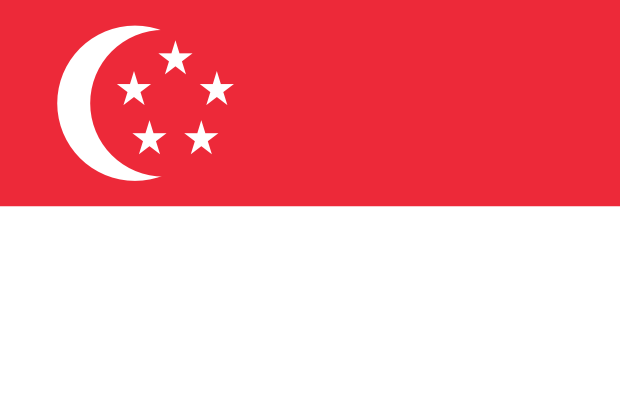
Flag is available in resolutions
| Icon 88x59 |  |
| Icon 32x21 |  |
Singapore
Singapore, officially the Republic of Singapore, is an island city-state off the southern coast of Malaysia, lying at the southern tip of the Malay Peninsula. It is a global financial hub, a major port, and a melting pot of cultures, boasting a rich history and a dynamic present. Its strategic location has shaped its destiny, transforming it from a humble fishing village into one of the most prosperous and technologically advanced nations in the world. This article will delve into the multifaceted aspects of Singapore, exploring its demographics, historical evolution, geographical characteristics, industrial landscape, and its captivating tourist attractions.
The population of Singapore is remarkably diverse, reflecting its historical role as a trading crossroads. As of recent estimates, the total population hovers around 5.7 million people, with a significant portion being permanent residents and foreign workers who contribute to its vibrant economy. The ethnic composition is primarily Chinese (around 74%), followed by Malay (around 13%) and Indian (around 9%), with smaller percentages of other ethnicities. This multicultural tapestry is not merely a statistical fact but is deeply woven into the fabric of Singaporean society, evident in its cuisine, festivals, languages, and daily interactions. English is the primary language of administration and business, but Malay, Mandarin Chinese, and Tamil are also official languages, fostering a multilingual environment. Religious diversity is also a hallmark, with Buddhism, Christianity, Islam, Hinduism, and Taoism being the most prevalent faiths, coexisting peacefully and contributing to the nations social harmony. The population density is exceptionally high, making Singapore one of the most densely populated countries globally, a testament to its limited land area and its ability to efficiently manage urban planning and infrastructure.
Singapore’s history is a fascinating narrative of transformation and resilience. Its origins can be traced back to the 14th century when it was known as Temasek, a thriving trading post. However, its modern history truly began in 1819 when Sir Stamford Raffles of the British East India Company established a trading post there, recognizing its strategic importance as a natural harbor. Under British rule, Singapore rapidly grew into a vital port and a center for trade, attracting immigrants from China, India, and other parts of Southeast Asia. The colonial era was not without its challenges, including periods of Japanese occupation during World War II, which left a lasting scar on the nation’s psyche. Following the war, Singapore briefly joined Malaysia in 1963 but separated two years later, embarking on its journey as an independent republic on August 9, 1965. The early years of independence were marked by significant economic and social challenges, including high unemployment and a lack of natural resources. However, under the visionary leadership of its founding Prime Minister, Lee Kuan Yew, Singapore adopted a pragmatic and forward-thinking approach, focusing on economic development, education, and social stability. This led to an unprecedented economic boom, transforming Singapore into the global powerhouse it is today.
Geographically, Singapore is a small island nation, comprising one main island and over 60 smaller islets. It is situated at the confluence of major shipping lanes, making it a crucial maritime gateway between the Indian Ocean and the South China Sea. The main island, Pulau Ujong, is characterized by its low-lying terrain, with the highest point being Bukit Timah Hill at a modest 163.63 meters. The country’s land area has been significantly expanded over the decades through land reclamation projects, a testament to its continuous efforts to optimize its limited space. Singapore’s climate is tropical, characterized by high temperatures, humidity, and abundant rainfall throughout the year, with no distinct dry season. The island is also prone to occasional thunderstorms. Despite its urbanized landscape, Singapore has made significant efforts to preserve and enhance its natural environment, with extensive green spaces, parks, and nature reserves integrated into its urban planning. The Singapore River flows through the city, historically serving as a vital artery for trade and commerce.
The industrial landscape of Singapore is remarkably diverse and highly sophisticated, driven by innovation and a commitment to high-value sectors. Historically, its economy was heavily reliant on entrepôt trade, but it has successfully diversified into advanced manufacturing, particularly in electronics, petrochemicals, and pharmaceuticals. The country is a global leader in biomedical sciences, with a strong research and development sector and a burgeoning biopharmaceutical industry. Its financial services sector is another pillar of its economy, with Singapore serving as a major international financial center, attracting global banks, investment firms, and wealth managers. The tourism industry is also a significant contributor, with world-class attractions and a reputation for safety and efficiency. Furthermore, Singapore is a hub for logistics and transportation, leveraging its strategic port and Changi International Airport to facilitate global trade and travel. The government has consistently implemented policies to foster innovation, attract foreign investment, and develop a highly skilled workforce, ensuring its continued competitiveness in the global arena.
Singapore’s tourist attractions are as diverse as its population, offering something for every traveler. The iconic Marina Bay Sands is a must-visit, with its futuristic architecture, infinity pool offering breathtaking city views, and a vibrant entertainment complex. The Gardens by the Bay is another spectacular attraction, featuring the stunning Supertree Grove, Cloud Forest, and Flower Dome, showcasing a remarkable array of flora and fauna. For a glimpse into Singapore’s multicultural heritage, a visit to Chinatown, Little India, and Kampong Glam is essential. These ethnic enclaves offer a sensory overload of sights, sounds, and tastes, with vibrant markets, ornate temples, and delicious street food. The Singapore Zoo and Night Safari are world-renowned for their innovative and immersive wildlife experiences. For history buffs, the National Museum of Singapore and the Asian Civilisations Museum provide deep insights into the nation’s past and its diverse cultural influences. The shopping scene is equally impressive, with luxury boutiques on Orchard Road and unique finds in the local markets. Food is a national obsession, and exploring hawker centers like Lau Pa Sat or Maxwell Food Centre is an integral part of the Singaporean experience, offering an incredible variety of affordable and delicious local dishes. The island’s commitment to cleanliness, safety, and efficient public transportation makes exploring its many wonders a seamless and enjoyable experience.
Information about Singapore
The information comes from the publication CIA The World Factbook.
Automated text translation, excuse errors, please!
Country Singapore is situated in a location / continent East Asia. Singapore has an area of 697 km2 and 5 353 494 residents. The highest point has a height 166 above sea level. and it is called Bukit Timah. The lowest point is located at the level of 0 above sea level and it is named Singapore Strait. System of government is republic and the date of independence 9th August 1965. The capital city is Singapore. Singapore has the international abbreviation SN.
Singapore - economy
Total gross domestic product (GDP) is 318 900 000 000 $. Total gross domestic product per capita in purchasing power parity is 60 500 $. GDP grows by 4.90 % a year. Inflation (consumer price index) is equal to 5.20 % a year. Singapore have 3 237 000 working-age population (from a total population 5 353 494 people). Unemployment is at 2.00 %. Singapore issued 3.90 % GDP to healt care and 4,90 % GDP to army. The public debt of the country is 118.20 % GDP. The total amount of foreign debt is 23 580 000 000 USD.
Singapore - demography
As suggested above, Singapore has 5 353 494 people. Population growth is in the amount 1.99 % per year. Number of children born per 1000 population per year is 7.72.Every mother has average 0.78 children. The infant mortality rate is 2.65 and maternal mortality 3.00 deaths per 100,000 births. Average estimated life expectancy makes 83.75 years. Mortality is 3.41 people per 1000 population per year.
Singapore - transport and telecommunications
Singapore has 3 356 km of roads and 9 airports. There is registered 1 599 ships.
Number of active mobile phones (sim card) in the country Singapore is 7 755 000. Number of active fixed telephone lines is 2 017 000. Singapore has 3 235 000 internet users, who have the available 1 932 000 Internet connections. Singapore has been assigned a domain first Choose range .sg.
Singapore - energetics
Singapore consumes a year 41 200 000 000 kWh of electricity. Annual electricity production is 45 370 000 000 kWh in power plants with a total installed electrical capacity 10 470 000 kW. Singapore exports 0 kWh and imports 0 kWh of electricity per year Energy mix of power generation is as follows: fossil fuels: 99.8 %, nuclear energy: 0 %, renewable: 0.2 %, hydropower: 0.0 %.
Keywords: energetics, transport, Flags of countries, list of flags, flags of countries in the world, information, telecommunications, Singapore, national flags, Flag of Singapore, list of countries, economy, world countries, flag states, flag, demography, all flags, politic.