Hong Kong
Flag of Hong Kong
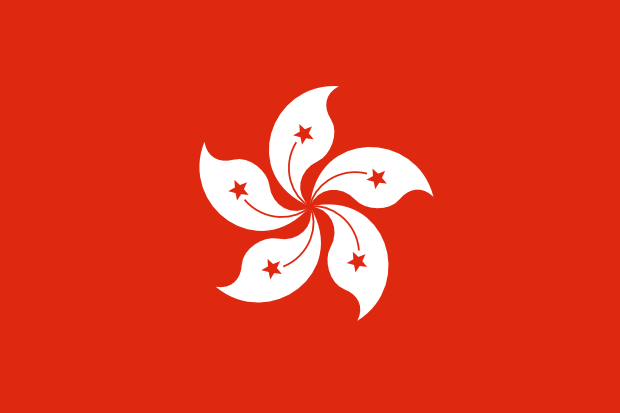
Flag is available in resolutions
| Icon 88x59 |  |
| Icon 32x21 |  |
Hong Kong
Hong Kong: A Symphony of Contrasts and Enduring Spirit
Hong Kong, a vibrant metropolis perched on the southeastern coast of China, is a land of captivating contrasts. It’s a place where towering skyscrapers pierce the clouds, reflecting the glittering lights of a global financial hub, while just a stone’s throw away, serene fishing villages and lush, verdant mountains offer a tranquil escape. This dynamic Special Administrative Region (SAR) of China, with its unique blend of East and West, has carved an indelible mark on the world stage, a testament to its resilient spirit and unwavering dynamism.
The population of Hong Kong is a fascinating tapestry woven from diverse threads. Predominantly of Cantonese Chinese descent, the city also hosts a significant expatriate community, drawn by its economic opportunities and cosmopolitan lifestyle. This multicultural influx has enriched Hong Kong’s social fabric, contributing to its eclectic culinary scene, vibrant arts, and diverse religious practices. The sheer density of its population, one of the highest in the world, fuels its relentless energy, creating a palpable buzz that permeates every street and alleyway. This intense concentration of people has also fostered a strong sense of community and a pragmatic approach to urban living, where efficiency and innovation are paramount. The linguistic landscape is equally varied, with Cantonese being the primary spoken language, but English widely used in business, government, and education, a legacy of its colonial past. This bilingualism is a key factor in Hong Kong’s ability to function as an international gateway.
Hong Kong’s history is a compelling narrative of trade, colonialism, and eventual return to Chinese sovereignty. Originally inhabited by indigenous peoples, the area rose to prominence in the 19th century with the arrival of the British. The Opium Wars led to the cession of Hong Kong Island to Britain in 1842, followed by the Kowloon Peninsula in 1860, and the New Territories on a 99-year lease in 1898. Under British rule, Hong Kong transformed into a vital trading post and a refuge for many fleeing turmoil on the mainland. It developed into a prosperous capitalist economy, distinct from the communist system of mainland China. The handover of sovereignty to the People’s Republic of China in 1997, under the “one country, two systems” principle, marked a new era. This agreement guaranteed Hong Kong a high degree of autonomy, including its own legal system, currency, and freedoms, for at least 50 years. However, recent years have seen increased political tensions and concerns about the erosion of these freedoms, leading to widespread protests and international scrutiny. This historical trajectory has shaped Hong Kong’s identity, imbuing it with a unique blend of resilience, adaptability, and a fierce desire to preserve its distinct way of life.
The geography of Hong Kong is as dramatic as its skyline. It comprises a mountainous mainland peninsula (Kowloon) and over 260 islands, the largest being Lantau Island. The iconic Victoria Harbour, one of the world’s busiest natural deep-water harbours, separates Hong Kong Island from Kowloon. The territory’s topography is characterized by steep hillsides, which have necessitated ingenious urban planning and construction, with many buildings clinging precariously to slopes. Despite its urban density, a significant portion of Hong Kong’s land is dedicated to country parks and nature reserves, offering a surprising amount of green space and biodiversity. The climate is subtropical, with hot, humid summers and mild, dry winters, making it a year-round destination for many. The geographical constraints have undoubtedly influenced its development, forcing innovation in land reclamation and high-density living, while also preserving pockets of natural beauty that offer a welcome respite from the urban bustle.
Hong Kong’s industry has long been synonymous with finance, trade, and logistics. It is a global financial centre, a gateway for investment into and out of mainland China, and a major hub for international banking and capital markets. The city’s free-port status and efficient infrastructure have made it a vital link in global supply chains. Beyond finance, Hong Kong has also excelled in other sectors, including tourism, professional services, and increasingly, in creative industries like film, fashion, and design. While manufacturing has largely moved to mainland China, the city retains a strong presence in high-value-added services and innovation. The relentless pursuit of economic growth and efficiency has been a hallmark of Hong Kong’s industrial landscape, driven by a pragmatic and entrepreneurial spirit.
For tourists, Hong Kong offers an unparalleled array of experiences. The iconic skyline viewed from Victoria Peak or from a Star Ferry crossing Victoria Harbour is a must-see. The bustling street markets, such as Temple Street Night Market and Ladies’ Market, offer a sensory overload of sights, sounds, and smells, where one can haggle for souvenirs, try local street food, and soak in the vibrant atmosphere. For those seeking cultural immersion, the historic temples like Man Mo Temple and the colourful architecture of the fishing village of Tai O provide a glimpse into traditional life. Food lovers are in for a treat, with Hong Kong boasting a world-renowned culinary scene, from Michelin-starred restaurants to humble dai pai dongs (open-air food stalls). The city’s efficient public transportation system makes it easy to explore its diverse districts, from the luxury boutiques of Causeway Bay to the artistic enclaves of Sheung Wan. For nature enthusiasts, hiking trails on Lantau Island, a visit to the Big Buddha, or a day at Hong Kong Disneyland offer a different facet of this multifaceted destination. The blend of ancient traditions and cutting-edge modernity ensures that Hong Kong captivates every visitor, offering a truly unforgettable experience. The city’s ability to seamlessly integrate its historical sites with its contemporary dynamism is a significant draw for travellers seeking a rich and varied vacation.
In conclusion, Hong Kong is far more than just a city; it is a living testament to human resilience, adaptability, and the enduring power of ambition. Its unique historical journey has forged a distinct identity, a place where East truly meets West in a spectacular and often exhilarating fashion. From its bustling financial districts to its tranquil natural landscapes, from its rich cultural heritage to its forward-thinking industries, Hong Kong continues to inspire and captivate, a true jewel of Asia that shines brightly on the global stage. Its spirit, forged through centuries of change and challenge, remains undimmed, promising a future as dynamic and compelling as its past.
Information about Hong Kong
The information comes from the publication CIA The World Factbook.
Automated text translation, excuse errors, please!
Country Hong Kong is situated in a location / continent East Asia. Hong Kong has an area of 1 104 km2 and 7 153 519 residents. The highest point has a height 958 above sea level. and it is called Tai Mo Shan. The lowest point is located at the level of 0 above sea level and it is named South China Sea. Hong Kong has the international abbreviation HK.
Hong Kong - economy
Total gross domestic product (GDP) is 355 600 000 000 $. Total gross domestic product per capita in purchasing power parity is 49 800 $. GDP grows by 5.00 % a year. Inflation (consumer price index) is equal to 5.30 % a year. Hong Kong have 3 703 000 working-age population (from a total population 7 153 519 people). Unemployment is at 3.40 %. The public debt of the country is 30.10 % GDP. The total amount of foreign debt is 903 200 000 000 USD.
Hong Kong - demography
As suggested above, Hong Kong has 7 153 519 people. Population growth is in the amount 0.42 % per year. Number of children born per 1000 population per year is 7.54.Every mother has average 1.09 children. The infant mortality rate is 2.90 .Average estimated life expectancy makes 82.12 years. Mortality is 7.23 people per 1000 population per year.
Hong Kong - transport and telecommunications
Hong Kong has 2 067 km of roads and 2 airports. There is registered 1 644 ships.
Number of active mobile phones (sim card) in the country Hong Kong is 14 931 000. Number of active fixed telephone lines is 4 348 000. Hong Kong has 4 873 000 internet users, who have the available 861 516 Internet connections. Hong Kong has been assigned a domain first Choose range .hk.
Hong Kong - energetics
Hong Kong consumes a year 43 140 000 000 kWh of electricity. Annual electricity production is 41 220 000 000 kWh in power plants with a total installed electrical capacity 12 620 000 kW. Hong Kong exports 2 750 000 000 kWh and imports 10 750 000 000 kWh of electricity per year Energy mix of power generation is as follows: fossil fuels: 100 %, nuclear energy: 0 %, renewable: 0.0 %, hydropower: 0.0 %.
Keywords: flags of countries in the world, energetics, Hong Kong, information, all flags, telecommunications, flag states, demography, transport, list of flags, Flag of Hong Kong, world countries, Flags of countries, list of countries, flag, economy, national flags, politic.