China
Flag of China
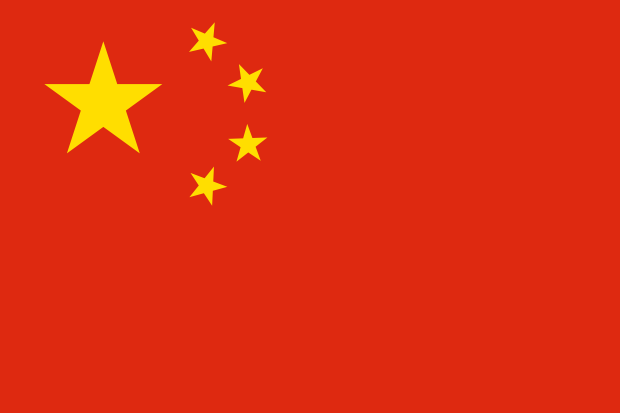
Flag is available in resolutions
| Icon 88x59 |  |
| Icon 32x21 |  |
China
China: A Colossus of Culture, History, and Modernity
China, officially the Peoples Republic of China (PRC), stands as a testament to the enduring power of civilization, a nation that has navigated millennia of profound change to emerge as a global superpower. Its sheer scale is staggering, both in terms of its vast geographical expanse and its unparalleled population. Home to over 1.4 billion people, China is the most populous country on Earth, a demographic reality that shapes its economy, society, and its place on the world stage. This immense human capital is the engine that has propelled Chinas remarkable economic ascent in recent decades, transforming it from a largely agrarian society into a manufacturing powerhouse and a leader in technological innovation. Understanding China requires grappling with this colossal human element, the intricate social fabric woven from diverse ethnic groups, and the enduring cultural heritage that continues to influence the lives of its citizens. The sheer density of population in its eastern plains and coastal regions contrasts sharply with the sparsely populated western territories, creating a dynamic and complex internal landscape.
The history of China is an epic saga, stretching back over 5,000 years. It is a narrative punctuated by the rise and fall of dynasties, periods of brilliant innovation and cultural flourishing, as well as times of internal strife and foreign invasion. From the legendary Xia dynasty, considered the first, to the powerful Han, Tang, and Song dynasties, each era left an indelible mark on Chinese civilization. The Han dynasty, for instance, is credited with establishing many of the foundational elements of Chinese governance and culture that persist to this day, including the imperial examination system and the spread of Confucianism. The Tang dynasty is often hailed as a golden age, a period of immense prosperity, artistic achievement, and cultural exchange with the outside world, facilitated by the Silk Road. The Ming and Qing dynasties, while witnessing periods of decline and eventual overthrow, also contributed significantly to Chinas architectural wonders, such as the Forbidden City and the Great Wall, and solidified its territorial boundaries. The 20th century brought seismic shifts with the collapse of the imperial system, the establishment of the Republic of China, and the eventual victory of the Communist Party in 1949, leading to the founding of the Peoples Republic of China. This tumultuous period of revolution, war, and ideological struggle has profoundly shaped modern China, its political system, and its national identity.
Geographically, China is a land of breathtaking diversity and immense scale. Occupying a significant portion of East Asia, it boasts a varied terrain that includes towering mountain ranges, vast deserts, fertile plains, and extensive coastlines. The Himalayas form a formidable natural barrier to the southwest, home to Mount Everest, the worlds highest peak. To the north lie the Gobi and Taklamakan deserts, arid expanses that have shaped the lives and traditions of nomadic peoples for centuries. The eastern part of the country is dominated by fertile river valleys, most notably those of the Yellow River (Huang He) and the Yangtze River (Chang Jiang), which have been the cradles of Chinese civilization for millennia. These rivers not only provide vital water for agriculture but also serve as crucial transportation routes. Chinas coastline stretches for thousands of kilometers along the Pacific Ocean, dotted with major port cities that are vital hubs for international trade. The countrys diverse climate ranges from subarctic in the north to tropical in the south, influencing its agricultural output and the lifestyles of its inhabitants. This geographical richness also presents significant challenges, from managing water resources to addressing environmental concerns in its rapidly industrializing regions.
The Chinese economy has undergone a metamorphosis over the past four decades, transitioning from a centrally planned system to a socialist market economy. This transformation, initiated by Deng Xiaoping in the late 1970s, has been nothing short of spectacular. China is now the worlds second-largest economy by nominal GDP and the largest by purchasing power parity. Its industrial sector is vast and diversified, encompassing everything from heavy industries like steel and automotive manufacturing to high-tech sectors such as electronics, telecommunications, and artificial intelligence. China is often referred to as the worlds factory due to its massive manufacturing output, producing a significant percentage of the worlds consumer goods. However, the country is increasingly shifting its focus towards innovation and higher-value production. Major industries include textiles, machinery, chemicals, and increasingly, advanced technologies like semiconductors and renewable energy. The Belt and Road Initiative (BRI), a massive infrastructure and economic development project, further underscores Chinas global economic ambitions, aiming to connect Asia, Europe, and Africa through a network of roads, railways, and maritime routes.
China offers a treasure trove of tourist attractions, reflecting its deep history, rich culture, and stunning natural beauty. Perhaps the most iconic symbol of China is the Great Wall, a monumental feat of engineering that stretches for thousands of kilometers across the northern landscape, a testament to centuries of defensive construction. The Forbidden City in Beijing, the former imperial palace, is a sprawling complex of palaces and courtyards that served as the home of emperors for nearly 500 years, offering a glimpse into the grandeur of imperial China. The Terracotta Army in Xian, a vast collection of life-sized clay soldiers guarding the tomb of the first Qin emperor, is another awe-inspiring archaeological wonder. For those seeking natural beauty, the karst landscapes of Guilin and Yangshuo present a surreal panorama of limestone peaks and winding rivers, often depicted in traditional Chinese landscape paintings. The ancient water towns near Shanghai, such as Zhouzhuang and Wuzhen, offer a charming glimpse into traditional Chinese life with their picturesque canals and well-preserved architecture. Further afield, the majestic Potala Palace in Lhasa, Tibet, stands as a spiritual and architectural marvel. From the bustling metropolises of Shanghai and Beijing, with their futuristic skylines and vibrant cultural scenes, to the serene temples and ancient villages nestled in the countryside, China offers an unparalleled diversity of experiences for travelers. The countrys commitment to preserving its heritage while embracing modernity makes it a truly captivating destination.
Information about China
The information comes from the publication CIA The World Factbook.
Automated text translation, excuse errors, please!
Country China is situated in a location / continent East Asia. China has an area of 9 596 961 km2 and 1 343 239 923 residents. The highest point has a height 8 850 above sea level. and it is called Mount Everest. The lowest point is located at the level of -154 above sea level and it is named Turpan Pendi. System of government is Communist state and the date of independence First October 1949. The capital city is Beijing. China has the international abbreviation CH.
China - economy
Total gross domestic product (GDP) is 11 440 000 000 000 $. Total gross domestic product per capita in purchasing power parity is 8 500 $. GDP grows by 9.20 % a year. Inflation (consumer price index) is equal to 5.50 % a year. China have 795 500 000 working-age population (from a total population 1 343 239 923 people). Unemployment is at 6.50 %. China issued 4.60 % GDP to healt care and 4,30 % GDP to army. The public debt of the country is 43.50 % GDP. The total amount of foreign debt is 697 200 000 000 USD.
China - demography
As suggested above, China has 1 343 239 923 people. Population growth is in the amount 0.48 % per year. Number of children born per 1000 population per year is 12.31.Every mother has average 1.55 children. The infant mortality rate is 15.62 and maternal mortality 37.00 deaths per 100,000 births. Average estimated life expectancy makes 74.84 years. Mortality is 7.17 people per 1000 population per year.
China - transport and telecommunications
China has 3 860 800 km of roads, 86 000 km of railway lines and 497 airports. The total length of waterways (navigable rivers, canals, etc.) is 110 000 km. There is registered 2 030 ships.
Number of active mobile phones (sim card) in the country China is 986 253 000. Number of active fixed telephone lines is 285 115 000. China has 389 000 000 internet users, who have the available 19 772 000 Internet connections. China has been assigned a domain first Choose range .cn.
China - energetics
China consumes a year 4 693 000 000 000 kWh of electricity. Annual electricity production is 4 604 000 000 000 kWh in power plants with a total installed electrical capacity 877 700 000 kW. China exports 19 060 000 000 kWh and imports 55 450 000 000 kWh of electricity per year Energy mix of power generation is as follows: fossil fuels: 74.3 %, nuclear energy: 1 %, renewable: 2.3 %, hydropower: 22.4 %. The country China is harvested annually 4 073 000 barrels of oil.
Keywords: world countries, demography, national flags, flag states, China, Flags of countries, energetics, list of flags, all flags, flags of countries in the world, flag, economy, information, telecommunications, Flag of China, list of countries, transport, politic.