Indonesia
Flag of Indonesia
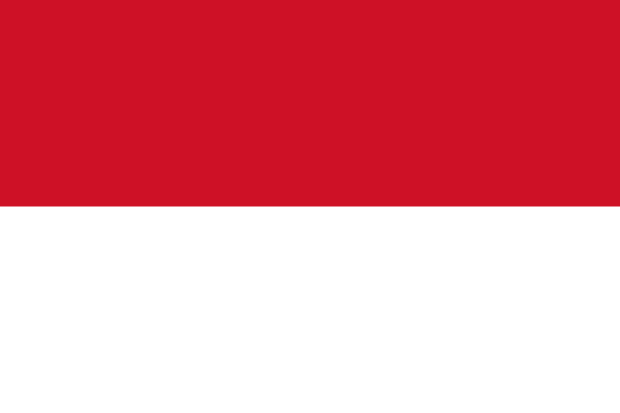
Flag is available in resolutions
| Icon 88x59 |  |
| Icon 32x21 |  |
Indonesia
Indonesia: An Archipelago of Wonders
Indonesia, officially the Republic of Indonesia, is a sprawling archipelago nation situated in Southeast Asia, straddling the equator between the Indian and Pacific Oceans. It is the world’s largest island country, comprising over 17,000 islands, of which around 6,000 are inhabited. This vast expanse of land and sea makes Indonesia a land of incredible biodiversity, diverse cultures, and a rich, complex history. From the volcanic peaks of Sumatra to the pristine beaches of Bali and the ancient rainforests of Borneo, Indonesia offers a captivating tapestry of natural beauty and human ingenuity. Its strategic location has historically made it a crossroads for trade and cultural exchange, leaving an indelible mark on its identity. The sheer scale of Indonesia presents both immense opportunities and significant challenges, shaping its economy, its people, and its place on the global stage.
The population of Indonesia is the fourth largest in the world, exceeding 270 million people. This immense demographic is characterized by an extraordinary ethnic and linguistic diversity, reflecting centuries of migration and interaction. While Javanese is the most spoken language, there are over 700 distinct languages and dialects spoken across the archipelago, each with its own unique cultural heritage. Bahasa Indonesia, a standardized form of Malay, serves as the national language, fostering a sense of unity amidst this rich mosaic. The majority of Indonesians are Muslim, making it the most populous Muslim-majority country in the world. However, Indonesia officially recognizes six religions: Islam, Protestantism, Catholicism, Hinduism, Buddhism, and Confucianism, underscoring its commitment to religious tolerance. This religious diversity, coupled with a multitude of ethnic groups, has fostered a unique cultural landscape where traditions, customs, and artistic expressions vary significantly from one island to another. The concept of „Bhinneka Tunggal Ika“ – „Unity in Diversity“ – is the national motto and a guiding principle for the nation’s social and political fabric, acknowledging and celebrating the differences that make Indonesia so vibrant. The rapid urbanization, particularly in major cities like Jakarta, Surabaya, and Bandung, is also a significant demographic trend, bringing its own set of social and economic dynamics.
Indonesias history is a long and multifaceted narrative, shaped by indigenous civilizations, foreign influences, and a persistent struggle for independence. Archaeological evidence suggests human habitation dating back hundreds of thousands of years, with early settlers developing sophisticated agricultural practices and complex social structures. The archipelago became a vital hub for maritime trade routes, attracting merchants and empires from India, China, and the Middle East. This led to the rise of powerful Hindu-Buddhist kingdoms, such as Srivijaya in Sumatra and Majapahit in Java, which exerted considerable influence over regional affairs and left behind impressive architectural legacies like the Borobudur and Prambanan temples. The arrival of European colonial powers in the 16th century marked a significant turning point. The Portuguese, followed by the Dutch, sought to control the lucrative spice trade, gradually establishing their dominance. The Dutch East Indies, as Indonesia was then known, became a cornerstone of the Dutch colonial empire, exploited for its rich natural resources. The struggle for independence was a protracted and arduous process, culminating in the Japanese occupation during World War II and the subsequent declaration of independence by Sukarno and Hatta on August 17, 1945. The ensuing war of independence against the Dutch lasted for several years before Indonesia finally gained full recognition of its sovereignty in 1949. The post-independence era has seen periods of political stability and upheaval, including the authoritarian rule of Suharto, followed by a transition to democracy in the late 1990s. This rich historical tapestry continues to inform Indonesia’s national identity and its aspirations for the future.
Geographically, Indonesia is a land of dramatic contrasts and immense natural beauty. Situated on the Pacific Ring of Fire, it is home to over 130 active volcanoes, contributing to its fertile soil and its susceptibility to seismic activity. The archipelago spans a vast area, with the western part of the country, including Sumatra, Java, and Borneo, lying on the Sunda Shelf, which is geologically connected to mainland Asia. The eastern part, including New Guinea, is part of the Sahul Shelf, connected to Australia. This geological diversity results in a wide range of landscapes, from lush tropical rainforests and sprawling rice paddies to rugged mountain ranges and extensive coastlines. The Indonesian archipelago is divided by two major biogeographical boundaries: the Wallace Line and the Weber Line, which separate Asian and Australian fauna and flora, contributing to its exceptional biodiversity. The country boasts an incredible array of ecosystems, including coral reefs, mangrove forests, and montane cloud forests, supporting an astonishing number of plant and animal species, many of which are endemic. The vastness of the ocean surrounding Indonesia also plays a crucial role in its climate, which is tropical and characterized by high humidity and rainfall throughout the year. The sheer scale of the archipelago means that climate conditions can vary significantly from one region to another, influenced by monsoon patterns and elevation.
Indonesias economy is the largest in Southeast Asia and is a member of the G20. It is a mixed economy with a significant role for the state, alongside a growing private sector. The country is rich in natural resources, including oil, natural gas, coal, tin, copper, and gold, which have historically been major drivers of its economy. However, in recent decades, Indonesia has been diversifying its economic base. The agricultural sector remains important, with key exports including palm oil, rubber, coffee, tea, and cocoa. Manufacturing has also grown substantially, with industries producing textiles, electronics, automotive parts, and processed food. The service sector, including tourism, telecommunications, and finance, is increasingly contributing to economic growth. The government has been implementing policies to attract foreign investment, improve infrastructure, and develop human capital to foster more sustainable and inclusive economic development. Challenges remain, including addressing income inequality, improving education and healthcare systems, and managing the environmental impact of resource extraction and industrialization. The digital economy is also rapidly expanding, with a growing number of tech startups and a burgeoning e-commerce market.
Indonesia offers an unparalleled wealth of tourist attractions, drawing millions of visitors each year to its diverse islands. Bali, often referred to as the Island of the Gods, is perhaps the most famous destination, renowned for its stunning beaches, vibrant Hindu culture, lush rice terraces, and world-class surfing. Ubud, in the heart of Bali, is a spiritual and artistic hub, attracting yoga enthusiasts and those seeking cultural immersion. Beyond Bali, Java boasts the magnificent Borobudur, the worlds largest Buddhist temple, and the equally impressive Hindu temple complex of Prambanan, both UNESCO World Heritage sites. The bustling capital city of Jakarta offers a glimpse into modern Indonesian life with its skyscrapers, shopping malls, and historical sites like the old Dutch quarter of Kota Tua. Sumatra is known for its wild beauty, including the orangutan sanctuaries in Bukit Lawang, the stunning volcanic lake of Toba, and the rich cultural heritage of the Batak people. Komodo National Park is a UNESCO World Heritage site famous for its unique Komodo dragons, the worlds largest lizards, and its breathtaking underwater scenery for diving and snorkeling. Lombok, often considered a less crowded alternative to Bali, offers pristine beaches, the majestic Mount Rinjani for trekking, and the Gili Islands, a popular spot for relaxation and diving. Sulawesi is home to the unique Torajan culture, known for its elaborate funeral ceremonies and distinctive architecture, as well as the worlds deepest lake, Lake Poso, and incredible diving opportunities. Further east, Papua (Western New Guinea) offers a truly wild and remote experience, with the stunning Raja Ampat archipelago renowned for its unparalleled marine biodiversity and the Dani people, who maintain traditional ways of life. Each island and region within Indonesia presents a distinct experience, catering to a wide range of interests, from adventure and nature to culture and relaxation.
In conclusion, Indonesia is a nation of immense scale and unparalleled diversity. Its archipelago of over 17,000 islands is a testament to the forces of nature and the resilience of its people. From its rich history shaped by ancient kingdoms and colonial rule to its vibrant present characterized by a burgeoning economy and a mosaic of cultures, Indonesia continues to captivate and inspire. The sheer geographical expanse, home to active volcanoes, lush rainforests, and vibrant coral reefs, supports an extraordinary array of biodiversity. Its population, the fourth largest in the world, is a testament to the countrys ability to foster unity amidst diversity. As Indonesia looks to the future, it faces challenges and opportunities that will undoubtedly shape its trajectory. Yet, its enduring spirit, embodied in the motto „Bhinneka Tunggal Ika,“ promises a continued journey of growth, discovery, and wonder for this extraordinary nation.
Information about Indonesia
The information comes from the publication CIA The World Factbook.
Automated text translation, excuse errors, please!
Country Indonesia is situated in a location / continent East Asia. Indonesia has an area of 1 904 569 km2 and 248 645 008 residents. The highest point has a height 5 030 above sea level. and it is called Puncak Jaya. The lowest point is located at the level of 0 above sea level and it is named Indian Ocean. System of government is republic and the date of independence 17th August 1945. The capital city is Jakarta. Indonesia has the international abbreviation ID.
Indonesia - economy
Total gross domestic product (GDP) is 1 139 000 000 000 $. Total gross domestic product per capita in purchasing power parity is 4 700 $. GDP grows by 6.50 % a year. Inflation (consumer price index) is equal to 5.40 % a year. Indonesia have 117 400 000 working-age population (from a total population 248 645 008 people). Unemployment is at 6.60 %. Indonesia issued 5.50 % GDP to healt care and 3,00 % GDP to army. The public debt of the country is 24.40 % GDP. The total amount of foreign debt is 186 900 000 000 USD.
Indonesia - demography
As suggested above, Indonesia has 248 645 008 people. Population growth is in the amount 1.04 % per year. Number of children born per 1000 population per year is 17.76.Every mother has average 2.23 children. The infant mortality rate is 26.99 and maternal mortality 220.00 deaths per 100,000 births. Average estimated life expectancy makes 71.62 years. Mortality is 6.28 people per 1000 population per year.
Indonesia - transport and telecommunications
Indonesia has 437 759 km of roads, 5 042 km of railway lines and 676 airports. The total length of waterways (navigable rivers, canals, etc.) is 21 579 km. There is registered 1 340 ships.
Number of active mobile phones (sim card) in the country Indonesia is 236 800 000. Number of active fixed telephone lines is 38 618 000. Indonesia has 20 000 000 internet users, who have the available 1 342 000 Internet connections. Indonesia has been assigned a domain first Choose range .id.
Indonesia - energetics
Indonesia consumes a year 131 500 000 000 kWh of electricity. Annual electricity production is 156 000 000 000 kWh in power plants with a total installed electrical capacity 32 800 000 kW. Indonesia exports 0 kWh and imports 0 kWh of electricity per year Energy mix of power generation is as follows: fossil fuels: 81.5 %, nuclear energy: 0 %, renewable: 3.6 %, hydropower: 14.9 %. The country Indonesia is harvested annually 982 900 barrels of oil.
Keywords: list of flags, Flag of Indonesia, world countries, Indonesia, economy, information, transport, energetics, all flags, flags of countries in the world, telecommunications, demography, flag, Flags of countries, national flags, list of countries, flag states, politic.