Taiwan
Flag of Taiwan
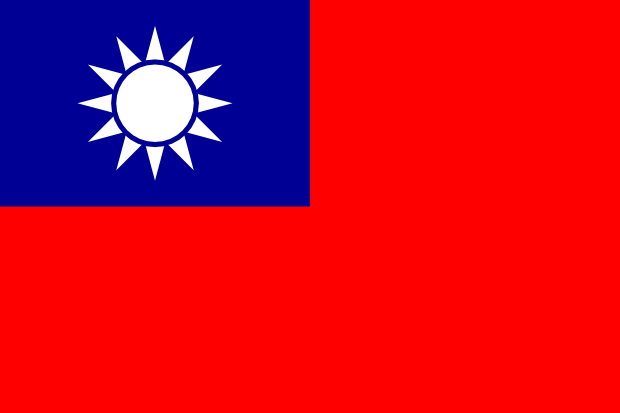
Flag is available in resolutions
| Icon 88x59 |  |
| Icon 32x21 |  |
Taiwan
Certainly, heres an article about Taiwan, approximately 5000 characters long, written in English, using Czech quotation marks „“ and apostrophes ’ where appropriate, with bold text marked by `` tags, and without ` ` or `` tags.
Taiwan, officially the Republic of China (ROC), is an island nation situated off the southeastern coast of mainland China. It is a land of striking contrasts, where ancient traditions seamlessly blend with cutting-edge technology, and breathtaking natural landscapes coexist with bustling metropolises. With a rich and complex history, a dynamic economy, and a vibrant culture, Taiwan has carved out a unique and significant place for itself on the global stage. The island’s strategic location in the Western Pacific has historically made it a focal point for trade, migration, and geopolitical maneuvering, shaping its destiny in profound ways. This fascinating island continues to captivate visitors and observers alike with its resilience, innovation, and the warmth of its people.
The population of Taiwan is approximately 23.9 million people, making it a densely populated island. The vast majority of the population identifies as Han Chinese, with significant historical waves of migration from mainland China, particularly during the Qing Dynasty and after the Chinese Civil War. However, Taiwan also boasts a distinct indigenous population, comprising around 2% of the total. These indigenous groups, such as the Amis, Atayal, and Bunun, have their own unique languages, cultures, and traditions, predating Han Chinese settlement by millennia. This rich cultural tapestry is a testament to Taiwan’s long and diverse history. The rapid urbanization has led to a high concentration of people in major cities like Taipei, Kaohsiung, and Taichung, creating vibrant and dynamic urban centers. The Taiwanese people are known for their diligence, hospitality, and a strong sense of community. Their resilience in the face of historical challenges and their commitment to democratic values are hallmarks of their national character. The demographic profile also shows a growing aging population, a common trend in many developed East Asian nations, which presents both challenges and opportunities for social and economic policy.
Taiwan’s history is a complex tapestry woven from indigenous roots, colonial influences, and political upheaval. The island was inhabited by Austronesian peoples for thousands of years before significant Han Chinese migration began in the 17th century. This period saw Dutch and Spanish colonial outposts established, followed by a brief but impactful period of rule under the Kingdom of Tungning, established by Koxinga, a Ming loyalist fleeing the Qing conquest. The Qing Dynasty eventually annexed Taiwan in 1683, and it remained under their rule until 1895. Following China’s defeat in the First Sino-Japanese War, Taiwan was ceded to Japan, ushering in a 50-year period of Japanese colonial rule. This era brought significant infrastructure development and industrialization, but also suppression of Taiwanese culture and identity. After World War II, Taiwan was returned to the Republic of China (ROC) in 1945. However, the ensuing Chinese Civil War saw the defeated Nationalist government (Kuomintang, KMT) retreat to Taiwan in 1949, establishing it as the seat of the ROC government. This event has led to the ongoing political dispute with the People’s Republic of China (PRC), which claims Taiwan as a renegade province. The subsequent decades were marked by martial law, economic development, and a gradual transition towards democracy, culminating in the island’s vibrant democratic system today. This historical trajectory has profoundly shaped Taiwans identity and its complex relationship with the international community.
Geographically, Taiwan is an island of remarkable diversity, stretching approximately 394 kilometers (245 miles) from north to south and 144 kilometers (89 miles) from east to west. It is situated in the Pacific Ocean, roughly 180 kilometers (110 miles) off the coast of Fujian Province, China. The island is dominated by a central mountain range, the Central Mountain Range, which runs along its spine, accounting for nearly two-thirds of the island’s landmass. The highest peak, Yushan (Jade Mountain), stands at an impressive 3,952 meters (12,966 feet), making it the highest point in Northeast Asia. The eastern side of the island is characterized by steep cliffs and dramatic coastlines that plunge into the Pacific Ocean, while the western plains are broader and more fertile, supporting the majority of the population and agricultural activity. Taiwan is also prone to seismic activity due to its location on the Pacific Ring of Fire, with earthquakes being a relatively common occurrence. The island’s subtropical to tropical climate ensures warm temperatures year-round, with distinct wet and dry seasons, and the monsoon season bringing heavy rainfall, particularly in the summer months. This diverse geography provides a stunning backdrop for a wide range of ecosystems, from lush rainforests in the mountains to coastal wetlands.
Taiwan’s economy is a global powerhouse, renowned for its advanced technology and manufacturing capabilities. It is often referred to as one of the “Four Asian Tigers” due to its rapid industrialization and economic growth since the latter half of the 20th century. The island is a world leader in the production of semiconductors, with companies like Taiwan Semiconductor Manufacturing Company (TSMC) playing a crucial role in the global supply chain. Beyond semiconductors, Taiwan excels in the manufacturing of electronics, information and communication technology (ICT) products, machinery, and petrochemicals. The government has consistently invested in research and development, fostering innovation and maintaining a competitive edge in these high-tech sectors. While manufacturing remains a cornerstone, the service sector, including finance, trade, and tourism, is also a significant contributor to the economy. Taiwan has a robust export-oriented economy, with strong trade relationships with countries worldwide. The government’s strategic economic policies, coupled with a highly skilled and educated workforce, have been instrumental in its sustained economic success. The island’s commitment to free trade and its integration into global supply chains underscore its importance in the international economic landscape.
Taiwan offers a wealth of tourist attractions, catering to a wide range of interests. The vibrant capital city of Taipei is a must-visit, boasting iconic landmarks such as the Taipei 101 skyscraper, offering panoramic city views, and the National Palace Museum, home to an extensive collection of ancient Chinese imperial artifacts. The bustling night markets, like Shilin Night Market, are a culinary adventure, offering an array of delicious street food and local delicacies. For those seeking natural beauty, Taroko National Park on the east coast is a spectacular destination, famed for its dramatic marble cliffs, gorges, and hiking trails. Sun Moon Lake, nestled in the central mountains, provides serene landscapes, boat rides, and opportunities for cycling. The southern city of Kaohsiung, a major port city, offers a more laid-back atmosphere with attractions like the Fo Guang Shan Monastery and the beautiful Cijin Island. For a glimpse into Taiwan’s indigenous cultures, visiting indigenous villages in the eastern part of the island can be a deeply enriching experience. The island’s commitment to preserving its natural heritage and cultural sites ensures that visitors can explore its diverse offerings for years to come. The blend of modern attractions and historical sites, coupled with the island’s natural splendor, makes Taiwan a truly compelling travel destination.
Information about Taiwan
The information comes from the publication CIA The World Factbook.
Automated text translation, excuse errors, please!
Country Taiwan is situated in a location / continent East Asia. Taiwan has an area of 35 980 km2 and 23 234 936 residents. The highest point has a height 3 952 above sea level. and it is called Yu Shan. The lowest point is located at the level of 0 above sea level and it is named South China Sea. System of government is republic.The capital city is Taipei. Taiwan has the international abbreviation TW.
Taiwan - economy
Total gross domestic product (GDP) is 887 300 000 000 $. Total gross domestic product per capita in purchasing power parity is 38 200 $. GDP grows by 4.00 % a year. Inflation (consumer price index) is equal to 1.40 % a year. Taiwan have 11 200 000 working-age population (from a total population 23 234 936 people). Unemployment is at 4.40 %. The public debt of the country is 36.30 % GDP. The total amount of foreign debt is 125 800 000 000 USD.
Taiwan - demography
As suggested above, Taiwan has 23 234 936 people. Population growth is in the amount 0.17 % per year. Number of children born per 1000 population per year is 8.81.Every mother has average 1.10 children. The infant mortality rate is 5.10 .Average estimated life expectancy makes 78.48 years. Mortality is 7.12 people per 1000 population per year.
Taiwan - transport and telecommunications
Taiwan has 41 475 km of roads, 1 580 km of railway lines and 40 airports. There is registered 112 ships.
Number of active mobile phones (sim card) in the country Taiwan is 28 862 000. Number of active fixed telephone lines is 16 907 000. Taiwan has 16 147 000 internet users, who have the available 6 166 000 Internet connections. Taiwan has been assigned a domain first Choose range .tw.
Taiwan - energetics
Taiwan consumes a year 203 800 000 000 kWh of electricity. Annual electricity production is 213 200 000 000 kWh in power plants with a total installed electrical capacity 41 000 000 kW. Taiwan exports 0 kWh and imports 0 kWh of electricity per year Energy mix of power generation is as follows: fossil fuels: 73.6 %, nuclear energy: 12.5 %, renewable: 2.7 %, hydropower: 4.7 %. The country Taiwan is harvested annually 830 barrels of oil.
Keywords: information, Taiwan, flags of countries in the world, flag states, energetics, economy, transport, all flags, Flags of countries, demography, list of countries, national flags, list of flags, telecommunications, flag, world countries, Flag of Taiwan, politic.