Israel
Flag of Israel
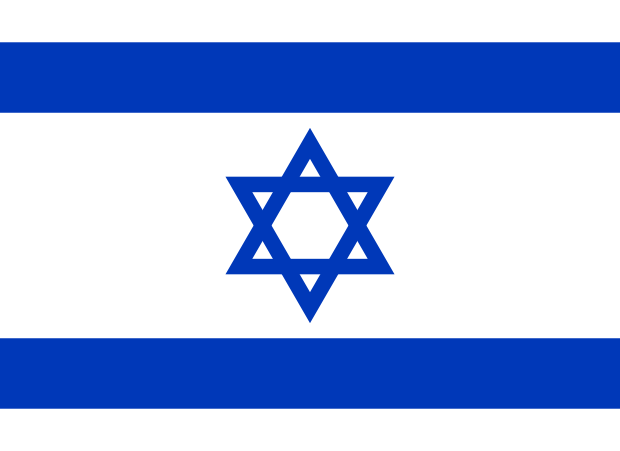
Flag is available in resolutions
| Icon 88x64 |  |
| Icon 32x23 |  |
Israel
Israel: A Land of Ancient Roots and Modern Ambitions
Nestled in the heart of the Levant, a region steeped in millennia of history and religious significance, lies Israel, a nation that defies easy categorization. It is a land where ancient stones whisper tales of prophets and empires, while gleaming skyscrapers pierce the sky, embodying a spirit of relentless innovation. This small but mighty country, bordered by Lebanon to the north, Syria to the northeast, Jordan to the east, and Egypt to the southwest, with the Mediterranean Sea to its west, is a tapestry woven with diverse landscapes, a vibrant populace, and a complex, compelling narrative. Its strategic location has made it a crossroads of civilizations, a prize sought after by many, and a crucible where cultures have clashed and coalesced for thousands of years. The very soil of Israel is imbued with a profound historical and spiritual resonance, attracting pilgrims and scholars from across the globe, all seeking to connect with its sacred sites and understand its enduring legacy.
The population of Israel is as multifaceted as its history. Comprised of approximately 9.5 million people, the majority are Jewish, a testament to the Zionist movements success in establishing a homeland for the Jewish people. However, a significant Arab minority, comprising about 21% of the population, adds a crucial layer to the nations demographic mosaic. This Arab population is largely Muslim, with smaller Christian and Druze communities also present. The dynamic between these two major groups, while often fraught with political tension, also fosters a unique cultural exchange, evident in everything from cuisine to artistic expression. Beyond these core groups, Israel is a melting pot, attracting immigrants from all corners of the world, drawn by opportunity, a desire to reconnect with their heritage, or the promise of a democratic society. This constant influx of new arrivals has enriched the nations cultural landscape, infusing it with diverse traditions, languages, and perspectives, creating a society that is both deeply rooted and remarkably dynamic. The official languages are Hebrew and Arabic, though English is widely spoken, particularly in business and tourism.
The history of Israel is a saga of epic proportions, stretching back to the biblical era. It is the land where Abraham is said to have received Gods covenant, where Moses led his people out of Egypt, and where King David established Jerusalem as his capital. The ancient kingdoms of Israel and Judah, though eventually conquered by larger empires, left an indelible mark on the region and the world. For centuries, the land was ruled by a succession of empires – Babylonian, Persian, Greek, Roman, Byzantine, and Ottoman – each leaving their architectural and cultural footprints. The modern Zionist movement, born out of a desire to escape persecution and establish self-determination, gained momentum in the late 19th and early 20th centuries. Following the Holocaust, the establishment of the State of Israel in 1948 marked a pivotal moment, fulfilling a centuries-old dream for many Jews but also ushering in a new era of conflict and geopolitical complexity. The subsequent decades have been characterized by wars, peace initiatives, and the ongoing struggle for security and coexistence in a deeply contested region. Understanding Israel necessitates grappling with this layered history, recognizing the interwoven narratives of its various peoples and the profound impact of historical events on its present-day reality.
Geographically, Israel is a land of striking contrasts, packed into a relatively small area. Its northern region is dominated by the fertile Galilee, with rolling hills, lush forests, and the iconic Sea of Galilee, a vital freshwater reservoir. Moving south, the landscape transitions to the more arid Judean Desert, a stark and beautiful expanse punctuated by ancient fortresses like Masada, perched dramatically on a rocky plateau overlooking the Dead Sea. The Dead Sea itself, the lowest point on Earths surface, is a unique natural wonder, its hypersaline waters offering buoyancy and therapeutic properties. Further south, the Negev Desert stretches across a vast portion of the country, a land of sand dunes, rocky plateaus, and surprisingly vibrant biodiversity. The Mediterranean coastline offers sandy beaches and bustling port cities, while the Jordan Rift Valley, a geological marvel, runs along its eastern border. This diverse topography influences everything from agriculture to climate, creating distinct microclimates and ecosystems within a short geographical span.
Despite its relatively small size, Israel boasts a remarkably robust and diversified economy, often referred to as the “Start-up Nation” for its pioneering role in technological innovation. The high-tech sector is a cornerstone of its economy, with world-renowned companies specializing in cybersecurity, artificial intelligence, medical devices, and agricultural technology. This success is fueled by a highly educated workforce, significant investment in research and development, and a culture that encourages entrepreneurship and risk-taking. Beyond technology, Israel has a strong agricultural sector, utilizing advanced irrigation techniques to overcome its arid climate and produce a significant portion of its own food, including fruits, vegetables, and flowers. The diamond industry is another vital component, with the country being a global leader in diamond cutting and polishing. Tourism also plays a significant role, attracting visitors to its historical and religious sites, its beaches, and its vibrant cities. The country’s strategic location has also made it a hub for international trade and logistics.
Israels tourist attractions are as diverse as its landscape and history, offering something for every traveler. Jerusalem, the eternal city, is arguably the most significant destination, drawing pilgrims from Judaism, Christianity, and Islam to its sacred sites. The Western Wall, a remnant of the ancient Jewish Temple, the Church of the Holy Sepulchre, believed to be the site of Jesus crucifixion and burial, and the Al-Aqsa Mosque and Dome of the Rock, holy to Muslims, are all located within the Old City, a UNESCO World Heritage site. Beyond Jerusalem, the ancient Roman ruins of Caesarea, the vibrant markets and modern boulevards of Tel Aviv, a UNESCO World Heritage site renowned for its Bauhaus architecture, the historic port city of Jaffa, and the breathtaking Masada fortress offer compelling glimpses into the countrys past and present. The natural beauty of the Galilee region, with its tranquil kibbutzim and biblical sites, and the unique geological formations of the Negev Desert, including the Ramon Crater, also draw visitors. For those seeking relaxation, the beaches of the Mediterranean coast and the therapeutic waters of the Dead Sea provide ample opportunities.
In conclusion, Israel is a land of profound complexity and enduring spirit. It is a nation forged in the crucible of history, shaped by the dreams and struggles of its people, and driven by a relentless pursuit of innovation. Its ancient past and its modern aspirations coexist, creating a unique and compelling destination that continues to captivate and inspire visitors from around the world. The intricate interplay of its diverse population, its rich history, its varied geography, its dynamic industry, and its wealth of tourist attractions paints a vivid picture of a country that is both deeply rooted and constantly evolving. Israel is not merely a place on a map; it is a narrative in motion, a testament to resilience, and a beacon of a vibrant, modern society rising from ancient foundations.
Information about Israel
The information comes from the publication CIA The World Factbook.
Automated text translation, excuse errors, please!
Country Israel is situated in a location / continent Middle East. Israel has an area of 20 770 km2 and 7 590 758 residents. The highest point has a height 1 208 above sea level. and it is called Har Meron. The lowest point is located at the level of -408 above sea level and it is named Dead Sea. System of government is republic and the date of independence 14th May 1948. The capital city is Jerusalem. Israel has the international abbreviation IS.
Israel - economy
Total gross domestic product (GDP) is 238 200 000 000 $. Total gross domestic product per capita in purchasing power parity is 31 400 $. GDP grows by 4.70 % a year. Inflation (consumer price index) is equal to 3.50 % a year. Israel have 3 204 000 working-age population (from a total population 7 590 758 people). Unemployment is at 5.60 %. Israel issued 9.50 % GDP to healt care and 7,30 % GDP to army. The public debt of the country is 72.80 % GDP. The total amount of foreign debt is 102 300 000 000 USD.
Israel - demography
As suggested above, Israel has 7 590 758 people. Population growth is in the amount 1.54 % per year. Number of children born per 1000 population per year is 18.97.Every mother has average 2.67 children. The infant mortality rate is 4.07 and maternal mortality 7.00 deaths per 100,000 births. Average estimated life expectancy makes 81.07 years. Mortality is 5.50 people per 1000 population per year.
Israel - transport and telecommunications
Israel has 18 290 km of roads, 975 km of railway lines and 47 airports. There is registered 8 ships.
Number of active mobile phones (sim card) in the country Israel is 9 200 000. Number of active fixed telephone lines is 3 500 000. Israel has 4 525 000 internet users, who have the available 2 179 000 Internet connections. Israel has been assigned a domain first Choose range .il.
Israel - energetics
Israel consumes a year 45 590 000 000 kWh of electricity. Annual electricity production is 53 550 000 000 kWh in power plants with a total installed electrical capacity 12 070 000 kW. Israel exports 3 783 000 000 kWh and imports 0 kWh of electricity per year Energy mix of power generation is as follows: fossil fuels: 99.7 %, nuclear energy: 0 %, renewable: 0.3 %, hydropower: 0.1 %. The country Israel is harvested annually 100 barrels of oil.
Keywords: Israel, world countries, economy, flag states, all flags, transport, flag, national flags, list of countries, telecommunications, list of flags, energetics, Flag of Israel, information, Flags of countries, flags of countries in the world, demography, politic.