Iraq
Flag of Iraq
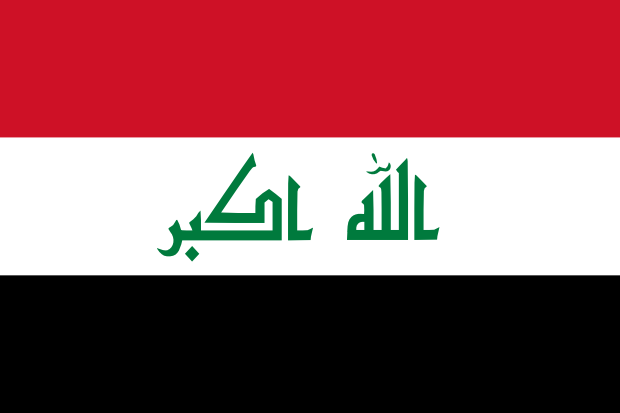
Flag is available in resolutions
| Icon 88x59 |  |
| Icon 32x21 |  |
Iraq
Iraq: A Cradle of Civilization and a Land of Enduring Spirit
Iraq, officially the Republic of Iraq, is a nation steeped in millennia of history, a land where the very foundations of civilization were laid. Situated at the crossroads of ancient empires and modern geopolitical currents, it is a country of profound cultural heritage, diverse landscapes, and a resilient people who have weathered centuries of change and conflict. Understanding Iraq requires delving into its rich past, appreciating its strategic geographical position, and acknowledging the complexities of its present-day realities. From the fertile crescent of Mesopotamia to the stark beauty of its desert expanses, Iraq offers a compelling narrative of human ingenuity, spiritual devotion, and the enduring quest for stability and prosperity. The country’s name itself is believed to derive from the Arabic word “’iraq,” meaning “deeply rooted” or “watered,” a fitting description for a land cradled by two mighty rivers, the Tigris and the Euphrates, which have sustained life and fostered innovation for thousands of years.
The population of Iraq is a vibrant tapestry woven from diverse ethnic and religious threads, reflecting its long and complex history. The majority of Iraqis are Arabs, comprising both Shia and Sunni Muslim communities. Shia Muslims are predominant, particularly in the southern and central regions, while Sunni Muslims are more concentrated in the west and north. Beyond the Arab majority, significant minority populations contribute to the nations rich cultural mosaic. The Kurds, the largest ethnic minority, inhabit the northern mountainous regions, known as the Kurdistan Region, and possess their own distinct language, culture, and a degree of autonomy. Other smaller but historically important communities include Assyrians, Turkmen, and Yazidis, each with their unique traditions and ancestral lands. This diversity, while a source of cultural richness, has also been a focal point of historical tensions and political struggles. The official languages are Arabic and Kurdish, though English is widely understood in professional and educational circles, a legacy of past administrations and international engagement. The Iraqi people are known for their warmth, hospitality, and deep sense of community, often expressed through strong family ties and vibrant social gatherings. Despite the hardships they have faced, a spirit of perseverance and hope for a brighter future remains a defining characteristic of the Iraqi populace.
Iraqs history is arguably its most defining feature, a narrative that stretches back to the dawn of human civilization. It is here, in ancient Mesopotamia, that some of the earliest known human settlements, cities, and empires flourished. The Sumerians, Akkadians, Babylonians, and Assyrians all left an indelible mark on human history, pioneering advancements in writing (cuneiform), law (Code of Hammurabi), mathematics, astronomy, and architecture. The legendary city of Babylon, with its Hanging Gardens, was once the center of a vast empire, and Ur was a thriving metropolis that played a crucial role in early trade and culture. Later, the region fell under the sway of various empires, including the Persians, Greeks, Romans, and the early Islamic caliphates. The Abbasid Caliphate, with Baghdad as its capital, was a golden age of Islamic learning and scientific discovery, attracting scholars from across the known world. The Mongol invasion in the 13th century marked a devastating turning point, leading to the destruction of Baghdad and a significant decline in the region’s prominence. The Ottoman Empire ruled for centuries, followed by the British mandate after World War I, which ultimately led to the establishment of the modern Iraqi state in 1932. The 20th century was marked by political instability, coups, and the rise of authoritarian regimes, most notably the Baathist rule under Saddam Hussein. The Iran-Iraq War, the invasion of Kuwait, and the subsequent Gulf War, followed by the 2003 invasion and the ensuing years of conflict and insurgency, have profoundly shaped contemporary Iraq, leaving scars that are still healing.
Geographically, Iraq is a land of striking contrasts, dominated by the fertile plains of Mesopotamia and bordered by arid desert regions and rugged mountains. The Tigris and Euphrates rivers, originating in the Taurus Mountains of Turkey, are the lifeblood of the country, flowing southwards to form the Shatt al-Arab waterway before emptying into the Persian Gulf. These rivers have historically enabled agriculture, supporting vast irrigation systems and making the land incredibly productive, hence its designation as the “Cradle of Civilization.” The Mesopotamian Plain, a vast alluvial plain, is characterized by fertile soil, making it ideal for growing grains, dates, and vegetables. To the north and east, the landscape rises into the Zagros Mountains, a rugged and sparsely populated region that forms a natural border with Iran and Turkey. This area is home to the Kurdish population and is known for its dramatic scenery, valleys, and higher elevations. The western and southern parts of Iraq are dominated by vast desert expanses, including the Syrian Desert and the Arabian Desert. These regions are characterized by sand dunes, rocky plateaus, and wadis (dry riverbeds), with scattered oases providing vital water sources. Iraq’s climate is predominantly arid and semi-arid, with very hot summers and mild winters. Rainfall is scarce, especially in the desert regions, and is primarily concentrated in the winter months. The presence of these diverse geographical features has influenced settlement patterns, economic activities, and the historical development of different communities within the country.
The Iraqi economy, historically driven by its rich natural resources, has undergone significant transformations and faced immense challenges. The most crucial sector is undoubtedly oil and gas. Iraq possesses some of the worlds largest proven oil reserves, and oil exports constitute the overwhelming majority of its revenue. The discovery and exploitation of these reserves have been central to the country’s economic development and its position on the global stage. However, this heavy reliance on oil has also made the economy vulnerable to fluctuations in global oil prices and has often overshadowed the development of other sectors. Agriculture, once a cornerstone of the Iraqi economy, has suffered from decades of conflict, neglect, and water scarcity issues, though efforts are underway to revitalize it. The fertile lands of Mesopotamia, when properly managed and irrigated, have the potential to support a thriving agricultural sector, contributing to food security and rural employment. Industry in Iraq is diverse but has also been impacted by war and sanctions. Key industrial sectors include petrochemicals, fertilizers, cement, and textiles. The country also has a significant manufacturing base, though much of it requires modernization and investment. The service sector is growing, particularly in urban centers, encompassing retail, telecommunications, and finance. However, rebuilding and diversifying the economy remains a paramount challenge, requiring significant investment in infrastructure, education, and the creation of a stable business environment. The ongoing efforts to attract foreign investment and foster private sector growth are crucial for Iraq’s long-term economic recovery and stability.
Despite the ravages of conflict and political turmoil, Iraq is endowed with an extraordinary wealth of historical and cultural attractions, offering a glimpse into its glorious past. The ancient ruins of Mesopotamia are a testament to the ingenuity of its earliest inhabitants. The ziggurat of Ur, a massive stepped pyramid, stands as a monumental structure from the Sumerian civilization. The ancient city of Babylon, though largely reconstructed, evokes the grandeur of Nebuchadnezzar’s empire, with its Ishtar Gate and reconstructed processional way. Near Mosul, the ruins of Nineveh, the capital of the Assyrian Empire, and Nimrud, another significant Assyrian city, hold immense archaeological significance, though sadly, some of these sites have been damaged by recent conflicts. Baghdad, the capital, is a city with a rich history, once the intellectual heart of the Islamic world. Its Al-Kadhimiya Mosque, a revered Shia shrine, and the historic Al-Mutanabbi Street, a hub for booksellers and intellectuals, are significant cultural landmarks. The Kurdistan Region offers a different kind of appeal, with its stunning mountainous landscapes, ancient citadels like Erbil Citadel (one of the oldest continuously inhabited cities in the world), and vibrant local cultures. Religious tourism is also a significant draw, with numerous important Shia shrines, such as the Imam Ali Mosque in Najaf and the Imam Hussein Shrine in Karbala, attracting millions of pilgrims annually. While the security situation has historically deterred widespread tourism, as Iraq moves towards greater stability, its unparalleled historical and cultural heritage offers immense potential for revival and appreciation by a global audience eager to connect with the roots of human civilization. The resilience of the Iraqi people and their deep pride in their heritage are palpable, even amidst the challenges, making any visit a profound and moving experience.
Information about Iraq
The information comes from the publication CIA The World Factbook.
Automated text translation, excuse errors, please!
Country Iraq is situated in a location / continent Middle East. Iraq has an area of 438 317 km2 and 31 129 225 residents. The highest point has a height 3 611 above sea level. and it is called unnamed peak. The lowest point is located at the level of 0 above sea level and it is named Persian Gulf. System of government is republic and the date of independence Third October 1932. The capital city is Baghdad. Iraq has the international abbreviation IZ.
Iraq - economy
Total gross domestic product (GDP) is 129 300 000 000 $. Total gross domestic product per capita in purchasing power parity is 3 900 $. GDP grows by 9.90 % a year. Inflation (consumer price index) is equal to 5.60 % a year. Iraq have 8 900 000 working-age population (from a total population 31 129 225 people). Unemployment is at 15.00 %. Iraq issued 9.70 % GDP to healt care and 8,60 % GDP to army. The total amount of foreign debt is 50 790 000 000 USD.
Iraq - demography
As suggested above, Iraq has 31 129 225 people. Population growth is in the amount 2.35 % per year. Number of children born per 1000 population per year is 28.19.Every mother has average 3.58 children. The infant mortality rate is 40.25 and maternal mortality 63.00 deaths per 100,000 births. Average estimated life expectancy makes 70.85 years. Mortality is 4.73 people per 1000 population per year.
Iraq - transport and telecommunications
Iraq has 44 900 km of roads, 2 272 km of railway lines and 104 airports. The total length of waterways (navigable rivers, canals, etc.) is 5 279 km. There is registered 2 ships.
Number of active mobile phones (sim card) in the country Iraq is 25 519 000. Number of active fixed telephone lines is 1 794 000. Iraq has 325 900 internet users, who have the available 23 Internet connections. Iraq has been assigned a domain first Choose range .iq.
Iraq - energetics
Iraq consumes a year 43 510 000 000 kWh of electricity. Annual electricity production is 40 780 000 000 kWh in power plants with a total installed electrical capacity 9 234 000 kW. Iraq exports 0 kWh and imports 6 700 000 000 kWh of electricity per year Energy mix of power generation is as follows: fossil fuels: 72.8 %, nuclear energy: 0 %, renewable: 0.0 %, hydropower: 27.2 %. The country Iraq is harvested annually 2 638 000 barrels of oil.
Keywords: Flags of countries, Iraq, transport, list of flags, flags of countries in the world, demography, Flag of Iraq, economy, list of countries, information, flag, energetics, national flags, world countries, telecommunications, flag states, all flags, politic.