Saudi Arabia
Flag of Saudi Arabia
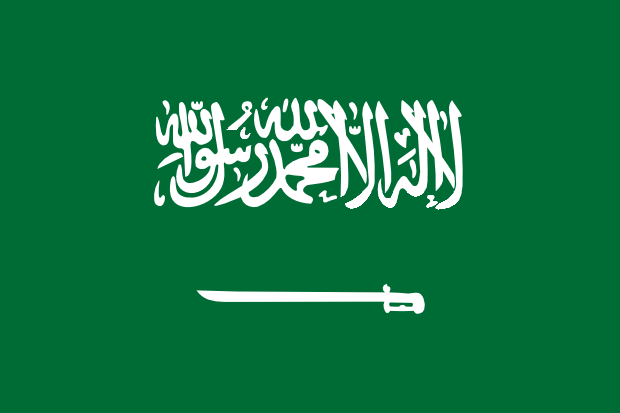
Flag is available in resolutions
| Icon 88x59 |  |
| Icon 32x21 |  |
Saudi Arabia
Saudi Arabia: A Kingdom of Contrasts and Ancient Roots
Saudi Arabia, officially the Kingdom of Saudi Arabia, is a vast and influential nation nestled in the heart of the Arabian Peninsula. It is a land where ancient traditions meet rapid modernization, where scorching deserts stretch towards the horizon, and where the holiest sites in Islam draw millions of pilgrims annually. Understanding Saudi Arabia requires delving into its rich history, diverse geography, complex society, and its pivotal role in global energy markets. The kingdom’s identity is deeply intertwined with its Islamic heritage, its strategic location, and its immense hydrocarbon wealth, all of which have shaped its trajectory and continue to define its place on the world stage.
The geography of Saudi Arabia is as dramatic as it is expansive. Covering approximately 2.15 million square kilometers, it is the largest country in the Arabian Peninsula and the second-largest in the Arab world, surpassed only by Algeria. The landscape is predominantly arid and desert, characterized by vast sand seas like the Rub’ al Khali (the Empty Quarter), one of the largest contiguous sand deserts in the world, and the Nefud Desert. These immense expanses of undulating dunes and desolate plains are punctuated by rocky plateaus and wadis, dry riverbeds that can flood during rare rainfall. The western part of the country is dominated by the Hejaz and Asir mountain ranges, which rise to significant altitudes, creating a more temperate climate and supporting a greater variety of flora and fauna. The coastline stretches along the Red Sea to the west and the Persian Gulf to the east, offering vital ports and contributing to the country’s maritime significance. The climate is overwhelmingly hot and dry, with extreme temperatures during the summer months. Rainfall is scarce, concentrated in the cooler winter months, and often localized. This arid environment has historically dictated settlement patterns, with populations congregating around oases and along coastal areas. The sheer scale of the desert has also played a crucial role in shaping the kingdom’s history, acting as both a barrier and a conduit for trade and migration.
The population of Saudi Arabia is a dynamic mix of native Saudis and a significant expatriate workforce. As of recent estimates, the total population hovers around 36 million people, with Saudis forming the majority. The Saudi population is predominantly Arab, with a strong tribal heritage that continues to influence social structures and identity. However, the kingdom has a large and diverse expatriate community, comprising millions of workers from South Asia, Southeast Asia, Africa, and other Arab nations. These expatriates play a crucial role in the economy, filling labor needs across various sectors, from construction and hospitality to healthcare and education. The demographic profile is relatively young, with a substantial proportion of the population under the age of 30. This youth bulge presents both opportunities and challenges for the kingdom’s future development and social evolution. The majority of the population lives in urban centers, with major cities like Riyadh (the capital), Jeddah, Mecca, and Medina being significant population hubs. Religious adherence is overwhelmingly to Islam, with the vast majority of Saudis being Sunni Muslims, and a notable Shia minority concentrated in the Eastern Province. The official language is Arabic, and the kingdom is deeply committed to preserving its cultural and religious traditions.
The history of Saudi Arabia is a narrative of tribal unification, religious revival, and the discovery of immense oil wealth. The region has been inhabited for millennia, with evidence of ancient civilizations and trade routes. However, the modern Kingdom of Saudi Arabia was forged in the early 20th century by Abdulaziz ibn Saud. He embarked on a decades-long campaign to unify the disparate tribes and regions of the Arabian Peninsula under his rule. This process culminated in the proclamation of the Kingdom of Saudi Arabia in 1932. The early years of the kingdom were characterized by a focus on consolidating power, developing infrastructure, and managing its limited resources. The discovery of oil in commercial quantities in 1938, however, irrevocably transformed the nation. The immense wealth generated by oil exports fueled rapid development, modernization, and a significant increase in the standard of living for many Saudis. The kingdom’s religious significance, as the custodian of Islam’s holiest cities, Mecca and Medina, also plays a central role in its historical and ongoing identity, drawing millions of pilgrims and shaping its foreign policy. The ruling House of Saud has maintained a firm grip on power throughout the kingdom’s history, establishing a hereditary monarchy. The kingdom’s history is also marked by its complex relationships with regional and global powers, navigating alliances and rivalries in a strategically vital part of the world.
The industry of Saudi Arabia is overwhelmingly dominated by its vast oil and gas reserves. The kingdom is one of the world’s largest producers and exporters of crude oil, and the Saudi Arabian Oil Company (Saudi Aramco) is the largest integrated oil and gas company in the world. This hydrocarbon wealth has been the engine of the country’s economic growth and development for decades, funding ambitious infrastructure projects, social programs, and military expenditures. However, recognizing the finite nature of oil and the need for economic diversification, Saudi Arabia has embarked on an ambitious program of economic reform known as Vision 2030. This vision aims to reduce the kingdom’s reliance on oil by developing new sectors such as tourism, entertainment, technology, and renewable energy. Significant investments are being made in these areas, with projects like NEOM, a futuristic mega-city, and the development of large-scale solar and wind power farms. The petrochemical industry, closely linked to oil and gas, is also a significant contributor to the economy. The agricultural sector, though challenged by the arid climate, is also being developed, with efforts focused on water conservation and efficient irrigation techniques. The construction sector remains robust, driven by the ongoing development projects and infrastructure upgrades.
Tourist attractions in Saudi Arabia are diverse, ranging from historical and religious sites to natural wonders and modern marvels. The undisputed crown jewels are the holy cities of Mecca and Medina, which attract millions of Muslims from around the globe for Hajj and Umrah pilgrimages. These cities are central to Islamic faith and history, housing the Kaaba in Mecca and the Prophet’s Mosque in Medina. Beyond the religious significance, Saudi Arabia offers a glimpse into ancient history. The UNESCO World Heritage Site of Al-Hijr (Mada’in Salih) showcases impressive Nabataean rock-cut tombs, reminiscent of Petra in Jordan. The historical district of Jeddah, Al-Balad, with its coral-stone architecture and bustling souks, offers a charming glimpse into the city’s trading past. The dramatic landscapes of the Asir region provide a stark contrast to the desert, with its lush valleys, cooler temperatures, and traditional mountain villages. For those seeking adventure, the vast desert landscapes offer opportunities for dune bashing, camel trekking, and stargazing. The Red Sea coast is increasingly being developed for tourism, with pristine beaches, coral reefs, and diving opportunities. Modern Saudi Arabia is also showcasing its ambition through mega-projects like NEOM, which aims to be a hub for innovation and tourism. The entertainment sector is also rapidly expanding, with concerts, sporting events, and cultural festivals becoming increasingly common, aiming to attract both domestic and international visitors and diversify the kingdom’s offerings.
Information about Saudi Arabia
The information comes from the publication CIA The World Factbook.
Automated text translation, excuse errors, please!
Country Saudi Arabia is situated in a location / continent Middle East. Saudi Arabia has an area of 2 149 690 km2 and 26 534 504 residents. The highest point has a height 3 133 above sea level.. The lowest point is located at the level of 0 above sea level and it is named Persian Gulf. System of government is monarchy and the date of independence 23rd September 1932. The capital city is Riyadh. Saudi Arabia has the international abbreviation SA.
Saudi Arabia - economy
Total gross domestic product (GDP) is 691 500 000 000 $. Total gross domestic product per capita in purchasing power parity is 24 500 $. GDP grows by 6.80 % a year. Inflation (consumer price index) is equal to 5.00 % a year. Saudi Arabia have 7 630 000 working-age population (from a total population 26 534 504 people). Unemployment is at 10.90 %. Saudi Arabia issued 5.00 % GDP to healt care .The public debt of the country is 13.00 % GDP. The total amount of foreign debt is 105 900 000 000 USD.
Saudi Arabia - demography
As suggested above, Saudi Arabia has 26 534 504 people. Population growth is in the amount 1.52 % per year. Number of children born per 1000 population per year is 19.19.Every mother has average 2.26 children. The infant mortality rate is 15.61 and maternal mortality 24.00 deaths per 100,000 births. Average estimated life expectancy makes 74.35 years. Mortality is 3.32 people per 1000 population per year.
Saudi Arabia - transport and telecommunications
Saudi Arabia has 221 372 km of roads, 1 378 km of railway lines and 216 airports. There is registered 72 ships.
Number of active mobile phones (sim card) in the country Saudi Arabia is 53 706 000. Number of active fixed telephone lines is 4 633 000. Saudi Arabia has 9 774 000 internet users, who have the available 147 202 Internet connections. Saudi Arabia has been assigned a domain first Choose range .sa.
Saudi Arabia - energetics
Saudi Arabia consumes a year 186 100 000 000 kWh of electricity. Annual electricity production is 212 300 000 000 kWh in power plants with a total installed electrical capacity 44 490 000 kW. Saudi Arabia exports 0 kWh and imports 0 kWh of electricity per year Energy mix of power generation is as follows: fossil fuels: 100 %, nuclear energy: 0 %, renewable: 0.0 %, hydropower: 0.0 %. The country Saudi Arabia is harvested annually 11 150 000 barrels of oil.
Keywords: Flag of Saudi Arabia, all flags, flag, telecommunications, economy, list of flags, world countries, transport, flag states, national flags, demography, flags of countries in the world, list of countries, Saudi Arabia, information, Flags of countries, energetics, politic.