Azerbaijan
Flag of Azerbaijan
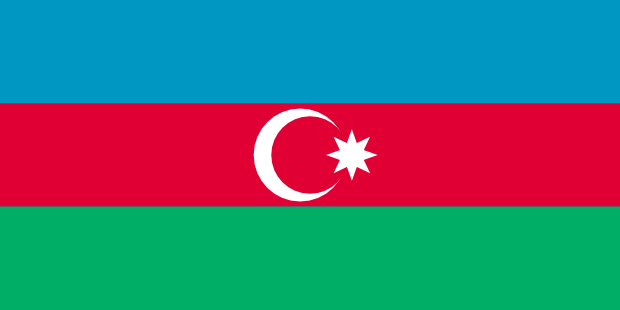
Flag is available in resolutions
| Icon 88x44 |  |
| Icon 32x16 |  |
Azerbaijan
Azerbaijan: A Land of Fire and Intrigue
Nestled at the crossroads of Eastern Europe and Western Asia, Azerbaijan, officially the Republic of Azerbaijan, is a nation steeped in a rich tapestry of history, culture, and breathtaking landscapes. Its strategic location, bordering the Caspian Sea to the east, Russia to the north, Georgia to the northwest, Armenia to the west, and Iran to the south, has profoundly shaped its identity, making it a fascinating blend of influences. The country’s moniker, the “Land of Fire,” is not merely a poetic epithet but a testament to its ancient connection with natural gas and petroleum, resources that have played a pivotal role in its economic development and historical narrative. This article will delve into the multifaceted aspects of Azerbaijan, exploring its demographics, historical evolution, diverse geography, burgeoning industry, and the myriad of tourist attractions that beckon visitors to its shores.
The population of Azerbaijan, estimated to be around 10 million people, is predominantly composed of ethnic Azerbaijanis, who speak the Azerbaijani language, a Turkic tongue closely related to Turkish. This linguistic and ethnic kinship with Turkey is a significant thread in the nation’s cultural fabric. However, Azerbaijan is also home to a diverse array of ethnic minorities, including Lezgins, Talysh, Russians, Avars, and Kurds, each contributing to the country’s vibrant multicultural mosaic. The religious landscape is predominantly Muslim, with the vast majority adhering to Shia Islam, though Sunni Muslims are also present. This religious diversity, coupled with a historical tradition of religious tolerance, has fostered a unique social harmony. The urban centers, particularly the capital city of Baku, are modern metropolises that showcase a dynamic blend of ancient traditions and contemporary aspirations, while rural areas often retain a more traditional way of life, preserving age-old customs and agricultural practices. The demographic profile is relatively young, with a significant portion of the population under 30, indicating a nation with a forward-looking perspective and a growing workforce. Education is highly valued, and literacy rates are exceptionally high, reflecting a commitment to human capital development.
Azerbaijan’s history is a long and complex saga, marked by the rise and fall of empires and the constant ebb and flow of cultural exchange. Ancient civilizations, including the Caucasian Albanians, left their indelible mark on the land. Throughout the centuries, Azerbaijan has been a crucible for various powers, including the Achaemenid, Sasanian, and Byzantine empires, followed by Arab, Seljuk, and Mongol invasions. The Safavid dynasty, in the 16th century, established a powerful Persianate empire that included Azerbaijan, further cementing its cultural ties with Persia. Later, the region became a battleground between the Ottoman and Russian empires, eventually leading to its incorporation into the Russian Empire in the early 19th century. This period of Russian rule brought significant changes, including the development of its oil industry, particularly in Baku, which became a global hub for oil production. Following the collapse of the Russian Empire, Azerbaijan declared its independence in 1918, forming the Azerbaijan Democratic Republic, a short-lived but historically significant interlude before Soviet rule was imposed in 1920. Under Soviet control, Azerbaijan became the Azerbaijan Soviet Socialist Republic, and its economy was heavily integrated into the Soviet system, with a strong emphasis on oil extraction and petrochemicals. The struggle for independence was a persistent undercurrent, culminating in the restoration of its sovereignty on August 30, 1991, amidst the dissolution of the Soviet Union. The post-independence era has been marked by challenges, including the Nagorno-Karabakh conflict with Armenia, which has had a profound impact on the nation’s political and social landscape.
The geography of Azerbaijan is as diverse as its history, offering a stunning array of natural wonders. The country boasts a varied topography, ranging from the lowlands of the Kura-Aras plain to the majestic peaks of the Greater Caucasus Mountains in the north. The Caspian Sea coastline stretches for over 800 kilometers, providing a vital economic and recreational resource. The climate is predominantly continental, with hot summers and mild winters in the lowlands, while the mountainous regions experience colder temperatures and significant snowfall. Azerbaijan is also blessed with a unique phenomenon: mud volcanoes. The country is home to over half of the worlds mud volcanoes, a testament to its rich subterranean geological activity. These natural formations, often spewing mud and gas, are a bizarre and captivating sight. The countrys natural resources are not limited to oil and gas; it also possesses significant deposits of iron ore, copper, and other minerals. The fertile plains are ideal for agriculture, with cotton, grains, and fruits being key crops. The diverse ecosystems support a rich biodiversity, from the arid steppes to the lush forests of the Talysh Mountains.
The industrial sector of Azerbaijan is heavily dominated by its vast oil and gas reserves, which are the backbone of its economy. The discovery and exploitation of these resources, particularly in the Absheron Peninsula and the Caspian Sea, have propelled Azerbaijan onto the global energy stage. The country is a significant producer and exporter of crude oil and natural gas, with major pipelines transporting these commodities to international markets. Beyond the energy sector, Azerbaijan is also developing its manufacturing capabilities, with a focus on petrochemicals, textiles, and food processing. The agricultural sector remains important, employing a significant portion of the population and contributing to the domestic food supply. Efforts are underway to diversify the economy and reduce its reliance on oil and gas, with investments in tourism, information technology, and other non-oil sectors gaining momentum. The government is actively seeking foreign investment to modernize its infrastructure and foster economic growth.
Azerbaijan offers a wealth of tourist attractions, catering to a wide range of interests. The capital city, Baku, is a vibrant metropolis that seamlessly blends ancient charm with modern sophistication. The Old City (Icherisheher), a UNESCO World Heritage site, is a labyrinth of narrow cobblestone streets, ancient mosques, caravanserais, and the iconic Maiden Tower, a mysterious cylindrical fortress with a rich history. The Palace of the Shirvanshahs, a 15th-century royal residence, stands as a magnificent testament to Azerbaijani architecture. Bakus modern skyline is dominated by the Flame Towers, three skyscrapers that illuminate the night sky with dynamic LED displays, symbolizing the country’s connection to fire. The Heydar Aliyev Center, a masterpiece of contemporary architecture designed by Zaha Hadid, hosts exhibitions and cultural events, showcasing Azerbaijans artistic and cultural dynamism. Beyond Baku, the country’s natural beauty beckons. The Gobustan National Park, another UNESCO site, is renowned for its ancient rock carvings (petroglyphs) dating back thousands of years, offering a glimpse into the lives of prehistoric inhabitants. The Yanar Dag (Burning Mountain), a natural gas fire that has been burning continuously for centuries, is a surreal and unforgettable spectacle. For those seeking natural landscapes, the Caucasus Mountains offer opportunities for hiking, trekking, and skiing in the winter months. The resort town of Gakh and the surrounding areas provide stunning mountain scenery and opportunities to explore traditional villages. The Caspian Sea coast offers beaches, resorts, and opportunities for water sports. The ancient city of Sheki, nestled in the foothills of the Greater Caucasus Mountains, is famous for its exquisite Sheki Khans Palace, adorned with intricate frescoes and stained glass. Azerbaijan’s rich cultural heritage, its warm hospitality, and its diverse landscapes make it an increasingly appealing destination for discerning travelers seeking an authentic and enriching experience.
Information about Azerbaijan
The information comes from the publication CIA The World Factbook.
Automated text translation, excuse errors, please!
Country Azerbaijan is situated in a location / continent Middle East. Azerbaijan has an area of 86 600 km2 and 9 493 600 residents. The highest point has a height 4 485 above sea level. and it is called Bazarduzu Dagi. The lowest point is located at the level of -28 above sea level and it is named Caspian Sea. System of government is republic and the date of independence 30th August 1991. The capital city is Baku (Baki, Baky). Azerbaijan has the international abbreviation AJ.
Azerbaijan - economy
Total gross domestic product (GDP) is 94 250 000 000 $. Total gross domestic product per capita in purchasing power parity is 10 300 $. GDP grows by 0.10 % a year. Inflation (consumer price index) is equal to 8.10 % a year. Azerbaijan have 6 119 000 working-age population (from a total population 9 493 600 people). Unemployment is at 1.00 %. Azerbaijan issued 5.80 % GDP to healt care and 2,60 % GDP to army. The public debt of the country is 5.50 % GDP. The total amount of foreign debt is 4 074 000 000 USD.
Azerbaijan - demography
As suggested above, Azerbaijan has 9 493 600 people. Population growth is in the amount 1.02 % per year. Number of children born per 1000 population per year is 17.30.Every mother has average 1.92 children. The infant mortality rate is 28.76 and maternal mortality 43.00 deaths per 100,000 births. Average estimated life expectancy makes 71.32 years. Mortality is 7.13 people per 1000 population per year.
Azerbaijan - transport and telecommunications
Azerbaijan has 59 141 km of roads, 2 918 km of railway lines and 37 airports. There is registered 90 ships.
Number of active mobile phones (sim card) in the country Azerbaijan is 10 120 000. Number of active fixed telephone lines is 1 684 000. Azerbaijan has 2 420 000 internet users, who have the available 29 968 Internet connections. Azerbaijan has been assigned a domain first Choose range .az.
Azerbaijan - energetics
Azerbaijan consumes a year 13 480 000 000 kWh of electricity. Annual electricity production is 17 850 000 000 kWh in power plants with a total installed electrical capacity 5 798 000 kW. Azerbaijan exports 380 000 000 kWh and imports 110 000 000 kWh of electricity per year Energy mix of power generation is as follows: fossil fuels: 82.3 %, nuclear energy: 0 %, renewable: 0.0 %, hydropower: 17.7 %. The country Azerbaijan is harvested annually 987 000 barrels of oil.
Keywords: flags of countries in the world, national flags, transport, information, flag states, flag, Azerbaijan, economy, Flags of countries, list of flags, telecommunications, demography, energetics, all flags, world countries, Flag of Azerbaijan, list of countries, politic.