Bahrain
Flag of Bahrain
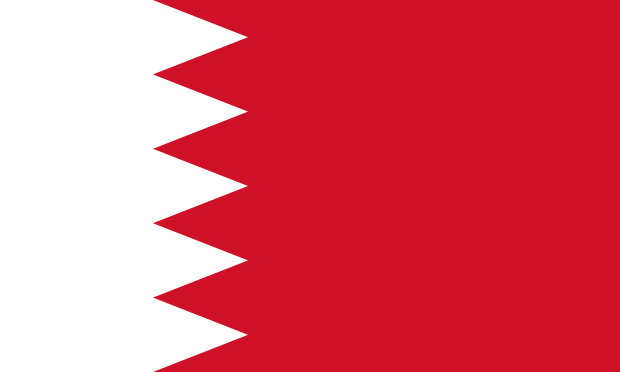
Flag is available in resolutions
| Icon 88x53 |  |
| Icon 32x19 |  |
Bahrain
Bahrain: An Island Nation at the Crossroads of History and Modernity
Bahrain, officially the Kingdom of Bahrain, is a small island nation situated in the Persian Gulf, just off the coast of Saudi Arabia. Its strategic location has historically made it a vital trading hub and a melting pot of cultures, a legacy that continues to shape its identity today. This archipelago, comprising over 30 islands, boasts a rich tapestry of history, a vibrant economy, and a growing appeal as a tourist destination. Understanding Bahrain requires delving into its geographical nuances, its ancient past, its modern economic drivers, and the unique cultural experiences it offers.
The geography of Bahrain is characterized by its low-lying desert terrain, with the highest point, Jabal ad-Dukhan (Mountain of Smoke), reaching a mere 134 meters above sea level. The islands are generally flat and arid, with a coastline dotted with natural harbors and artificial islands that have significantly expanded its landmass. The climate is typically hot and humid, with very little rainfall, making water a precious resource. The capital city, Manama, is a bustling metropolis located on the largest island, also named Bahrain. The surrounding waters of the Persian Gulf are relatively shallow, and the seabed is rich in pearl oysters, a historical source of immense wealth for the islands. The archipelago’s proximity to Saudi Arabia is further emphasized by the King Fahd Causeway, a 25-kilometer-long bridge connecting the two nations, facilitating trade and travel. The islands themselves are a testament to both natural beauty and human ingenuity, with the traditional fishing villages contrasting with the futuristic skyline of Manama. The natural landscape, though arid, is punctuated by oases and the remnants of ancient irrigation systems, hinting at a more verdant past and the constant struggle for survival in this challenging environment. The surrounding waters, teeming with marine life, have always been a crucial element of Bahraini life, providing sustenance and contributing to its historical prosperity.
Bahrain’s history stretches back thousands of years, with evidence of human settlement dating to the Dilmun civilization, which flourished from the 3rd millennium BCE. Dilmun was a significant trading partner of Mesopotamia and the Indus Valley, renowned for its copper and pearls. Archaeological sites across Bahrain, such as the Bahrain Fort (Qal’at al-Bahrain), a UNESCO World Heritage site, offer tangible evidence of this ancient civilization’s sophistication and influence. Over the centuries, Bahrain has been ruled by various empires and dynasties, including the Kassites, Persians, Arabs, Portuguese, and Omanis, each leaving their mark on the island’s culture and architecture. The arrival of Islam in the 7th century profoundly shaped Bahraini society and continues to be its dominant religion. In the late 19th century, Bahrain became a British protectorate, a period that saw the development of its pearling industry and the establishment of modern administrative structures. The discovery of oil in the 1930s marked a turning point, transforming Bahrain’s economy and its relationship with the outside world. In 1971, Bahrain gained full independence from Britain, becoming a constitutional monarchy. This long and complex history has endowed Bahrain with a unique cultural heritage, evident in its ancient forts, traditional souqs, and the enduring hospitality of its people. The layers of history are palpable as one navigates the islands, from the ancient burial mounds of Dilmun to the colonial-era architecture and the gleaming modernity of the present day. Each conquest and period of influence has added a new dimension to the island’s identity, creating a rich mosaic of traditions and influences.
The modern economy of Bahrain is a testament to its strategic vision and adaptability. While oil and gas remain significant contributors, the nation has actively diversified its economy, focusing on finance, tourism, logistics, and manufacturing. Bahrain was the first in the Persian Gulf to discover oil, and its prudent management of these resources has allowed for substantial investment in infrastructure and human capital. The Bahrain Financial Harbour in Manama is a hub for international banking and financial services, attracting significant foreign investment. The tourism sector is also experiencing robust growth, with the government investing in developing world-class hotels, resorts, and entertainment facilities. The nation’s strategic location, coupled with its business-friendly environment and efficient infrastructure, makes it an attractive destination for both business and leisure travelers. The manufacturing sector, particularly in petrochemicals and aluminum, also plays a crucial role in the economy. Bahrain has also embraced technological advancements, striving to become a regional leader in areas like fintech and renewable energy. This economic diversification is key to Bahrain’s long-term sustainability and its ability to navigate the fluctuating global energy markets. The proactive approach to economic development, moving beyond a sole reliance on oil, showcases Bahrain’s foresight and ambition.
Bahrain’s population is a diverse blend of Bahraini nationals and expatriates, reflecting its status as a regional hub. The official language is Arabic, but English is widely spoken, particularly in business and tourism circles. Islam is the predominant religion, with a significant Shia Muslim majority and a Sunni ruling family. The society is known for its tolerance and respect for different cultures and religions, making it a welcoming place for people from all backgrounds. Bahraini culture is deeply rooted in Arab and Islamic traditions, with a strong emphasis on family, hospitality, and community. Traditional arts and crafts, such as pottery, weaving, and calligraphy, are still practiced and cherished. The Bahraini people are renowned for their warmth and generosity, often inviting visitors to share a cup of traditional coffee and dates. The cultural landscape is also enriched by the presence of diverse expatriate communities, who bring their own traditions, cuisines, and festivals, contributing to the vibrant multicultural fabric of the nation. This blend of tradition and modernity, of local customs and global influences, creates a unique and dynamic social environment. The emphasis on community and hospitality is a cornerstone of Bahraini identity, fostering a sense of belonging for both locals and residents.
Bahrain offers a wealth of tourist attractions, catering to a variety of interests. Manama, the capital, is a vibrant city that seamlessly blends old and new. The Bahrain National Museum offers a comprehensive overview of the island’s history and culture, while the Al-Fateh Grand Mosque, one of the largest mosques in the world, is a stunning architectural marvel. The traditional souqs, such as Bab Al Bahrain, are bustling marketplaces where one can find everything from spices and textiles to traditional crafts and souvenirs. For those interested in history, the ancient Dilmun burial mounds and the Bahrain Fort provide a glimpse into the island’s ancient past. The modern side of Manama is showcased by its impressive skyline, lined with skyscrapers, luxury hotels, and world-class shopping malls. The Bahrain International Circuit, home to the Formula 1 Grand Prix, attracts motorsport enthusiasts from around the globe. For nature lovers, the Hawar Islands, a protected archipelago, offer opportunities for birdwatching and diving, with their rich marine biodiversity. The traditional pearling heritage can be explored through visits to pearl farms and museums dedicated to this once-thriving industry. The island’s beaches provide opportunities for relaxation and water sports, while the numerous archaeological sites offer a journey back in time. From the ancient wonders to the modern marvels, Bahrain presents a captivating blend of experiences for every traveler. The contrast between the ancient forts and the contemporary urban landscape perfectly encapsulates Bahrain’s unique position as a bridge between eras. The island’s commitment to preserving its heritage while embracing progress is evident in its diverse attractions.
Information about Bahrain
The information comes from the publication CIA The World Factbook.
Automated text translation, excuse errors, please!
Country Bahrain is situated in a location / continent Middle East. Bahrain has an area of 760 km2 and 1 248 348 residents. The highest point has a height 122 above sea level. and it is called Jabal ad Dukhan. The lowest point is located at the level of 0 above sea level and it is named Persian Gulf. System of government is constitutional monarchy and the date of independence 15th August 1971. The capital city is Manama. Bahrain has the international abbreviation BA.
Bahrain - economy
Total gross domestic product (GDP) is 31 500 000 000 $. Total gross domestic product per capita in purchasing power parity is 27 900 $. GDP grows by 1.80 % a year. Inflation (consumer price index) is equal to -0.40 % a year. Bahrain have 666 000 working-age population (from a total population 1 248 348 people). Unemployment is at 15.00 %. Bahrain issued 4.50 % GDP to healt care and 4,50 % GDP to army. The public debt of the country is 54.00 % GDP. The total amount of foreign debt is 14 930 000 000 USD.
Bahrain - demography
As suggested above, Bahrain has 1 248 348 people. Population growth is in the amount 2.65 % per year. Number of children born per 1000 population per year is 14.41.Every mother has average 1.86 children. The infant mortality rate is 10.20 and maternal mortality 20.00 deaths per 100,000 births. Average estimated life expectancy makes 78.29 years. Mortality is 2.63 people per 1000 population per year.
Bahrain - transport and telecommunications
Bahrain has 3 851 km of roads and 4 airports. There is registered 8 ships.
Number of active mobile phones (sim card) in the country Bahrain is 1 694 000. Number of active fixed telephone lines is 276 500. Bahrain has 419 500 internet users, who have the available 46 035 Internet connections. Bahrain has been assigned a domain first Choose range .bh.
Bahrain - energetics
Bahrain consumes a year 11 060 000 000 kWh of electricity. Annual electricity production is 11 340 000 000 kWh in power plants with a total installed electrical capacity 3 168 000 kW. Bahrain exports 0 kWh and imports 168 000 000 kWh of electricity per year Energy mix of power generation is as follows: fossil fuels: 100 %, nuclear energy: 0 %, renewable: 0.0 %, hydropower: 0.0 %. The country Bahrain is harvested annually 45 000 barrels of oil.
Keywords: energetics, world countries, flag states, demography, all flags, Bahrain, economy, transport, Flags of countries, national flags, flags of countries in the world, flag, Flag of Bahrain, list of flags, information, telecommunications, list of countries, politic.