Lebanon
Flag of Lebanon
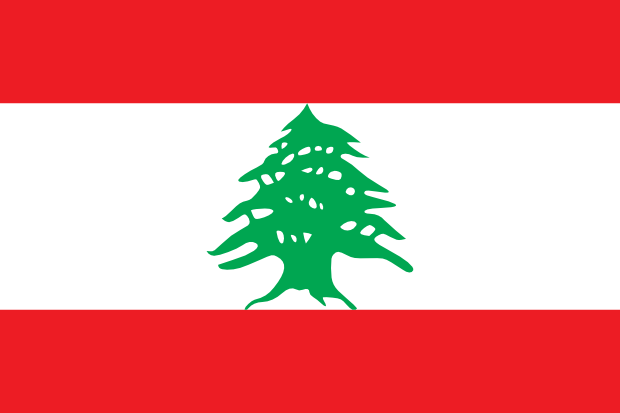
Flag is available in resolutions
| Icon 88x59 |  |
| Icon 32x21 |  |
Lebanon
Lebanon: A Land of Ancient Cedars, Rich History, and Vibrant Culture
Nestled on the eastern shores of the Mediterranean Sea, Lebanon is a country that punches far above its weight in terms of historical significance, cultural richness, and breathtaking natural beauty. Despite its relatively small size, this Levantine nation boasts a captivating tapestry woven from millennia of human endeavor, diverse religious communities, and a resilient spirit that has weathered numerous storms. From the snow-capped peaks of its mountains to the bustling souks of its cities and the sun-drenched beaches of its coast, Lebanon offers a compelling microcosm of the Middle East, a place where ancient traditions meet modern aspirations.
The demographic makeup of Lebanon is as complex and fascinating as its history. It is a nation characterized by its remarkable religious diversity, a mosaic of communities that have coexisted, albeit sometimes precariously, for centuries. The largest religious group is Islam, divided primarily into Shia and Sunni branches, with a significant presence of Druze communities. Christianity, however, has a deep and ancient root in Lebanon, with various denominations including Maronite, Orthodox, Catholic, and Protestant churches forming a substantial portion of the population. This religious plurality has shaped Lebanon’s unique social and political landscape, fostering a spirit of interfaith dialogue and cultural exchange, while also presenting ongoing challenges in achieving complete national cohesion. Beyond religious affiliations, the Lebanese people are known for their strong sense of identity, their warmth, hospitality, and a deep pride in their heritage. The Lebanese diaspora, scattered across the globe, remains a vital and influential part of the national fabric, contributing significantly to the economy and maintaining strong cultural ties to their homeland. The official language is Arabic, but French and English are widely spoken, particularly in urban centers and among the educated elite, a legacy of its colonial past and its role as a regional hub.
Lebanon’s history is a saga of civilizations, empires, and pivotal moments that have left an indelible mark on its identity. Its strategic location at the crossroads of Europe, Asia, and Africa made it a coveted prize for numerous powers throughout antiquity. The Phoenicians, renowned seafarers and traders, established a sophisticated civilization along its coast, their cities like Tyre and Sidon becoming centers of commerce and culture. Later, the region fell under the sway of the Assyrians, Babylonians, Persians, Greeks, and Romans. The arrival of Christianity in the early centuries CE profoundly influenced the region, and Lebanon became home to some of the oldest Christian communities in the world. The spread of Islam in the 7th century CE introduced another significant layer to its religious and cultural tapestry. During the medieval period, Lebanon was part of various Islamic caliphates and later experienced periods of Crusader presence. The Ottoman Empire ruled for centuries, a period that saw the rise of powerful local dynasties and the development of distinct regional identities. In the early 20th century, after the collapse of the Ottoman Empire following World War I, Lebanon came under French mandate, a period that saw the consolidation of its modern borders and the establishment of institutions that would shape its future. Independence was achieved in 1943, ushering in an era of relative prosperity and establishing Beirut as a vibrant regional capital, often referred to as the “Paris of the Middle East.” However, this golden age was tragically interrupted by the outbreak of a brutal civil war in 1975, a conflict that lasted for 15 years and devastated the country. The post-civil war era has been marked by reconstruction efforts, political instability, and ongoing challenges, including the presence of Palestinian refugees and the complex regional dynamics that continue to impact its stability.
The geography of Lebanon is a study in contrasts, offering a diverse range of landscapes within a compact territory. The country is dominated by two parallel mountain ranges: the Mount Lebanon range to the west and the Anti-Lebanon range to the east, which forms part of its border with Syria. The Mount Lebanon range, with its iconic cedar trees, is the countrys backbone, rising to impressive heights and providing a stunning backdrop to the coastal plains. These mountains are snow-capped for much of the year, offering opportunities for winter sports, and are crisscrossed by ancient trails and picturesque villages. Between the mountain ranges lies the fertile Beqaa Valley, a significant agricultural heartland renowned for its vineyards, fruit orchards, and vegetable farms. The coastline stretches for approximately 225 kilometers, a ribbon of beaches, rocky coves, and bustling port cities. The Mediterranean Sea plays a crucial role in Lebanon’s climate, moderating temperatures and providing a source of livelihood through fishing and tourism. Rivers, though relatively short, flow from the mountains to the sea, nurturing the land and providing water resources. The country’s small size means that one can travel from the mountains to the sea in a matter of hours, experiencing a remarkable array of natural environments.
The Lebanese economy, while historically robust and diverse, has faced significant challenges in recent years. Traditionally, Lebanon has been a service-based economy, with its banking sector, tourism, and trade playing crucial roles. Beirut, before its decline, was a regional financial hub, attracting investment and serving as a gateway for international business. Tourism has always been a significant contributor, drawing visitors with its historical sites, vibrant nightlife, and natural beauty. Agriculture, particularly in the Beqaa Valley, remains important, with products like grapes, olives, citrus fruits, and vegetables being key exports. However, the country has also relied on remittances from its large diaspora. In recent years, Lebanon has been grappling with a severe economic crisis, characterized by high inflation, currency devaluation, and a mounting national debt. This crisis has had a profound impact on the lives of ordinary Lebanese, leading to widespread hardship and a decline in living standards. Despite these challenges, the entrepreneurial spirit of the Lebanese people remains evident, with efforts underway to revitalize key sectors and attract much-needed investment.
Lebanon’s tourist attractions are as varied and captivating as its history and geography. The capital city, Beirut, is a dynamic metropolis that seamlessly blends ancient ruins with modern skyscrapers, bustling markets with sophisticated boutiques. Its Corniche, a seaside promenade, offers stunning views of the Mediterranean and is a popular spot for locals and tourists alike. The National Museum of Beirut houses an impressive collection of Phoenician, Roman, and Byzantine artifacts, offering a glimpse into the country’s rich past. Inland, the ancient city of Byblos (Jbeil), one of the oldest continuously inhabited cities in the world, is a UNESCO World Heritage site, boasting Roman ruins, Crusader castles, and a picturesque harbor. The Roman ruins of Baalbek, in the Beqaa Valley, are among the most impressive and well-preserved in the world, featuring colossal temples dedicated to Jupiter, Bacchus, and Venus. The Cedars of God, also a UNESCO World Heritage site, are ancient groves of cedar trees, symbols of Lebanon’s natural heritage and resilience, some of which are believed to be thousands of years old. The mountainous regions offer opportunities for hiking, skiing in resorts like Faraya and Cedars, and exploring charming villages like Deir el Qamar and Beiteddine, known for their traditional architecture and historical palaces. The coastline provides opportunities for swimming, diving, and enjoying fresh seafood in charming seaside towns. Lebanon’s culinary scene is another major draw, with its delicious and diverse cuisine, characterized by fresh ingredients, aromatic spices, and flavorful meze platters, being celebrated worldwide.
In conclusion, Lebanon is a country of profound depth and enduring allure. It is a land where the echoes of ancient civilizations resonate in its ruins, where the prayers of diverse faiths mingle in its sacred spaces, and where the resilience of its people shines through in their vibrant culture and unwavering spirit. Despite the challenges it has faced, Lebanon remains a testament to the enduring power of human connection, cultural exchange, and the profound beauty that can emerge from a land steeped in history and blessed with natural splendor. It is a destination that promises a journey not just through landscapes, but through time, offering an unforgettable experience for those who seek to discover its multifaceted soul.
Information about Lebanon
The information comes from the publication CIA The World Factbook.
Automated text translation, excuse errors, please!
Country Lebanon is situated in a location / continent Middle East. Lebanon has an area of 10 400 km2 and 4 140 289 residents. The highest point has a height 3 088 above sea level.. The lowest point is located at the level of 0 above sea level and it is named Mediterranean Sea. System of government is republic and the date of independence 22nd November 1943. The capital city is Beirut. Lebanon has the international abbreviation LE.
Lebanon - economy
Total gross domestic product (GDP) is 62 230 000 000 $. Total gross domestic product per capita in purchasing power parity is 15 700 $. GDP grows by 1.50 % a year. Inflation (consumer price index) is equal to 5.10 % a year. Lebanon have 1 481 000 working-age population (from a total population 4 140 289 people). Lebanon issued 8.20 % GDP to healt care and 3,10 % GDP to army. The public debt of the country is 134.00 % GDP. The total amount of foreign debt is 29 460 000 000 USD.
Lebanon - demography
As suggested above, Lebanon has 4 140 289 people. Population growth is in the amount -0.38 % per year. Number of children born per 1000 population per year is 14.92.Every mother has average 1.76 children. The infant mortality rate is 15.32 and maternal mortality 25.00 deaths per 100,000 births. Average estimated life expectancy makes 75.23 years. Mortality is 6.63 people per 1000 population per year.
Lebanon - transport and telecommunications
Lebanon has 6 970 km of roads, 401 km of railway lines and 7 airports. There is registered 29 ships.
Number of active mobile phones (sim card) in the country Lebanon is 3 350 000. Number of active fixed telephone lines is 900 000. Lebanon has 1 000 000 internet users, who have the available 64 525 Internet connections. Lebanon has been assigned a domain first Choose range .lb.
Lebanon - energetics
Lebanon consumes a year 12 340 000 000 kWh of electricity. Annual electricity production is 12 980 000 000 kWh in power plants with a total installed electrical capacity 2 314 000 kW. Lebanon exports 0 kWh and imports 1 155 000 000 kWh of electricity per year Energy mix of power generation is as follows: fossil fuels: 87.9 %, nuclear energy: 0 %, renewable: 0.0 %, hydropower: 12.1 %.
Keywords: information, world countries, economy, Flag of Lebanon, list of flags, transport, energetics, flag states, Flags of countries, all flags, telecommunications, list of countries, national flags, Lebanon, demography, flag, flags of countries in the world, politic.