Gaza Strip
Flag of Gaza Strip
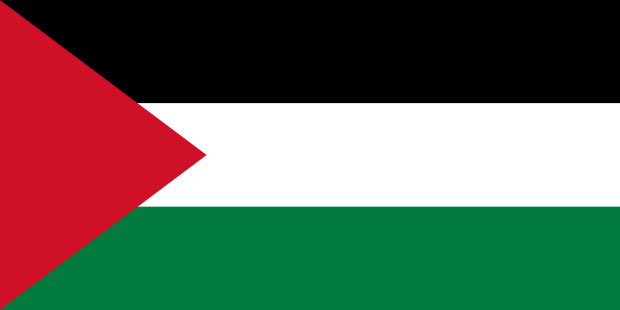
Flag is available in resolutions
| Icon 88x44 |  |
| Icon 32x16 |  |
Gaza Strip
Here is an article about the Gaza Strip, approximately 5000 characters long, written in English and adhering to your formatting requests:
The Gaza Strip, a narrow sliver of land on the eastern Mediterranean coast, is a territory brimming with a complex and often tragic history, a dense population, and a unique, albeit challenging, socioeconomic landscape. Geographically, it is bordered by Israel to the north and east, Egypt to the southwest, and the Mediterranean Sea to the west. This strategic, yet confined, location has profoundly shaped its destiny, making it a focal point of regional conflicts and international attention. Measuring roughly 41 kilometers (25 miles) in length and between 6 and 12 kilometers (3.7 to 7.5 miles) wide, the Gaza Strip’s total area is a mere 365 square kilometers (141 square miles). Despite its small size, it is one of the most densely populated places on Earth, a fact that underscores the immense pressure on its resources and infrastructure. The terrain is predominantly flat and sandy, with coastal dunes giving way to more fertile land further inland, though much of the agricultural potential is hampered by land scarcity and environmental degradation. The climate is Mediterranean, characterized by hot, dry summers and mild, wet winters, which, under normal circumstances, would support a diverse range of crops.
The population of the Gaza Strip is overwhelmingly Palestinian, with a significant majority being refugees or descendants of refugees who were displaced from their ancestral homes during the 1948 Arab-Israeli War and subsequent conflicts. Estimates place the population at around 2.3 million people, a staggering number for such a small territory. This demographic reality creates immense challenges in terms of housing, employment, and access to basic services. The population is youthful, with a large proportion under the age of 15, reflecting high birth rates often associated with areas facing hardship and uncertainty. The social fabric is deeply interwoven with family ties and a strong sense of collective identity, often forged through shared historical experiences and ongoing struggles. Religious life is predominantly Islamic, with the vast majority of the population adhering to Sunni Islam, which plays a significant role in cultural and social norms.
The history of the Gaza Strip is a tapestry woven with threads of conquest, occupation, and resistance. For centuries, it was a strategic crossroads, part of various empires including the Roman, Byzantine, and Ottoman. Following World War I, it fell under the British Mandate for Palestine. The 1947 United Nations Partition Plan proposed that Gaza become part of an Arab state, but the ensuing Arab-Israeli War of 1948 led to its occupation by Egypt. During this period, a large influx of Palestinian refugees arrived, dramatically altering the demographic landscape. The 1967 Six-Day War saw Israel occupy the Gaza Strip, along with the West Bank and East Jerusalem. For decades, Israel maintained military control, establishing settlements and controlling movement in and out of the territory. The Oslo Accords in the 1990s led to the establishment of the Palestinian Authority (PA), which was granted limited self-governance in Gaza. However, the Israeli occupation and blockade, which intensified after the Hamas takeover of Gaza in 2007, have severely restricted the movement of people and goods, leading to dire economic and humanitarian consequences. The ongoing conflict with Israel, marked by periodic escalations of violence, has left an indelible scar on the land and its people, shaping every aspect of life in the Strip.
The economy of the Gaza Strip has been severely crippled by the prolonged Israeli-Egyptian blockade and the recurrent conflicts. Prior to the blockade, Gaza had a more diversified economy, with significant contributions from agriculture, manufacturing, and trade. However, the restrictions on imports and exports, coupled with the destruction of infrastructure during conflicts, have led to widespread unemployment and poverty. Agriculture, once a key sector, is now limited by land availability, water scarcity, and the difficulty of accessing necessary inputs. Fishing, another traditional livelihood, is also severely restricted by the naval blockade imposed by Israel. The industrial sector is nascent and struggling, with most businesses operating at a fraction of their capacity. The economy is heavily reliant on international aid, which, while crucial for survival, does not foster sustainable development or create significant employment opportunities. The unemployment rate remains exceptionally high, often exceeding 50%, with youth unemployment being particularly acute. The lack of economic prospects is a major driver of social unrest and emigration, though emigration itself is severely restricted.
Despite the immense challenges, the Gaza Strip possesses a rich cultural heritage and some points of historical interest, though access and preservation are often compromised. The city of Gaza itself, one of the oldest continuously inhabited cities in the world, boasts remnants of its long history. The Great Mosque of Gaza, built on the site of a Byzantine church, is a significant religious and architectural landmark. The Tel al-Sultan archaeological site offers glimpses into ancient civilizations that once thrived in the region. The al-Qasr Citadel, though partially ruined, speaks to the strategic importance of Gaza throughout history. The Gaza Museum of Archaeology, when accessible, showcases artifacts that tell the story of the region’s past. However, many historical sites have suffered damage due to conflict and neglect, and ongoing political instability makes large-scale tourism virtually impossible. The vibrant street art scene, often reflecting the political situation and the aspirations of the people, offers a contemporary form of cultural expression. The resilience and creativity of the Gazan people are evident in their art, music, and literature, which often serve as a powerful outlet for their experiences and emotions. The beaches of the Mediterranean coast, while offering a natural beauty, are often marred by pollution and the limitations imposed by the blockade, preventing their full potential as recreational spaces from being realized. The daily lives of Gazans are a testament to their enduring spirit in the face of immense adversity, with community gatherings, traditional celebrations, and a strong emphasis on family providing sources of solace and strength.
Information about Gaza Strip
The information comes from the publication CIA The World Factbook.
Automated text translation, excuse errors, please!
Country Gaza Strip is situated in a location / continent Middle East. Gaza Strip has an area of 360 km2 and 1 710 257 residents. The highest point has a height 105 above sea level.. The lowest point is located at the level of 0 above sea level and it is named Mediterranean Sea. Gaza Strip has the international abbreviation GZ.
Gaza Strip - economy
Inflation (consumer price index) is equal to 5.00 % a year. Gaza Strip have 348 200 working-age population (from a total population 1 710 257 people). Unemployment is at 40.00 %.
Gaza Strip - demography
As suggested above, Gaza Strip has 1 710 257 people. Population growth is in the amount 3.11 % per year. Number of children born per 1000 population per year is 34.30.Every mother has average 4.57 children. The infant mortality rate is 16.55 and maternal mortality 64.00 deaths per 100,000 births. Average estimated life expectancy makes 74.16 years. Mortality is 3.22 people per 1000 population per year.
Gaza Strip - transport and telecommunications
Gaza Strip has 1 airports.
Number of active mobile phones (sim card) in the country Gaza Strip is 2 405 000. Number of active fixed telephone lines is 337 000. Gaza Strip has 1 379 000 internet usersGaza Strip has been assigned a domain first Choose range .ps. .
Gaza Strip - energetics
Gaza Strip consumes a year 202 000 kWh of electricity. Annual electricity production is 51 000 kWh .Gaza Strip exports 0 kWh and imports 193 000 kWh of electricity per year.
Keywords: list of countries, all flags, Flags of countries, telecommunications, energetics, Flag of Gaza Strip, demography, national flags, world countries, economy, flag, transport, information, flags of countries in the world, flag states, Gaza Strip, list of flags, politic.