West Bank
Flag of West Bank
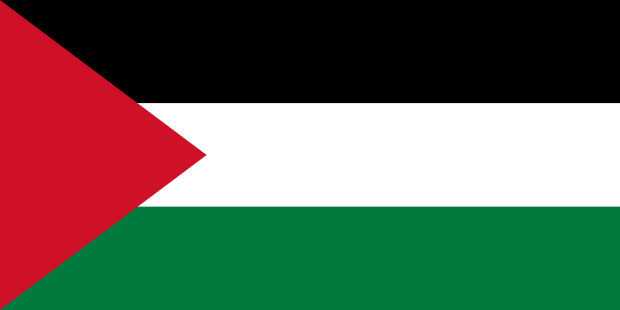
Flag is available in resolutions
| Icon 88x44 |  |
| Icon 32x16 |  |
West Bank
The West Bank: A Land of Profound Significance and Complex Realities
The West Bank, a landlocked territory situated to the west of the Jordan River, is a region steeped in millennia of history, religious significance, and ongoing political complexity. Its very name evokes a tapestry of ancient narratives, religious pilgrimage, and contemporary geopolitical challenges. Geographically, it is a diverse landscape, transitioning from the arid Judean Desert in the east to more fertile rolling hills and plains in the west. The Jordan River forms its eastern boundary, separating it from Jordan, while Israel encircles the remaining borders. This strategic location has, for centuries, placed it at the crossroads of civilizations, influencing its culture, demographics, and destiny. The territory’s approximately 5,655 square kilometers are home to a population that is predominantly Palestinian Arab, with a significant and growing Israeli settler population. The demographic makeup is a direct reflection of the region’s tumultuous history and the unresolved Israeli-Palestinian conflict, which continues to shape every facet of life within the West Bank. Understanding the West Bank requires delving into its rich past, appreciating its geographical features, and acknowledging the intricate socio-political realities that define it today.
The history of the West Bank is an epic saga, stretching back to biblical times and encompassing periods of rule by numerous empires and peoples. This land is considered holy by Judaism, Christianity, and Islam, making it a focal point for religious devotion and pilgrimage for millions worldwide. Ancient civilizations, including the Canaanites, Israelites, Babylonians, Persians, Greeks, Romans, Byzantines, and early Islamic caliphates, all left their indelible mark on this territory. It was here that many pivotal events in religious history are said to have occurred, contributing to its enduring sacred status. Following the Six-Day War in 1967, Israel occupied the West Bank, and since then, its political status has been a central issue in the Israeli-Palestinian conflict. The Oslo Accords of the 1990s led to the establishment of the Palestinian Authority, which exercises limited self-governance in certain areas, designated as Areas A and B. However, the majority of the West Bank, particularly Area C, remains under full Israeli civil and security control, a situation that profoundly impacts the daily lives of Palestinians. The ongoing expansion of Israeli settlements in the West Bank is a contentious issue, widely condemned by the international community and seen by Palestinians as a major obstacle to the establishment of an independent Palestinian state. This long and complex history has shaped the cultural identity and aspirations of the Palestinian people, who yearn for self-determination and an end to the occupation.
The geography of the West Bank is characterized by a varied topography. The eastern part of the territory slopes down towards the Dead Sea, the lowest point on Earth, and is largely arid and desert-like. The central highlands, forming the backbone of the West Bank, are more fertile and are characterized by rolling hills and agricultural land. This region is home to many of the major Palestinian cities and towns, as well as numerous ancient archaeological sites. The western foothills gradually descend towards the coastal plain of Israel. The Jordan River, a vital water source for the entire region, forms the eastern boundary. However, access to water resources is a significant point of contention, with Israel controlling a substantial portion of the shared water aquifers. The climate is Mediterranean, with hot, dry summers and mild, wet winters. The landscape offers a stark contrast between the rugged beauty of the desert and the verdant hills, providing a picturesque backdrop to the ancient sites and modern settlements that dot the territory. The geographical features, while offering natural beauty, also present challenges for infrastructure development and resource management, particularly in the context of the ongoing political situation.
The economy of the West Bank is largely dependent on agriculture, remittances from Palestinians working abroad, and international aid. However, the Israeli occupation and the restrictions it imposes on movement, trade, and access to resources significantly hinder economic development. Agriculture, particularly olive cultivation and fruit farming, remains a vital sector, employing a considerable portion of the population. Palestinian artisans are renowned for their intricate embroidery, ceramics, and olive wood crafts, which are important export products. The presence of Israeli settlements has also led to the development of a settlement-based economy, often integrated with the Israeli economy, which further complicates the economic landscape for Palestinians. Unemployment rates are often high, exacerbated by limited economic opportunities and the impact of security measures on business operations. The Palestinian Authority strives to foster economic growth and create jobs, but its efforts are often constrained by the political realities on the ground. International aid plays a crucial role in supporting essential services, infrastructure projects, and humanitarian assistance, but it is not a sustainable solution for long-term economic self-sufficiency. The pursuit of economic independence remains a key aspiration for the Palestinian people.
The West Bank is a treasure trove of tourist attractions, drawing visitors from around the globe who seek to connect with its profound religious and historical significance. Bethlehem, the birthplace of Jesus Christ according to Christian tradition, is a paramount pilgrimage destination. The Church of the Nativity, a UNESCO World Heritage Site, is a testament to centuries of faith and architectural evolution. Ramallah, the de facto administrative capital of the Palestinian Authority, offers a glimpse into modern Palestinian life, with its bustling markets, cultural institutions, and political institutions. Hebron, a city of immense historical and religious importance, is home to the Cave of the Patriarchs, revered by Jews and Muslims alike as the burial place of Abraham and other biblical figures. Nablus, an ancient city known for its rich history and vibrant souks, is also famous for its delicious kunafa, a traditional sweet pastry. Jericho, one of the oldest continuously inhabited cities in the world, boasts ancient ruins and the Mount of Temptation, where Jesus is said to have fasted for forty days. The Dead Sea, bordering the eastern edge of the West Bank, offers a unique experience of floating in its mineral-rich waters. Beyond these prominent sites, numerous archaeological digs and ancient ruins pepper the landscape, hinting at the layers of history embedded within this land. However, tourism in the West Bank is profoundly affected by the political situation, with access and security concerns sometimes impacting visitor numbers and travel arrangements. Despite these challenges, the West Bank continues to attract those who wish to explore its sacred sites, ancient wonders, and the enduring spirit of its people.
Information about West Bank
The information comes from the publication CIA The World Factbook.
Automated text translation, excuse errors, please!
Country West Bank is situated in a location / continent Middle East. West Bank has an area of 5 860 km2 and 2 622 544 residents. The highest point has a height 1 022 above sea level. and it is called Tall Asur. The lowest point is located at the level of -408 above sea level and it is named Dead Sea. West Bank has the international abbreviation WE.
West Bank - economy
Total gross domestic product (GDP) is 12 790 000 000 $. Total gross domestic product per capita in purchasing power parity is 2 900 $. GDP grows by 7.00 % a year. Inflation (consumer price index) is equal to 5.00 % a year. West Bank have 745 600 working-age population (from a total population 2 622 544 people). Unemployment is at 23.50 %. The total amount of foreign debt is 1 040 000 000 USD.
West Bank - demography
As suggested above, West Bank has 2 622 544 people. Population growth is in the amount 2.06 % per year. Number of children born per 1000 population per year is 24.19.Every mother has average 2.98 children. The infant mortality rate is 14.47 and maternal mortality 64.00 deaths per 100,000 births. Average estimated life expectancy makes 75.24 years. Mortality is 3.56 people per 1000 population per year.
West Bank - transport and telecommunications
West Bank has 5 147 km of roads and 2 airports.
Number of active mobile phones (sim card) in the country West Bank is 2 405 000. Number of active fixed telephone lines is 337 000. West Bank has 1 379 000 internet usersWest Bank has been assigned a domain first Choose range .ps. .
West Bank - energetics
West Bank consumes a year 4 420 000 000 kWh of electricity. Annual electricity production is 470 000 000 kWh in power plants with a total installed electrical capacity 140 000 kW. West Bank exports 0 kWh and imports 550 000 000 kWh of electricity per year Energy mix of power generation is as follows: fossil fuels: 100 %, nuclear energy: 0 %, renewable: 0.0 %, hydropower: 0.0 %.
Keywords: transport, world countries, flags of countries in the world, list of countries, Flag of West Bank, West Bank, demography, national flags, flag states, information, telecommunications, energetics, all flags, list of flags, economy, Flags of countries, flag, politic.