Turkey
Flag of Turkey
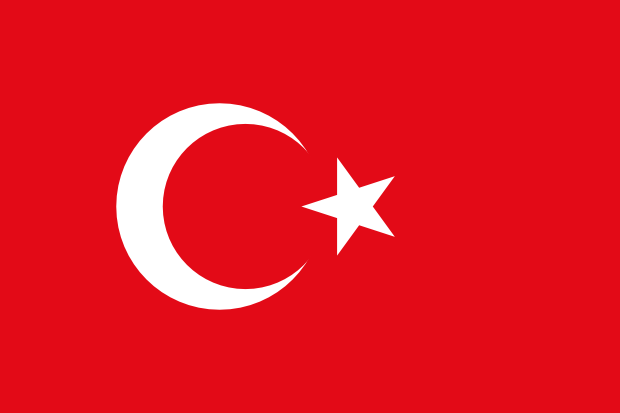
Flag is available in resolutions
| Icon 88x59 |  |
| Icon 32x21 |  |
Turkey
Turkey: A Land of Contrasts and Enduring Legacy
Turkey, officially the Republic of Turkey, is a transcontinental country located mainly on the Anatolian Peninsula in Western Asia, with a smaller portion on the Balkan Peninsula in Southeastern Europe. This unique geographical position, straddling two continents, has profoundly shaped its history, culture, and identity for millennia. From the bustling metropolises of Istanbul to the stark, lunar landscapes of Cappadocia and the sun-drenched Mediterranean coast, Turkey offers a captivating tapestry of ancient wonders and modern dynamism. Its strategic importance as a bridge between East and West has made it a crossroads of civilizations, leaving an indelible mark on its rich heritage. The sheer diversity of its landscapes, from snow-capped mountains to fertile plains and arid steppes, further contributes to its multifaceted appeal.
The population of Turkey is a vibrant mosaic, reflecting centuries of migration, conquest, and cultural exchange. As of recent estimates, the country is home to over 85 million people, making it one of the most populous nations in Europe and Western Asia. The vast majority of Turks are of Turkic descent, but the population also includes significant ethnic minorities such as Kurds, Arabs, Circassians, and various Caucasian groups, each contributing to the nations unique cultural fabric. The Turkish language, a Turkic language, is the official language and is spoken by the overwhelming majority of the population. Islam is the dominant religion, with the vast majority of citizens identifying as Muslim, though the country officially upholds secularism. This religious and ethnic diversity has historically presented both opportunities for cultural enrichment and, at times, challenges in national cohesion. The demographic distribution is uneven, with a significant portion of the population concentrated in urban centers, particularly Istanbul, Ankara, Izmir, and Bursa, which serve as economic and cultural hubs. The younger demographic is a significant factor, with a substantial proportion of the population under the age of 30, presenting both opportunities for economic growth and challenges related to employment and education.
Turkey’s history is a grand epic, stretching back to the dawn of civilization. The Anatolian peninsula has been inhabited since the Paleolithic era, and it was home to some of the earliest known human settlements, including Çatalhöyük, a Neolithic proto-city. Over millennia, it witnessed the rise and fall of numerous empires and civilizations, each leaving behind a legacy of architectural marvels, artistic achievements, and cultural traditions. The Hittites, a powerful Bronze Age empire, established their capital at Hattusa. Later, the Phrygians, Lydians, Greeks, and Romans all left their imprint on the region. The arrival of Turkic tribes from Central Asia in the 11th century marked a pivotal turning point. They gradually conquered Anatolia, laying the foundation for the Seljuk Sultanate of Rum and, subsequently, the mighty Ottoman Empire. The Ottoman Empire, which lasted for over six centuries, was a global superpower, renowned for its military might, administrative prowess, and cultural splendor. Its influence extended across North Africa, the Middle East, and Southeastern Europe. The empire’s capital, Istanbul (formerly Constantinople), became a magnificent cosmopolitan center, a melting pot of cultures and religions. However, internal strife, economic decline, and the rise of European powers eventually led to its gradual disintegration. Following World War I, the Ottoman Empire was dismantled, and the Republic of Turkey was founded in 1923 by Mustafa Kemal Atatürk, a visionary leader who ushered in a period of radical reforms aimed at modernizing the nation and establishing it as a secular, democratic republic. Atatürk’s legacy as the “Father of the Turks” remains profound, and his principles of secularism, nationalism, and republicanism continue to shape modern Turkey.
The geography of Turkey is as diverse as its history. Situated at the crossroads of Europe and Asia, it boasts a varied topography. The Anatolian Peninsula, forming the bulk of the country, is a vast plateau surrounded by mountain ranges. To the north lie the Pontic Mountains, stretching along the Black Sea coast, while the Taurus Mountains dominate the southern Mediterranean region. These mountain ranges influence the country’s climate, creating distinct regional variations. The Black Sea coast experiences a temperate oceanic climate with abundant rainfall, supporting lush forests. The Mediterranean coast enjoys a hot, dry summer and mild, wet winter. The interior Anatolian plateau, in contrast, has a continental climate with hot, dry summers and cold, snowy winters. Turkey also possesses a long coastline along the Mediterranean Sea, the Aegean Sea, and the Black Sea, offering beautiful beaches and a thriving tourism industry. The country is also traversed by major rivers, including the Tigris and Euphrates, which have played a crucial role in the development of civilizations in the region. The Bosporus and Dardanelles straits, connecting the Black Sea to the Aegean Sea, are strategically vital waterways, further underscoring Turkey’s geopolitical significance. The diverse geographical features also contribute to Turkey’s rich biodiversity, with a wide array of flora and fauna found across its different ecosystems.
The Turkish economy has undergone significant transformation, evolving from an agrarian base to a more industrialized and service-oriented economy. The country is a major producer of agricultural goods, including wheat, cotton, tobacco, fruits, and nuts. However, the industrial sector has witnessed substantial growth, with key industries including textiles, automotive manufacturing, electronics, and petrochemicals. Turkey is a significant player in the global textile market, known for its high-quality production. The automotive industry is also a major contributor to the economy, with both domestic and international manufacturers operating within the country. The burgeoning tourism sector is another vital pillar of the Turkish economy, attracting millions of visitors annually. The country’s rich history, stunning natural landscapes, and vibrant culture make it a premier tourist destination. The service sector, encompassing finance, telecommunications, and retail, is also expanding rapidly. Turkey’s strategic location facilitates trade, and it has established strong economic ties with both European and Asian countries. The government has implemented various policies to encourage foreign investment and promote economic development, aiming to enhance its competitiveness on the global stage. Despite facing economic challenges, such as inflation and currency fluctuations, Turkey remains a dynamic and growing economy with significant potential.
Turkey is brimming with tourist attractions, each offering a unique glimpse into its multifaceted appeal. Istanbul, the nation’s largest city and its cultural and economic heart, is a must-visit destination. Straddling the Bosporus Strait, it is a city where East meets West, boasting iconic landmarks such as the Hagia Sophia, a former church, mosque, and now a museum, showcasing breathtaking Byzantine and Ottoman architecture. The Blue Mosque, with its six minarets and exquisite interior tilework, is another architectural masterpiece. The Grand Bazaar and the Spice Bazaar offer a sensory overload of sights, sounds, and smells, providing an authentic shopping experience. Further afield, the ancient city of Ephesus, once a thriving Roman port, offers remarkably preserved ruins, including the Library of Celsus and the Great Theatre. The surreal landscapes of Cappadocia are a photographers dream, characterized by unique rock formations known as “fairy chimneys” that have been carved by erosion over millennia. Hot air balloon rides over these otherworldly formations at sunrise are an unforgettable experience. The ancient ruins of Troy, famed for its legendary horse, transport visitors back to the era of Homeric epics. The southern coast, known as the Turquoise Coast, beckons with its azure waters, pristine beaches, and charming coastal towns like Antalya, Bodrum, and Fethiye. These areas offer opportunities for swimming, sunbathing, sailing, and exploring ancient Lycian tombs and Roman theaters. For history buffs, the ancient city of Pergamon, with its impressive acropolis and theater, and the ruins of Aspendos, home to one of the best-preserved Roman theaters in the world, are equally compelling. The country’s commitment to preserving its historical and natural heritage, coupled with its warm hospitality, ensures that Turkey remains a captivating destination for travelers from around the globe.
Information about Turkey
The information comes from the publication CIA The World Factbook.
Automated text translation, excuse errors, please!
Country Turkey is situated in a location / continent Middle East. Turkey has an area of 783 562 km2 and 79 749 461 residents. The highest point has a height 5 166 above sea level. and it is called Mount Ararat. The lowest point is located at the level of 0 above sea level and it is named Mediterranean Sea. System of government is republic and the date of independence 29th October 1923. The capital city is Ankara. Turkey has the international abbreviation TU.
Turkey - economy
Total gross domestic product (GDP) is 1 087 000 000 000 $. Total gross domestic product per capita in purchasing power parity is 14 700 $. GDP grows by 8.50 % a year. Inflation (consumer price index) is equal to 6.50 % a year. Turkey have 27 430 000 working-age population (from a total population 79 749 461 people). Unemployment is at 9.80 %. Turkey issued 6.70 % GDP to healt care and 5,30 % GDP to army. The public debt of the country is 39.90 % GDP. The total amount of foreign debt is 306 600 000 000 USD.
Turkey - demography
As suggested above, Turkey has 79 749 461 people. Population growth is in the amount 1.20 % per year. Number of children born per 1000 population per year is 17.58.Every mother has average 2.13 children. The infant mortality rate is 23.07 and maternal mortality 20.00 deaths per 100,000 births. Average estimated life expectancy makes 72.77 years. Mortality is 6.10 people per 1000 population per year.
Turkey - transport and telecommunications
Turkey has 352 046 km of roads, 8 699 km of railway lines and 98 airports. The total length of waterways (navigable rivers, canals, etc.) is 1 200 km. There is registered 629 ships.
Number of active mobile phones (sim card) in the country Turkey is 65 322 000. Number of active fixed telephone lines is 15 211 000. Turkey has 27 233 000 internet users, who have the available 3 625 000 Internet connections. Turkey has been assigned a domain first Choose range .tr.
Turkey - energetics
Turkey consumes a year 155 200 000 000 kWh of electricity. Annual electricity production is 201 200 000 000 kWh in power plants with a total installed electrical capacity 44 760 000 kW. Turkey exports 1 918 000 000 kWh and imports 1 144 000 000 kWh of electricity per year Energy mix of power generation is as follows: fossil fuels: 65.3 %, nuclear energy: 0 %, renewable: 2.2 %, hydropower: 32.5 %. The country Turkey is harvested annually 45 740 barrels of oil.
Keywords: flag, list of countries, Flag of Turkey, flag states, flags of countries in the world, energetics, Turkey, telecommunications, national flags, Flags of countries, economy, list of flags, world countries, information, all flags, demography, transport, politic.