Iran
Flag of Iran
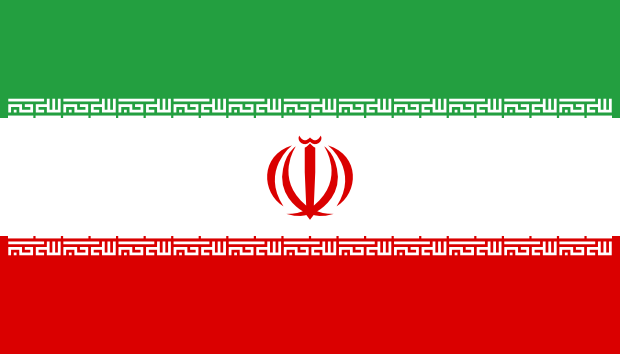
Flag is available in resolutions
| Icon 88x50 |  |
| Icon 32x18 |  |
Iran
Iran, officially the Islamic Republic of Iran, is a vast and historically rich nation situated at the crossroads of Western Asia and Central Asia. Its strategic location, spanning from the Caspian Sea in the north to the Persian Gulf and Gulf of Oman in the south, has profoundly shaped its destiny, making it a coveted prize and a significant player in regional and global affairs for millennia. The country’s sheer size, comparable to that of Western Europe, is matched by its remarkable diversity – a mosaic of cultures, ethnicities, and landscapes that contribute to its unique national identity. From the majestic Alborz and Zagros mountain ranges that dominate its interior to the arid deserts and fertile river valleys, Iran’s geography is as varied as it is breathtaking, offering a compelling backdrop to its ancient civilization. The very name Iran itself is derived from Aryana, meaning land of the Aryans, a testament to its deep historical roots and the enduring legacy of its ancient peoples.
The population of Iran is a vibrant tapestry woven from numerous ethnic groups, with the Persians forming the largest demographic. However, significant minority populations, including Azeris, Kurds, Lurs, Arabs, and Balochis, contribute to the country’s rich cultural and linguistic diversity. This ethnic heterogeneity has, at times, presented challenges for national unity, but it has also fostered a dynamic exchange of traditions, arts, and customs. The official language is Persian (Farsi), but various regional dialects and languages are spoken throughout the country. The vast majority of Iranians are Shia Muslims, a defining characteristic of the nation’s religious and political landscape since the Safavid dynasty established Shia Islam as the state religion in the 16th century. This religious adherence deeply influences social norms, cultural practices, and the governance structure of the Islamic Republic. The population is relatively young, with a substantial proportion of individuals under the age of 30, presenting both opportunities and challenges for the nations future development and economic growth. Urbanization has been a significant trend in recent decades, with large metropolises like Tehran, Mashhad, and Isfahan serving as centers of economic, cultural, and political activity, drawing people from rural areas in search of better opportunities.
Iran’s history is an epic saga, stretching back to the dawn of civilization. The region was home to some of the worlds earliest urban settlements, including the Elamite civilization in the southwest, which flourished for millennia before the rise of the great Persian empires. The Achaemenid Empire, founded by Cyrus the Great in the 6th century BCE, was a colossal power that stretched from the Balkans to the Indus Valley, renowned for its administrative prowess, tolerance towards conquered peoples, and monumental architecture like Persepolis. This era laid the foundations for a sophisticated Persian identity and a lasting cultural influence. Following the Achaemenids, the Seleucid, Parthian, and Sasanian empires continued to shape the region, each leaving their indelible mark on Persian art, science, and governance. The Arab conquest in the 7th century CE introduced Islam, which gradually became the dominant religion and profoundly influenced Persian culture, language, and literature, leading to a remarkable synthesis of pre-Islamic and Islamic traditions. The subsequent centuries saw the rise and fall of various dynasties, including the Samanids, Buyids, and Seljuks, each contributing to the rich intellectual and artistic heritage of Persia. The Safavid dynasty, in particular, is credited with solidifying Shia Islam as the state religion and fostering a golden age of art and architecture, evidenced in the magnificent mosques and palaces of Isfahan. The Qajar dynasty, though weaker, witnessed increasing European influence and the seeds of modern political awakening. The 20th century brought dramatic transformations, beginning with the Constitutional Revolution in the early 1900s, which sought to limit the monarchs power and establish a parliament. The discovery of oil in the early 20th century fundamentally altered Irans economic and geopolitical standing, drawing the attention of global powers. The Pahlavi dynasty, which came to power in the 1920s, embarked on ambitious modernization programs, often with authoritarian methods. The Islamic Revolution of 1979, led by Ayatollah Ruhollah Khomeini, overthrew the monarchy and established the Islamic Republic, ushering in a new era with profound implications for Irans domestic and foreign policy.
The Iranian economy is characterized by its significant natural resources, particularly oil and natural gas, which have historically been the backbone of its export earnings. Iran possesses some of the largest proven reserves of both commodities globally, making it a crucial player in the international energy market. However, the economy has faced considerable challenges due to international sanctions, which have impacted its ability to access global financial markets and export its products freely. Despite these hurdles, Iran has a diverse industrial base. Beyond the energy sector, key industries include petrochemicals, which leverage its abundant natural gas resources, and manufacturing, encompassing sectors like automobiles, textiles, and pharmaceuticals. Agriculture remains important, with the country producing a range of crops, including wheat, rice, fruits, and pistachios, a highly prized export. The services sector is also growing, with a significant contribution from trade, transportation, and telecommunications. Efforts have been made to diversify the economy and reduce its reliance on oil revenues, with a focus on developing non-oil exports and promoting domestic industries. However, the ongoing geopolitical tensions and the complex international sanctions regime continue to present significant obstacles to sustained economic growth and development.
Iran is a treasure trove of historical and natural wonders, attracting visitors with its rich cultural heritage and diverse landscapes. The ancient city of Persepolis, a UNESCO World Heritage site, stands as a magnificent testament to the grandeur of the Achaemenid Empire, its monumental ruins whispering tales of a bygone era. Isfahan, often referred to as half the world, is renowned for its breathtaking Islamic architecture, including the majestic Imam Square, adorned with exquisite mosques like the Imam Mosque and the Sheikh Lotfollah Mosque, and the Ali Qapu Palace, offering panoramic views. Yazd, a desert city, captivates with its ancient mud-brick architecture, Zoroastrian fire temples, and the unique windcatchers designed to channel cool air. The bustling bazaars of Tehran, the vibrant capital, offer a sensory overload of sights, sounds, and smells, from traditional handicrafts to aromatic spices. Beyond its historical sites, Iran boasts stunning natural beauty. The Alborz Mountains provide opportunities for hiking and skiing, while the Caspian Sea coast offers a different climate and a refreshing escape. The Dasht-e Kavir and Dasht-e Lut deserts present starkly beautiful, otherworldly landscapes, challenging the adventurous traveler. The lush forests of the north, along the Caspian coast, offer a verdant contrast to the arid interior. For those interested in the country’s rich cultural tapestry, visiting traditional tea houses, experiencing the intricate art of Persian carpet weaving, and attending religious ceremonies offer profound insights into the heart of Iranian life. The countrys commitment to preserving its heritage is evident in its numerous museums, showcasing everything from ancient artifacts to contemporary art.
In conclusion, Iran is a land of immense depth and complexity, a nation whose past continues to shape its present and future. Its ancient civilization, diverse population, strategic geography, and significant natural resources have positioned it as a pivotal entity on the world stage. While facing contemporary challenges, Iran’s enduring cultural legacy, its resilient people, and its profound historical significance ensure its continued importance in the global narrative. The land of the Aryans remains a captivating destination for those seeking to understand a civilization that has endured for millennia, offering a unique blend of history, culture, and natural splendor.
Information about Iran
The information comes from the publication CIA The World Factbook.
Automated text translation, excuse errors, please!
Country Iran is situated in a location / continent Middle East. Iran has an area of 1 648 195 km2 and 78 868 711 residents. The highest point has a height 5 671 above sea level. and it is called Kuh-e Damavand. The lowest point is located at the level of -28 above sea level and it is named Caspian Sea. System of government is Islamic Republic of and the date of independence First April 1979. The capital city is Tehran. Iran has the international abbreviation IR.
Iran - economy
Total gross domestic product (GDP) is 1 003 000 000 000 $. Total gross domestic product per capita in purchasing power parity is 13 200 $. GDP grows by 2.00 % a year. Inflation (consumer price index) is equal to 22.50 % a year. Iran have 26 370 000 working-age population (from a total population 78 868 711 people). Unemployment is at 15.30 %. Iran issued 3.90 % GDP to healt care and 2,50 % GDP to army. The public debt of the country is 12.00 % GDP. The total amount of foreign debt is 17 900 000 000 USD.
Iran - demography
As suggested above, Iran has 78 868 711 people. Population growth is in the amount 1.25 % per year. Number of children born per 1000 population per year is 18.52.Every mother has average 1.87 children. The infant mortality rate is 41.11 and maternal mortality 21.00 deaths per 100,000 births. Average estimated life expectancy makes 70.35 years. Mortality is 5.94 people per 1000 population per year.
Iran - transport and telecommunications
Iran has 172 927 km of roads, 8 442 km of railway lines and 324 airports. The total length of waterways (navigable rivers, canals, etc.) is 850 km. There is registered 76 ships.
Number of active mobile phones (sim card) in the country Iran is 56 043 000. Number of active fixed telephone lines is 27 767 000. Iran has 8 214 000 internet users, who have the available 167 453 Internet connections. Iran has been assigned a domain first Choose range .ir.
Iran - energetics
Iran consumes a year 173 100 000 000 kWh of electricity. Annual electricity production is 213 700 000 000 kWh in power plants with a total installed electrical capacity 56 170 000 kW. Iran exports 6 154 000 000 kWh and imports 2 068 000 000 kWh of electricity per year Energy mix of power generation is as follows: fossil fuels: 86.1 %, nuclear energy: 0 %, renewable: 0.1 %, hydropower: 13.7 %. The country Iran is harvested annually 4 231 000 barrels of oil.
Keywords: Flags of countries, all flags, flags of countries in the world, flag, economy, information, Flag of Iran, transport, national flags, flag states, energetics, world countries, list of flags, Iran, demography, telecommunications, list of countries, politic.