Belize
Flag of Belize
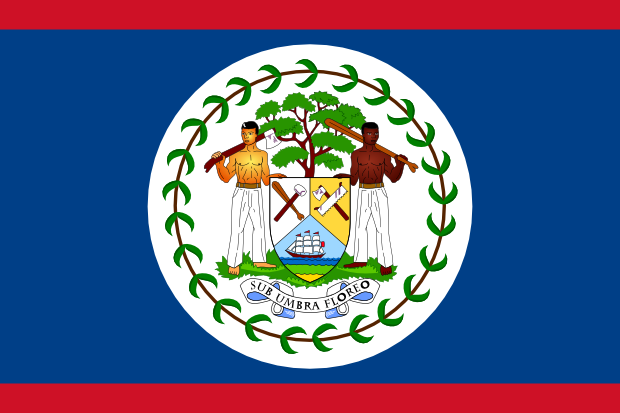
Flag is available in resolutions
| Icon 88x59 |  |
| Icon 32x21 |  |
Belize
Belize: A Jewel of Central America
Belize, a small nation nestled on the northeastern coast of Central America, is a land of captivating contrasts and rich cultural tapestry. Bordered by Mexico to the north and west, Guatemala to the southwest, and the Caribbean Sea to the east, it boasts a unique blend of influences that have shaped its history, demographics, and vibrant way of life. Unlike its Spanish-speaking neighbors, Belize’s official language is English, a legacy of its colonial past as British Honduras. This linguistic distinction, coupled with its diverse ethnic makeup, sets Belize apart as a truly distinct gem in the region, offering a compelling narrative of resilience, adaptation, and a deep connection to its natural wonders. The country’s relatively small size belies its immense biodiversity and significant historical importance, from ancient Mayan civilizations to its more recent struggles for independence and economic development.
The history of Belize is a fascinating journey that stretches back millennia, marked by the rise and fall of powerful civilizations and the subsequent arrival of European powers. The most significant early chapter is undoubtedly written by the Maya, who established thriving city-states throughout the region from around 250 AD to 900 AD. Sites like Caracol, Xunantunich, and Lamanai stand as enduring testaments to their advanced architectural, astronomical, and artistic achievements, offering glimpses into a complex and sophisticated society that once dominated this landscape. Following the decline of the Maya, the area remained sparsely populated for centuries until the arrival of European explorers and settlers. Spanish claims were largely nominal, with the British establishing a more permanent presence in the 17th century, primarily through buccaneers and logwood cutters attracted by the valuable timber. This period of British influence gradually solidified, leading to the establishment of British Honduras as a Crown Colony in 1862. The path to independence was a long and often challenging one, characterized by economic dependence on the timber industry and a protracted dispute with Guatemala over territorial claims. Finally, on September 21, 1981, Belize gained full independence, embarking on its journey as a sovereign nation. This historical arc, from ancient empires to colonial rule and finally to self-determination, has profoundly shaped Belize’s national identity and its relationship with both its neighbors and the wider world.
Geographically, Belize is a land of remarkable diversity, encompassing a stunning array of ecosystems and landscapes. The coastal plain, characterized by low-lying wetlands and mangrove forests, gradually gives way to rolling hills and eventually the Maya Mountains in the south, which reach elevations of over 1,100 meters. The country’s most iconic feature, however, is its extensive barrier reef system, the second-largest in the world. This UNESCO World Heritage site, home to an astonishing variety of marine life, includes the famous Great Blue Hole, a massive underwater sinkhole that draws divers from across the globe. Inland, Belize is crisscrossed by numerous rivers, such as the Belize River and the New River, which have historically served as vital transportation routes and continue to support lush rainforests teeming with biodiversity. The climate is tropical, with distinct wet and dry seasons. The dry season, from November to May, is generally considered the best time to visit, offering warm temperatures and ample sunshine. The country’s commitment to conservation is evident in its numerous protected areas, including national parks, wildlife reserves, and marine reserves, which safeguard its precious natural heritage for future generations. This geographical richness is not just a source of natural beauty but also a cornerstone of Belize’s economy and its appeal to visitors.
The demographic landscape of Belize is a vibrant mosaic of cultures and ethnicities, reflecting its complex history of migration and settlement. The largest ethnic group is the Mestizo, of mixed Spanish and Indigenous Maya descent, who primarily reside in the northern and western districts. Following closely are the Kriol (Creole) people, descendants of African slaves and European settlers, who are predominantly found in the coastal areas, particularly Belize City. The Garifuna, a distinct ethnic group with a unique language, culture, and musical traditions, have a strong presence in the southern coastal towns. Other significant groups include the Maya, who maintain their ancestral traditions in the western highlands, and a growing population of East Indians, Chinese, Mennonites, and various expatriates, contributing to the country’s multicultural fabric. This diversity is not merely a matter of statistics; it manifests in the rich tapestry of languages spoken, the diverse culinary traditions, the vibrant festivals, and the harmonious coexistence of different communities. English is the official language, but Kriol, Spanish, Garifuna, and various Mayan dialects are widely spoken, adding to the country’s linguistic richness. This blend of cultures creates a unique and welcoming atmosphere, where traditions are celebrated and integrated into the modern Belizean identity.
The economy of Belize, while still developing, has seen significant growth in recent decades, driven by key sectors that leverage its natural assets and strategic location. Tourism is undoubtedly the most significant contributor to Belize’s GDP, attracting visitors with its pristine beaches, world-class diving and snorkeling opportunities along the barrier reef, ancient Mayan ruins, and lush rainforests. The country’s commitment to eco-tourism and sustainable practices is increasingly drawing environmentally conscious travelers. Agriculture remains another vital pillar of the economy, with sugar, citrus fruits (especially oranges and grapefruits), bananas, and cocoa being major export commodities. The country’s fertile land and favorable climate support these agricultural endeavors. The Belizean government has been actively promoting foreign investment and diversifying the economy, with sectors like light manufacturing, business process outsourcing, and the offshore financial services industry showing potential for growth. However, challenges persist, including a reliance on a few key export products, vulnerability to natural disasters, and the need for continued investment in infrastructure and human capital development. Despite these challenges, Belize’s economic trajectory shows promise, with a growing emphasis on sustainable development and leveraging its unique advantages to foster prosperity.
Belize’s tourist attractions are as diverse as its population and geography, offering something for every type of traveler. The Belize Barrier Reef is a paramount draw, with its crystal-clear waters and vibrant marine life. Iconic sites like the Great Blue Hole, a massive underwater sinkhole, and the Hol Chan Marine Reserve and Shark Ray Alley provide unparalleled opportunities for diving and snorkeling. For history enthusiasts, the Mayan ruins scattered across the country are a must-see. Caracol, one of the largest Mayan sites, offers impressive pyramids and a glimpse into a lost civilization. Xunantunich, perched on a hill overlooking the Mopan River, provides breathtaking views and intricate stucco carvings. Lamanai, accessible by boat through mangrove-lined rivers, is known for its well-preserved temples and the opportunity to spot crocodiles and diverse birdlife. Inland, the Cockscomb Basin Wildlife Sanctuary is the world’s first jaguar preserve, offering hiking trails and the chance to encounter this elusive big cat, along with other wildlife such as monkeys, tapirs, and numerous bird species. The lush rainforests also offer opportunities for zip-lining, cave tubing through ancient Mayan ceremonial caves, and exploring waterfalls. Coastal towns like Ambergris Caye and Caye Caulker are popular for their laid-back island vibes, pristine beaches, and vibrant coral reefs, offering a perfect escape for relaxation and adventure. The cultural experiences are equally compelling, with opportunities to engage with the Garifuna culture in towns like Hopkins and Punta Gorda, experiencing their music, dance, and cuisine. From the ancient wonders of the Maya to the breathtaking underwater world of the Caribbean Sea and the vibrant tapestry of its cultures, Belize truly offers an unforgettable journey.
Information about Belize
The information comes from the publication CIA The World Factbook.
Automated text translation, excuse errors, please!
Country Belize is situated in a location / continent Central America. Belize has an area of 22 966 km2 and 327 719 residents. The highest point has a height 1 160 above sea level.. The lowest point is located at the level of 0 above sea level and it is named Caribbean Sea. System of government is Republic, Commonwealth member country.The capital city is Belmopan. Belize has the international abbreviation BH.
Belize - economy
Total gross domestic product (GDP) is 2 836 000 000 $. Total gross domestic product per capita in purchasing power parity is 8 400 $. GDP grows by 2.50 % a year. Inflation (consumer price index) is equal to 1.80 % a year. Belize have 120 500 working-age population (from a total population 327 719 people). Unemployment is at 13.10 %. Belize issued 3.30 % GDP to healt care and 1,40 % GDP to army. The public debt of the country is 84.80 % GDP. The total amount of foreign debt is 1 079 000 000 USD.
Belize - demography
As suggested above, Belize has 327 719 people. Population growth is in the amount 2.01 % per year. Number of children born per 1000 population per year is 26.02.Every mother has average 3.15 children. The infant mortality rate is 21.37 and maternal mortality 53.00 deaths per 100,000 births. Average estimated life expectancy makes 68.28 years. Mortality is 5.91 people per 1000 population per year.
Belize - transport and telecommunications
Belize has 3 007 km of roads and 43 airports. The total length of waterways (navigable rivers, canals, etc.) is 825 km. There is registered 247 ships.
Number of active mobile phones (sim card) in the country Belize is 203 000. Number of active fixed telephone lines is 28 800. Belize has 36 000 internet users, who have the available 7 464 Internet connections. Belize has been assigned a domain first Choose range .bz.
Belize - energetics
Belize consumes a year 285 700 000 kWh of electricity. Annual electricity production is 307 200 000 kWh in power plants with a total installed electrical capacity 102 100 kW. Belize exports 0 kWh and imports 0 kWh of electricity per year Energy mix of power generation is as follows: fossil fuels: 33.3 %, nuclear energy: 0 %, renewable: 29.5 %, hydropower: 37.2 %. The country Belize is harvested annually 4 000 barrels of oil.
Keywords: Belize, Flag of Belize, information, list of countries, all flags, flag, economy, flag states, telecommunications, world countries, energetics, list of flags, flags of countries in the world, demography, Flags of countries, national flags, transport, politic.