Honduras
Flag of Honduras
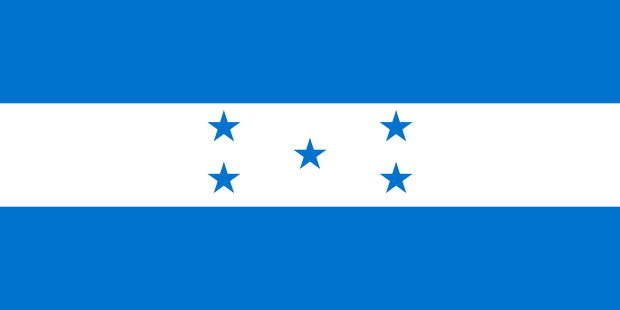
Flag is available in resolutions
| Icon 88x44 |  |
| Icon 32x16 |  |
Honduras
Honduras: A Land of Contrasts and Enduring Spirit
Honduras, nestled in the heart of Central America, is a nation often overlooked, yet brimming with a rich tapestry of history, vibrant culture, and breathtaking natural beauty. Its name, derived from the Spanish word for depths, hints at the profound, sometimes turbulent, experiences that have shaped this land and its people. From ancient Mayan ruins that whisper tales of a glorious past to the azure waters of the Caribbean coast teeming with marine life, Honduras offers a compelling paradox: a country grappling with contemporary challenges while cherishing its deep-rooted heritage and immense potential. This article delves into the multifaceted identity of Honduras, exploring its demographics, historical trajectory, geographical wonders, economic endeavors, and the allure of its tourist destinations, painting a comprehensive picture of this captivating Central American gem.
The population of Honduras, estimated to be around 10 million, is a testament to its diverse heritage. The majority of Hondurans are mestizos, a blend of European and Indigenous ancestry, reflecting the historical intermingling of Spanish colonizers and the native peoples who inhabited the land. A significant Indigenous population, primarily comprising the Lenca, Miskito, Garifuna, and Tolupan communities, continues to preserve their unique languages, traditions, and cultural practices, adding a vibrant layer to the national mosaic. The Garifuna, in particular, with their distinct Afro-Caribbean culture and language, are a remarkable presence along the northern coast, a living embodiment of resilience and cultural fusion. Spanish is the official language, spoken by the vast majority, but pockets of Indigenous languages and the Garifuna language persist, enriching the linguistic landscape. The Honduran people are generally known for their warmth, hospitality, and a strong sense of community, often finding solace and strength in shared traditions and familial bonds, even amidst economic hardships. Religious life is predominantly Roman Catholic, a legacy of Spanish colonization, but Protestant denominations have gained significant traction in recent decades. This religious diversity, alongside the enduring Indigenous spiritual beliefs, contributes to a rich spiritual fabric that influences daily life and cultural expressions.
Honduras history is a compelling narrative of ancient civilizations, colonial conquest, and the struggle for independence and self-determination. The land was once home to the mighty Maya civilization, whose architectural prowess and astronomical knowledge are still evident in the magnificent ruins of Copán. These UNESCO World Heritage sites, with their intricate hieroglyphs and imposing pyramids, stand as silent witnesses to a sophisticated society that flourished for centuries before its mysterious decline. Following the arrival of Christopher Columbus in 1502, Honduras became a Spanish colony, subjected to the exploitation of its natural resources, particularly silver, and the subjugation of its Indigenous populations. The colonial era left an indelible mark on Honduran society, shaping its language, religion, and social structures. In 1821, Honduras, along with other Central American nations, declared independence from Spain, embarking on a new chapter as a sovereign state. However, the path to stability was fraught with challenges, including internal conflicts, political instability, and economic dependence on foreign powers, particularly the United States, whose influence, especially through the powerful United Fruit Company, profoundly impacted the nations economy and politics in the late 19th and early 20th centuries. The 20th century saw a series of coups and dictatorships, punctuated by periods of democratic rule, as Honduras grappled with its identity and sought to forge a stable political future. Despite these historical struggles, the spirit of resilience and a yearning for progress have always characterized the Honduran people, who continue to strive for a brighter tomorrow.
Geographically, Honduras is a land of striking diversity and breathtaking natural beauty. Its territory encompasses a substantial portion of the Central American isthmus, bordered by Guatemala to the west, El Salvador and Nicaragua to the south, and the Caribbean Sea to the north. The northern coastline stretches for over 600 kilometers, boasting pristine white-sand beaches, vibrant coral reefs, and the worlds second-largest barrier reef system, the Mesoamerican Barrier Reef. This underwater paradise, a haven for divers and snorkelers, teems with an astonishing array of marine life, including colorful fish, sea turtles, and majestic whale sharks. Inland, the landscape transforms dramatically. The rugged Cordillera de Celaque, a mountain range that forms the backbone of the country, is home to lush cloud forests, cascading waterfalls, and a rich biodiversity of flora and fauna. The Pico Celaque, the highest peak in Honduras, offers panoramic views and challenging hiking trails for the adventurous. Honduras also boasts a significant portion of the Mosquito Coast, a vast and largely undeveloped coastal plain that extends into Nicaragua, characterized by dense rainforests, extensive wetlands, and a unique blend of Indigenous and Afro-Caribbean cultures. The country is also crisscrossed by numerous rivers, the most important being the Río Ulúa and the Río Coco, which are vital for transportation, agriculture, and the generation of hydroelectric power. This geographical mosaic, from the turquoise waters of the Caribbean to the misty peaks of the mountains, provides a stunning backdrop for the nations natural wonders and a significant resource for its economy.
The Honduran economy, while historically reliant on agriculture, has been diversifying, with a growing emphasis on industry and services. For decades, bananas, coffee, and shrimp were the cornerstones of its export economy, and these sectors remain significant. Honduras is one of the worlds leading producers of bananas, and its coffee, particularly from the regions of Marcala and Copán, is highly regarded for its quality. However, the country has made strides in developing its manufacturing sector, particularly in the assembly of clothing and textiles, taking advantage of its relatively low labor costs and favorable trade agreements. The maquiladora industry has become a significant source of employment, contributing to the national GDP. Tourism, though still in its nascent stages compared to some of its neighbors, holds immense potential. The pristine beaches, the ancient Mayan ruins of Copán, and the rich biodiversity of its national parks are increasingly attracting international visitors. Remittances from Hondurans working abroad, particularly in the United States, also play a crucial role in the national economy, providing a vital source of income for many families. Despite these economic activities, Honduras faces considerable challenges, including poverty, inequality, and a reliance on foreign aid. Efforts are underway to improve infrastructure, attract foreign investment, and foster sustainable development to create a more robust and equitable economy for its citizens.
Honduras offers a wealth of tourist attractions that cater to a diverse range of interests, from history buffs and adventure seekers to beach lovers and nature enthusiasts. The crown jewel of its historical sites is undoubtedly Copán Ruinas. These remarkably preserved Mayan ruins, nestled in a lush valley, provide an unparalleled glimpse into the sophistication of this ancient civilization. Visitors can explore the Great Plaza, the Hieroglyphic Stairway, and the numerous stelae that depict the history and cosmology of the Maya. The nearby museum offers further insights into the archaeological discoveries. For those seeking sun, sand, and sea, the Bay Islands – Utila, Roatán, and Guanaja – are a tropical paradise. Roatán, the largest and most developed, is renowned for its stunning beaches, crystal-clear waters, and world-class diving and snorkeling opportunities along the Mesoamerican Barrier Reef. Utila, a more laid-back and budget-friendly option, is a popular destination for learning to dive and for spotting whale sharks. Guanaja, the most serene of the islands, offers a more secluded escape with its pristine beaches and lush interior. Nature lovers will find solace in Pico Bonito National Park, a biodiverse sanctuary home to a remarkable array of wildlife, including jaguars, monkeys, and numerous bird species. Hiking trails lead to spectacular waterfalls, including the iconic Cascada de Cangrejal, offering refreshing opportunities for a swim. The Mosquitia region, a vast and wild expanse of rainforest and wetlands, offers an authentic adventure for intrepid travelers, with opportunities for exploring Indigenous communities and encountering unique ecosystems. The Tegucigalpa metropolitan area, the capital city, while not as overtly tourist-centric as other destinations, offers a glimpse into Honduran urban life, with its bustling markets, historical architecture, and the National Museum. From the echoes of ancient civilizations to the vibrant pulse of modern life, Honduras beckons with its diverse landscapes, rich cultural heritage, and the enduring spirit of its people, promising an unforgettable journey for those willing to explore its depths.
Information about Honduras
The information comes from the publication CIA The World Factbook.
Automated text translation, excuse errors, please!
Country Honduras is situated in a location / continent Central America. Honduras has an area of 112 090 km2 and 8 296 693 residents. The highest point has a height 2 870 above sea level. and it is called Cerro Las Minas. The lowest point is located at the level of 0 above sea level and it is named Caribbean Sea. System of government is Democratic Republic and the date of independence 15th September 1821. The capital city is Tegucigalpa. Honduras has the international abbreviation HO.
Honduras - economy
Total gross domestic product (GDP) is 36 150 000 000 $. Total gross domestic product per capita in purchasing power parity is 4 400 $. GDP grows by 3.60 % a year. Inflation (consumer price index) is equal to 6.80 % a year. Honduras have 3 461 000 working-age population (from a total population 8 296 693 people). Unemployment is at 4.80 %. Honduras issued 7.30 % GDP to healt care and 0,60 % GDP to army. The public debt of the country is 33.50 % GDP. The total amount of foreign debt is 4 564 000 000 USD.
Honduras - demography
As suggested above, Honduras has 8 296 693 people. Population growth is in the amount 1.84 % per year. Number of children born per 1000 population per year is 24.66.Every mother has average 3.01 children. The infant mortality rate is 19.85 and maternal mortality 100.00 deaths per 100,000 births. Average estimated life expectancy makes 70.71 years. Mortality is 5.05 people per 1000 population per year.
Honduras - transport and telecommunications
Honduras has 14 239 km of roads, 75 km of railway lines and 104 airports. The total length of waterways (navigable rivers, canals, etc.) is 465 km. There is registered 88 ships.
Number of active mobile phones (sim card) in the country Honduras is 8 062 000. Number of active fixed telephone lines is 609 200. Honduras has 731 700 internet users, who have the available 27 074 Internet connections. Honduras has been assigned a domain first Choose range .hn.
Honduras - energetics
Honduras consumes a year 4 800 000 000 kWh of electricity. Annual electricity production is 6 326 000 000 kWh in power plants with a total installed electrical capacity 1 697 000 kW. Honduras exports 46 000 000 kWh and imports 100 000 kWh of electricity per year Energy mix of power generation is as follows: fossil fuels: 63.9 %, nuclear energy: 0 %, renewable: 5.4 %, hydropower: 30.8 %.
Keywords: demography, all flags, national flags, Honduras, information, flag, Flags of countries, telecommunications, flags of countries in the world, economy, transport, Flag of Honduras, list of flags, energetics, list of countries, world countries, flag states, politic.