Grenada
Flag of Grenada
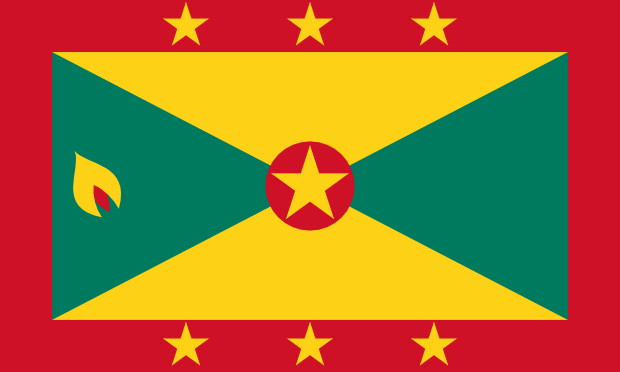
Flag is available in resolutions
| Icon 88x53 |  |
| Icon 32x19 |  |
Grenada
Grenada: The Spice Isle of the Caribbean
Nestled in the southeastern Caribbean Sea, Grenada is a captivating island nation renowned for its lush rainforests, pristine beaches, and, most notably, its aromatic spices. Often referred to as the “Spice Isle,” Grenada’s fragrant allure, combined with its rich history and vibrant culture, makes it a truly unique destination. This volcanic island, part of the Windward Islands chain, boasts a dramatic landscape that transitions from dramatic mountain peaks cloaked in verdant foliage to idyllic coastal stretches lapped by turquoise waters. Beyond its breathtaking natural beauty, Grenada possesses a compelling narrative woven from indigenous heritage, colonial struggles, and a tenacious spirit of independence, all of which contribute to its distinct identity.
The population of Grenada, estimated to be around 113,000 people, is a vibrant tapestry of African, European, and East Indian descent, a legacy of its complex past. This diverse heritage is reflected in the island’s culture, music, cuisine, and traditions. The official language is English, though Grenadian Creole, a French-based patois, is widely spoken and adds a charming local flavor to everyday interactions. The people of Grenada are known for their warmth, hospitality, and a joyful zest for life, evident in their lively festivals and the welcoming smiles that greet visitors. The society is predominantly Christian, with significant Roman Catholic and Anglican communities, complemented by smaller groups of Hindus, Muslims, and Rastafarians, creating a harmonious religious landscape. The capital city, St. George’s, is a picturesque harbor town with colorful colonial architecture, bustling markets, and a lively atmosphere that encapsulates the spirit of the island.
Grenada’s history is a compelling saga of exploration, conquest, and resilience. Originally inhabited by the indigenous Kalinago and Carib peoples, the island was first sighted by Europeans in the late 15th century during Christopher Columbus’s third voyage. However, it was the French who established the first permanent settlement in 1650, naming the island “Grenade” after the Spanish city. This marked the beginning of a tumultuous period of French and British rivalry for control of the island. The French introduced sugar cultivation, which relied heavily on enslaved African labor, leaving an indelible mark on the island’s demographics and social structure. The British eventually gained full control in 1783 following the Treaty of Versailles. Under British rule, Grenada’s economy shifted towards the cultivation of spices, particularly nutmeg and mace, which would come to define its global reputation. The abolition of slavery in 1834 brought about significant social changes, and Grenada gained its independence from the United Kingdom on February 7, 1974, becoming a sovereign nation within the Commonwealth. The island has since navigated its path as an independent state, facing economic challenges and political shifts, yet always retaining its unique cultural identity and pride.
The geography of Grenada is as diverse as its history. The island is mountainous, with the central highlands dominated by Grand Etang National Park and Forest Reserve. This protected area is a haven for biodiversity, featuring a stunning crater lake, lush rainforests, and a variety of endemic flora and fauna, including the Mona monkey and the Grenada dove. The coastline is characterized by a mix of dramatic cliffs, secluded coves, and idyllic sandy beaches, many of which are world-renowned. The iconic Grand Anse Beach, a two-mile stretch of soft, white sand, is a prime example of Grenada’s coastal splendor. The island’s volcanic origins are evident in its fertile soil, which is ideal for spice cultivation, and in its numerous waterfalls, such as Concord Falls and Annandale Falls, which offer refreshing natural pools for swimming. Grenada also comprises several smaller islands and cays, including Carriacou and Petite Martinique, each with its own distinct charm and character, offering a more secluded and authentic Caribbean experience.
The economy of Grenada is primarily driven by tourism and the export of spices. The island’s reputation as the “Spice Isle” is well-earned, with nutmeg and mace being its most significant agricultural exports, adorning the national flag and appearing on its currency. Cinnamon, cloves, ginger, and turmeric are also cultivated, contributing to the island’s aromatic landscape and culinary traditions. The fertile volcanic soil and tropical climate provide excellent conditions for these crops. Tourism is a vital sector, attracting visitors with its beautiful beaches, lush interior, and vibrant culture. The government actively promotes eco-tourism and adventure tourism, capitalizing on the island’s natural attractions. Other sectors include agriculture, fishing, and a small manufacturing base. The nation has made efforts to diversify its economy, investing in areas such as renewable energy and the development of its offshore financial services sector. However, the economy remains vulnerable to external shocks, such as fluctuations in global commodity prices and the impact of natural disasters like hurricanes.
Grenada offers a wealth of tourist attractions that cater to a wide range of interests. For beach lovers, the aforementioned Grand Anse Beach is a must-visit, offering a vibrant atmosphere with water sports, beach bars, and local vendors. Morne Rouge Beach, also known as BBC Beach, provides a more tranquil setting. Beyond the beaches, the island’s interior beckons with natural wonders. Grand Etang National Park is a highlight, offering hiking trails through the rainforest, opportunities for birdwatching, and the chance to see the island’s unique wildlife. The crater lake within the park is a breathtaking sight. Waterfalls like Concord Falls and Annandale Falls provide refreshing escapes and picturesque photo opportunities. The capital city, St. George’s, is a historical gem with its horseshoe-shaped harbor, the imposing Fort George offering panoramic views, and the historic marketplace where visitors can immerse themselves in local life and purchase spices and handicrafts. For those interested in the island’s spice heritage, a visit to a nutmeg processing station or a spice plantation is highly recommended. The underwater world also holds allure, with excellent diving and snorkeling opportunities around the coral reefs and the famous Molinere Underwater Sculpture Park, the world’s first of its kind. The sister islands of Carriacou and Petite Martinique offer a glimpse into a more traditional and laid-back Caribbean lifestyle, with pristine beaches and vibrant local culture.
Grenada’s cultural landscape is a vibrant fusion of its diverse heritage. Music plays a central role, with calypso and soca being popular genres, especially during the annual Carnival celebrations, a riot of color, music, and dance. Traditional folk music and dance are also preserved and celebrated. The island’s cuisine is a delicious reflection of its multicultural influences, featuring fresh seafood, local fruits and vegetables, and, of course, an abundance of spices. Dishes like Oil Down, a hearty one-pot stew, and Grenadian chocolate, made from locally grown cocoa, are culinary delights. The annual Grenada Chocolate Festival is a testament to the island’s growing reputation as a producer of high-quality chocolate. The island’s festivals, such as the Carriacou Regatta, a celebration of traditional boat building and sailing, and the National Day of Independence, showcase the islanders’ pride in their heritage and their strong sense of community. The arts and crafts scene is also thriving, with local artisans producing beautiful pottery, woven goods, and wood carvings, often inspired by nature and traditional motifs. The warm and welcoming nature of the Grenadian people, their infectious rhythm, and their deep connection to their land and traditions create an unforgettable cultural experience for any visitor.
Information about Grenada
The information comes from the publication CIA The World Factbook.
Automated text translation, excuse errors, please!
Country Grenada is situated in a location / continent Central America. Grenada has an area of 344 km2 and 109 011 residents. The highest point has a height 840 above sea level. and it is called Mount Saint Catherine. The lowest point is located at the level of 0 above sea level and it is named Caribbean Sea. System of government is Republic, Commonwealth member country and the date of independence 7th February 1974. The capital city is Saint George. Grenada has the international abbreviation GJ.
Grenada - economy
Total gross domestic product (GDP) is 1 468 000 000 $. Total gross domestic product per capita in purchasing power parity is 14 100 $. GDP grows by 1.10 % a year. Inflation (consumer price index) is equal to 4.00 % a year. Grenada have 47 580 working-age population (from a total population 109 011 people). Unemployment is at 25.00 %. Grenada issued 7.10 % GDP to healt care .The total amount of foreign debt is 531 000 000 USD.
Grenada - demography
As suggested above, Grenada has 109 011 people. Population growth is in the amount 0.54 % per year. Number of children born per 1000 population per year is 16.81.Every mother has average 2.15 children. The infant mortality rate is 11.12 and maternal mortality 24.00 deaths per 100,000 births. Average estimated life expectancy makes 73.30 years. Mortality is 7.98 people per 1000 population per year.
Grenada - transport and telecommunications
Grenada has 1 127 km of roads and 3 airports.
Number of active mobile phones (sim card) in the country Grenada is 121 900. Number of active fixed telephone lines is 28 400. Grenada has 25 000 internet users, who have the available 71 Internet connections. Grenada has been assigned a domain first Choose range .gd.
Grenada - energetics
Grenada consumes a year 177 400 000 kWh of electricity. Annual electricity production is 201 400 000 kWh in power plants with a total installed electrical capacity 33 000 kW. Grenada exports 0 kWh and imports 0 kWh of electricity per year Energy mix of power generation is as follows: fossil fuels: 100 %, nuclear energy: 0 %, renewable: 0.0 %, hydropower: 0.0 %.
Keywords: transport, national flags, Grenada, energetics, Flag of Grenada, flags of countries in the world, economy, list of countries, list of flags, Flags of countries, all flags, world countries, demography, flag, telecommunications, flag states, information, politic.