Trinidad and Tobago
Flag of Trinidad and Tobago
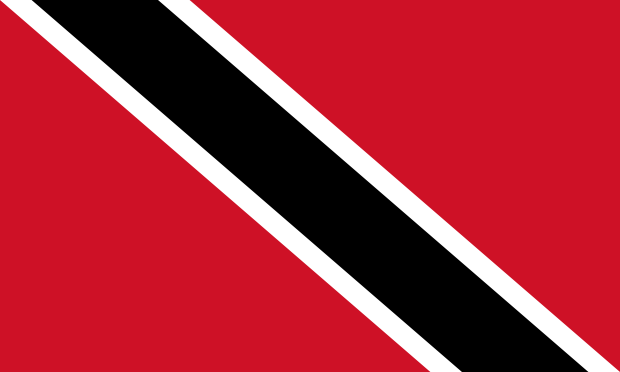
Flag is available in resolutions
| Icon 88x53 |  |
| Icon 32x19 |  |
Trinidad and Tobago
Trinidad and Tobago: A Caribbean Tapestry of Culture, Nature, and Industry
Nestled in the southeastern corner of the Caribbean Sea, just off the coast of Venezuela, lies the twin-island nation of Trinidad and Tobago. This vibrant country, a melting pot of diverse cultures and a land of striking natural beauty, offers a unique blend of tropical allure and industrial dynamism. From its rich historical tapestry woven by indigenous peoples, colonial powers, and waves of immigrants, to its lush rainforests, pristine beaches, and a thriving economy driven by its natural resources, Trinidad and Tobago presents a captivating destination for exploration and understanding. Its story is one of resilience, adaptation, and a celebration of its multifaceted identity, making it a truly distinctive jewel in the Caribbean crown.
The population of Trinidad and Tobago is a testament to its complex history, a vibrant mosaic composed of descendants from Africa, India, Europe, and the Middle East, alongside indigenous Amerindian roots. This rich heritage is most vividly expressed in the nation’s culture, a dynamic fusion of African rhythms, Indian traditions, European influences, and Caribbean flair. The dominant languages spoken are English, the official language, and various creole dialects, notably Trinidadian Creole and Tobagonian Creole. The diverse religious landscape mirrors the populations origins, with Christianity, Hinduism, and Islam being the most prominent faiths. This cultural amalgamation is most famously showcased during the annual Carnival, a spectacular pre-Lenten celebration renowned for its infectious music, elaborate costumes, and an overwhelming sense of joy and community. Beyond Carnival, the country’s culinary scene is a delightful reflection of its multiculturalism, offering an array of dishes that blend spices and flavors from across the globe. Festivals like Divali, Eid al-Fitr, and various Christian holidays are celebrated with equal enthusiasm, reinforcing the spirit of unity and mutual respect that defines the nation. The educational system is well-developed, with a high literacy rate, and the people are known for their warmth, hospitality, and a distinctive sense of humor, often expressed through witty proverbs and lively conversations.
The history of Trinidad and Tobago is a captivating narrative of discovery, conquest, and transformation. Originally inhabited by indigenous Amerindian tribes, including the Caribs and Arawaks, the islands were first sighted by Europeans during Christopher Columbuss second voyage in 1498, who claimed them for Spain. For centuries, Trinidad remained under Spanish rule, though it was sparsely populated and largely left undeveloped. Tobago, on the other hand, experienced a more turbulent history, changing hands numerous times between the British, French, Dutch, and even the Knights of Malta. It was the British who eventually gained firm control of both islands in the early 19th century, consolidating them into a single crown colony in 1889. The abolition of slavery in 1834 led to a significant shift in labor practices. To fill the void left by emancipated slaves, the British introduced indentured laborers, primarily from India, to work on the sugar plantations. This influx of Indian workers profoundly shaped the demographics and cultural landscape of Trinidad, contributing significantly to its Hindu and Muslim populations and introducing a rich tapestry of traditions and customs. The 20th century saw a growing movement towards self-governance, culminating in Trinidad and Tobago gaining full independence from the United Kingdom on August 31, 1962. A further milestone was achieved in 1976 when the nation became a republic. Since independence, Trinidad and Tobago has navigated the complexities of post-colonial nation-building, focusing on economic diversification and maintaining its vibrant democratic traditions.
Geographically, Trinidad and Tobago is a land of striking contrasts, offering a diverse range of landscapes within its relatively small area. Trinidad, the larger of the two islands, is characterized by a mountainous interior, most notably the Northern Range, which runs along the northern coast and is covered in dense tropical rainforest. These mountains are home to a rich biodiversity, including numerous species of birds, mammals, and reptiles. The island also features extensive lowlands, fertile plains ideal for agriculture, and a dramatic coastline dotted with beautiful beaches, mangrove swamps, and dramatic cliffs. The pitch lake at La Brea, a natural asphalt lake, is a unique geological wonder and a significant economic resource. Tobago, situated northeast of Trinidad, is smaller and more mountainous, with a central ridge of volcanic origin, the Main Ridge, which is the oldest protected rainforest in the Western Hemisphere. Tobago is renowned for its idyllic beaches, turquoise waters, and vibrant coral reefs, making it a prime destination for diving and snorkeling. The climate is tropical, with high temperatures and humidity year-round, moderated by trade winds. The rainy season typically runs from June to December, while the dry season occurs from January to May. The islands are also prone to hurricanes, though direct hits are relatively rare. The country’s natural environment is a significant asset, supporting a thriving tourism industry and providing vital resources for its economy.
The economy of Trinidad and Tobago is heavily reliant on its abundant natural resources, particularly oil and natural gas. The discovery of significant oil reserves in the early 20th century and the subsequent development of its natural gas industry have been the primary drivers of economic growth and prosperity for the nation. The energy sector accounts for a substantial portion of the countrys Gross Domestic Product (GDP) and export earnings. Trinidad and Tobago is a major exporter of liquefied natural gas (LNG), methanol, and ammonia. Beyond the energy sector, the government has made concerted efforts to diversify the economy, focusing on developing other sectors such as manufacturing, financial services, tourism, and agriculture. Agriculture, though less dominant than in the past, still plays a role, with the cultivation of sugarcane, cocoa, coffee, and tropical fruits. The manufacturing sector includes food processing, textiles, and light industrial goods. Tourism, particularly on the island of Tobago, is a growing industry, attracting visitors with its natural beauty, cultural heritage, and vibrant festivals. The country is a member of the Caribbean Community (CARICOM) and participates in regional trade agreements, further integrating it into the broader Caribbean economy. Despite its economic strengths, the nation faces challenges such as dependence on volatile commodity prices and the need for continued investment in infrastructure and human capital to foster sustainable long-term growth.
Trinidad and Tobago boasts a wealth of tourist attractions, catering to a wide range of interests. For nature enthusiasts, the Asa Wright Nature Centre on Trinidad offers an unparalleled opportunity to observe diverse birdlife in its natural habitat, including the famous oilbird. The Caroni Bird Sanctuary is another must-visit, renowned for its spectacular evening spectacle of thousands of scarlet ibises returning to roost. The beaches of Tobago, such as Pigeon Point, with its iconic jetty, and Store Bay, are perfect for relaxation and water sports. The underwater world around Tobago is equally captivating, with prime diving and snorkeling spots like Speyside, home to the wreck of the *M.V. Puritania* and vibrant coral formations teeming with marine life. For those interested in history and culture, the capital city of Port of Spain on Trinidad offers a vibrant urban experience. The Royal Botanic Gardens, the Queen’s Park Savannah, and the historic Red House (parliament building) are notable landmarks. The National Museum and Art Gallery provides insights into the country’s rich past and artistic expressions. The vibrant street art scene in Port of Spain is also worth exploring. The pitch lake at La Brea is a unique geological attraction, offering a glimpse into the island’s natural asphalt reserves. The annual Carnival, a world-renowned event, is a major draw for tourists, offering an immersive experience of Trinidadian culture through music, dance, and elaborate parades. The laid-back atmosphere and stunning natural beauty of Tobago also attract visitors seeking a more tranquil Caribbean escape. The blend of natural wonders, cultural richness, and lively festivities ensures that Trinidad and Tobago offers an unforgettable experience for every traveler.
Information about Trinidad and Tobago
The information comes from the publication CIA The World Factbook.
Automated text translation, excuse errors, please!
Country Trinidad and Tobago is situated in a location / continent Central America. Trinidad and Tobago has an area of 5 128 km2 and 1 226 383 residents. The highest point has a height 940 above sea level. and it is called El Cerro del Aripo. The lowest point is located at the level of 0 above sea level and it is named Caribbean Sea. System of government is republic and the date of independence 31st August 1962. The capital city is Port-of-Spain. Trinidad and Tobago has the international abbreviation TD.
Trinidad and Tobago - economy
Total gross domestic product (GDP) is 26 880 000 000 $. Total gross domestic product per capita in purchasing power parity is 20 300 $. GDP grows by -1.30 % a year. Inflation (consumer price index) is equal to 5.10 % a year. Trinidad and Tobago have 636 800 working-age population (from a total population 1 226 383 people). Unemployment is at 6.40 %. Trinidad and Tobago issued 5.60 % GDP to healt care .The public debt of the country is 32.70 % GDP. The total amount of foreign debt is 4 483 000 000 USD.
Trinidad and Tobago - demography
As suggested above, Trinidad and Tobago has 1 226 383 people. Population growth is in the amount -0.09 % per year. Number of children born per 1000 population per year is 14.25.Every mother has average 1.72 children. The infant mortality rate is 26.73 and maternal mortality 46.00 deaths per 100,000 births. Average estimated life expectancy makes 71.67 years. Mortality is 8.35 people per 1000 population per year.
Trinidad and Tobago - transport and telecommunications
Trinidad and Tobago has 8 320 km of roads and 5 airports. There is registered 4 ships.
Number of active mobile phones (sim card) in the country Trinidad and Tobago is 1 825 000. Number of active fixed telephone lines is 292 000. Trinidad and Tobago has 593 000 internet users, who have the available 241 640 Internet connections. Trinidad and Tobago has been assigned a domain first Choose range .tt.
Trinidad and Tobago - energetics
Trinidad and Tobago consumes a year 7 102 000 000 kWh of electricity. Annual electricity production is 7 271 000 000 kWh in power plants with a total installed electrical capacity 1 429 000 kW. Trinidad and Tobago exports 0 kWh and imports 0 kWh of electricity per year Energy mix of power generation is as follows: fossil fuels: 99.7 %, nuclear energy: 0 %, renewable: 0.3 %, hydropower: 0.0 %. The country Trinidad and Tobago is harvested annually 135 900 barrels of oil.
Keywords: Flag of Trinidad and Tobago, Trinidad and Tobago, information, telecommunications, economy, transport, world countries, national flags, list of countries, list of flags, flag states, demography, Flags of countries, flags of countries in the world, all flags, flag, energetics, politic.