Haiti
Flag of Haiti
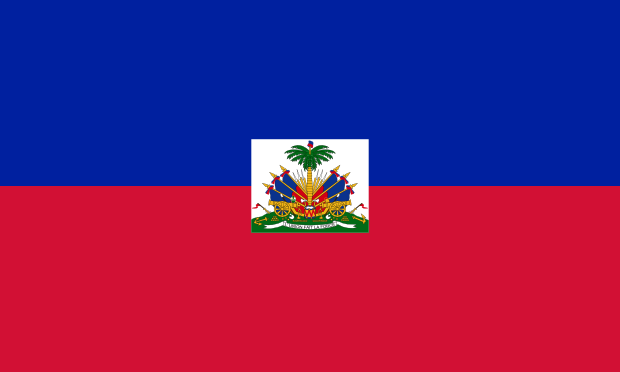
Flag is available in resolutions
| Icon 88x53 |  |
| Icon 32x19 |  |
Haiti
Haiti: A Nation Forged in Revolution and Resilience
Haiti, a nation occupying the western third of the island of Hispaniola in the Caribbean Sea, is a land of stark contrasts and profound historical significance. Its story is one of unparalleled triumph over oppression, followed by enduring struggles against poverty, natural disasters, and political instability. From its volcanic mountains to its vibrant culture, Haiti offers a compelling glimpse into the complexities of a nation that has consistently defied expectations and demonstrated remarkable resilience. Understanding Haiti requires delving into its unique geography, its revolutionary past, its diverse population, its nascent industries, and the captivating allure of its cultural heritage and natural beauty.
The geography of Haiti is as dramatic as its history. Bordered by the Dominican Republic to the east, Haiti’s coastline is a tapestry of bays, peninsulas, and numerous smaller islands, including La Gonâve and La Tortue. The terrain is predominantly mountainous, with the highest peak, Pic la Selle, reaching an elevation of 2,680 meters (8,793 feet). These rugged mountains, often cloaked in mist, have historically served as both a sanctuary and a barrier, shaping the nation’s development and its relationship with the outside world. The fertile valleys nestled between these peaks, such as the Artibonite Valley, have historically been the agricultural heartland, though deforestation has significantly impacted the landscape over centuries. Haiti’s climate is tropical, characterized by high temperatures and humidity, with distinct wet and dry seasons. The island is also situated in a hurricane-prone region, a factor that has repeatedly brought devastation and underscored the nation’s vulnerability to the forces of nature. The capital city, Port-au-Prince, sprawls across a bay at the foot of the mountains, a bustling metropolis that embodies the energy and challenges of the nation.
Haiti’s history is inextricably linked to its status as the worlds first free black republic, a testament to the power of human spirit and the yearning for liberty. The island, originally inhabited by the indigenous Taíno people, was claimed by Christopher Columbus in 1492 and named Hispaniola. Spanish colonization was followed by French dominion, which established a brutal system of chattel slavery on sugar plantations, extracting immense wealth for the European colonizers. The enslaved Africans, brought in vast numbers, endured unimaginable cruelty. However, their spirit was never broken. In 1791, under the leadership of Toussaint Louverture, a brilliant military strategist and former slave, the Haitian Revolution began. It was a protracted and bloody struggle, marked by extraordinary bravery and sacrifice. In 1804, Haiti declared its independence, a monumental achievement that sent shockwaves across the globe, inspiring slave revolts elsewhere and terrifying colonial powers. This hard-won freedom, however, came at a steep price. The newly formed nation was ostracized by the international community, burdened by crippling debt imposed by France in exchange for recognition, and plagued by internal strife. This legacy of isolation and economic hardship has continued to shape Haiti’s trajectory for centuries, presenting formidable obstacles to its development.
The population of Haiti is overwhelmingly of African descent, a direct consequence of the transatlantic slave trade. The official languages are Haitian Creole and French, with Creole serving as the primary language of everyday communication, a vibrant creolized French that reflects the nation’s unique cultural fusion. The Haitian people are known for their strong sense of community, their deep-rooted spirituality, and their rich artistic traditions. While the majority of the population identifies as Roman Catholic, Vodou, a syncretic religion blending West African spiritual traditions with Catholicism, plays a significant role in the cultural and social fabric of the nation. This spiritual landscape is a testament to the resilience of African heritage, preserved and adapted in the crucible of slavery. The population is young, with a significant proportion under the age of 25, presenting both opportunities and challenges in terms of education, employment, and healthcare. Despite persistent poverty and hardship, Haitians possess an indomitable spirit, a deep appreciation for family, and a rich oral tradition that sustains their cultural identity.
The Haitian economy has historically been agrarian, with coffee, cocoa, mangoes, and essential oils being key exports. However, centuries of environmental degradation, particularly deforestation, coupled with political instability and a lack of investment, have hampered agricultural productivity. In recent decades, the garment industry has emerged as a significant sector, providing employment for a substantial portion of the workforce, particularly in export processing zones. The remittances sent home by Haitians living abroad also constitute a vital source of income for many families. The nation has also seen the development of a growing handicraft sector, producing vibrant paintings, intricate wood carvings, and colorful textiles that are sought after by tourists and collectors. However, the economy remains fragile, heavily reliant on foreign aid and susceptible to external shocks. The devastating earthquake of 2010, which claimed hundreds of thousands of lives and destroyed much of the country’s infrastructure, further exacerbated existing economic challenges, highlighting the urgent need for sustainable development initiatives and robust disaster preparedness.
Haiti’s tourist attractions, though often overshadowed by its challenges, offer a captivating experience for those seeking an authentic encounter with Caribbean culture and history. The Citadelle Laferrire, a UNESCO World Heritage site, is a monumental fortress perched atop a mountain, a powerful symbol of Haitian independence and a remarkable feat of engineering. Its imposing stone walls and panoramic views are a testament to the nation’s defiant spirit. Sans-Souci Palace, the former royal residence of Henri Christophe, though now in ruins, still evokes an aura of grandeur and historical significance. The vibrant art scene in Haiti is legendary, with colorful naive paintings and intricate metalwork often found in bustling markets like the Iron Market in Port-au-Prince. The natural beauty of Haiti also beckons. The beaches of the southern coast, such as those near Jacmel, offer pristine stretches of sand and clear turquoise waters. The countrys lush interior, with its waterfalls and hiking trails, provides opportunities for eco-tourism, though infrastructure development is still in its nascent stages. The rich cultural tapestry, woven from African, European, and indigenous influences, is perhaps Haiti’s greatest allure, evident in its music, dance, cuisine, and festivals. From the pulsating rhythms of Kompa music to the intricate storytelling of traditional folklore, Haiti offers an immersive cultural experience that is both profound and unforgettable. Despite the challenges it faces, Haiti remains a land of immense beauty, enduring spirit, and a history that continues to inspire.
Information about Haiti
The information comes from the publication CIA The World Factbook.
Automated text translation, excuse errors, please!
Country Haiti is situated in a location / continent Central America. Haiti has an area of 27 750 km2 and 9 801 664 residents. The highest point has a height 2 680 above sea level. and it is called Chaine de la Selle. The lowest point is located at the level of 0 above sea level and it is named Caribbean Sea. System of government is republic and the date of independence First January 1804. The capital city is Port-au-Prince. Haiti has the international abbreviation HA.
Haiti - economy
Total gross domestic product (GDP) is 12 520 000 000 $. Total gross domestic product per capita in purchasing power parity is 1 300 $. GDP grows by 5.60 % a year. Inflation (consumer price index) is equal to 8.50 % a year. Haiti have 4 810 000 working-age population (from a total population 9 801 664 people). Unemployment is at 40.60 %. Haiti issued 6.00 % GDP to healt care and 0,40 % GDP to army. The total amount of foreign debt is 665 100 000 USD.
Haiti - demography
As suggested above, Haiti has 9 801 664 people. Population growth is in the amount 0.89 % per year. Number of children born per 1000 population per year is 23.87.Every mother has average 2.98 children. The infant mortality rate is 52.44 and maternal mortality 350.00 deaths per 100,000 births. Average estimated life expectancy makes 62.51 years. Mortality is 8.10 people per 1000 population per year.
Haiti - transport and telecommunications
Haiti has 4 160 km of roads and 14 airports.
Number of active mobile phones (sim card) in the country Haiti is 4 200 000. Number of active fixed telephone lines is 50 000. Haiti has 1 000 000 internet users, who have the available 541 Internet connections. Haiti has been assigned a domain first Choose range .ht.
Haiti - energetics
Haiti consumes a year 309 000 000 kWh of electricity. Annual electricity production is 650 000 000 kWh in power plants with a total installed electrical capacity 240 000 kW. Haiti exports 0 kWh and imports 0 kWh of electricity per year Energy mix of power generation is as follows: fossil fuels: 74.2 %, nuclear energy: 0 %, renewable: 0.0 %, hydropower: 25.8 %.
Keywords: energetics, flag, demography, Haiti, list of countries, telecommunications, flag states, all flags, flags of countries in the world, information, list of flags, transport, Flag of Haiti, economy, world countries, Flags of countries, national flags, politic.