Panama
Flag of Panama
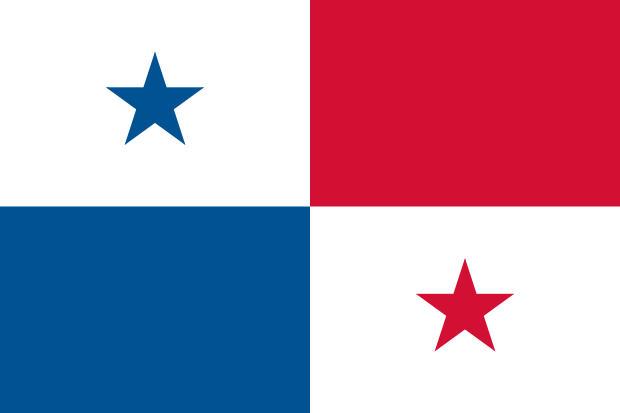
Flag is available in resolutions
| Icon 88x59 |  |
| Icon 32x21 |  |
Panama
Panama: A Crossroads of the Americas
Nestled at the narrowest point of the Isthmus of Panama, connecting North and South America, Panama is a land of captivating contrasts and immense strategic importance. From its iconic canal, a marvel of engineering that reshapes global trade, to its pristine rainforests teeming with biodiversity and its vibrant cultural tapestry, Panama offers a compelling glimpse into a nation shaped by geography, history, and a forward-looking spirit. This Central American gem, with its capital city mirroring its dynamic nature, has evolved from a colonial outpost to a modern economic hub, all while preserving a rich heritage and breathtaking natural beauty. Its story is one of resilience, innovation, and a unique position at the nexus of two continents, making it a destination of enduring fascination for travelers and a vital player on the world stage.
The demographic landscape of Panama is a vibrant mosaic, reflecting centuries of migration and intermingling. The majority of its population, estimated to be around 4.3 million people, is mestizo, a blend of European (primarily Spanish) and Indigenous ancestry. Significant populations of Afro-Panamanians, descendants of laborers brought to work on the Panama Canal and earlier colonial ventures, reside in the Colón province and along the Caribbean coast, contributing a distinct cultural flair. Indigenous communities, such as the Emberá, Wounaan, Guna, Ngäbe, and Buglé, maintain their traditions and languages in distinct territories, particularly in the Darién province and the San Blas Islands, offering a window into the regions ancient roots. The capital, Panama City, is a cosmopolitan metropolis, attracting a diverse international community, drawn by economic opportunities and the city’s modern amenities. Spanish is the official language, though English is widely spoken in business and tourist areas. The dominant religion is Roman Catholicism, but other Christian denominations and a growing secular population are also present. This rich ethnic and cultural diversity is not merely a statistical fact but a living, breathing aspect of Panamanian identity, influencing its music, cuisine, festivals, and everyday life, creating a society that is both proudly Panamanian and globally connected.
Panama’s history is a narrative deeply intertwined with its strategic location. Indigenous peoples inhabited the region for millennia before the arrival of the Spanish conquistador Rodrigo de Bastidas in 1501. Vasco Núez de Balboa followed in 1513, becoming the first European to cross the Isthmus and discover the Pacific Ocean, a moment that forever marked Panama as a crucial transit point. For centuries, it served as a vital link for the Spanish Empire, a staging ground for expeditions to Peru and a conduit for silver and gold. The colonial era left an indelible mark, visible in the architecture of Panama Viejo, the original settlement founded in 1519, and the fortified city of Portobelo. The dream of a canal, however, began to take shape much later. After a failed French attempt in the late 19th century, the United States took over the project, and construction of the Panama Canal began in earnest in 1904. The canal’s completion in 1914 was a watershed moment, revolutionizing global maritime trade and cementing Panamas international significance. The subsequent decades saw a complex relationship with the United States regarding canal control, culminating in the Torrijos-Carter Treaties of 1977, which stipulated the gradual transfer of canal sovereignty to Panama. This historic handover was completed on December 31, 1999, marking a pivotal moment in Panamanian independence and national pride. The nation has since focused on leveraging its canal advantage and diversifying its economy, navigating its own destiny with a newfound sense of self-determination.
Geographically, Panama is a land of remarkable variety, a narrow bridge of land that bridges two continents and separates two oceans. Its defining feature is the Panama Canal, a 50-mile waterway that cuts through the country, connecting the Atlantic and Pacific Oceans. The landscape is dominated by lush tropical rainforests, home to an astonishing array of flora and fauna. The Serranía de Tabasará mountain range runs through the western part of the country, home to the Ngäbe-Buglé Comarca, an autonomous indigenous territory. Volcanic peaks, such as the dormant Barú Volcano, offer breathtaking panoramic views. Panama’s coastline is extensive, featuring over 1,500 islands scattered across both the Caribbean and Pacific. The San Blas Islands, administered by the Guna people, are famed for their idyllic white-sand beaches and turquoise waters, while the Pearl Islands in the Pacific are known for their luxury resorts and rich marine life. The Darién Gap, a dense jungle region in the easternmost part of the country, is a formidable natural barrier, largely undeveloped and home to a wild, untamed ecosystem. The climate is tropical, characterized by high temperatures and humidity year-round, with a distinct rainy season from May to December. This diverse geography not only provides stunning natural beauty but also dictates the nation’s economic activities and cultural development, from the fertile agricultural lands to the vital shipping lanes that crisscross its waters.
The Panamanian economy is robust and increasingly diversified, with its strategic location at the heart of its prosperity. The Panama Canal remains the undisputed cornerstone, generating significant revenue through tolls and related services. However, Panama has actively sought to reduce its reliance on the canal by developing other key sectors. The service sector is a major contributor, encompassing finance, insurance, and real estate, with Panama City serving as a regional financial hub. Logistics and transportation are also paramount, benefiting from the canal and an extensive network of ports and airports. Tourism has emerged as a rapidly growing industry, drawn by the country’s natural beauty, rich history, and vibrant culture. Agriculture, though less dominant than in the past, remains important, with exports including bananas, pineapples, and coffee. The mining sector, particularly gold extraction, has also seen significant investment. Panama has also embraced the digital economy, with a growing tech sector and a focus on innovation. Despite its economic successes, the country faces challenges, including income inequality and the need for sustainable development practices. Nevertheless, Panama’s forward-thinking economic policies and its advantageous geographical position position it for continued growth and influence in the global marketplace.
Panama is a treasure trove of tourist attractions, offering a captivating blend of natural wonders, historical sites, and vibrant cultural experiences. The undisputed icon is the Panama Canal, a UNESCO World Heritage site. Visitors can witness the impressive lock system at the Miraflores Locks Visitor Center, observe massive cargo ships transiting the waterway, and learn about its engineering marvels. Beyond the canal, Panama City itself is a dynamic destination. The historic district of Casco Viejo (or Casco Antiguo) is a charming labyrinth of colonial architecture, bustling plazas, and vibrant nightlife, also a UNESCO World Heritage site. Here, one can explore the Panama Cathedral, the Presidential Palace, and the historic Plaza de Francia. The modern skyline of Panama City, with its gleaming skyscrapers, offers a stark contrast to the colonial charm, showcasing the countrys economic dynamism.
For nature enthusiasts, the Soberanía National Park and Metropolitan Natural Park near Panama City offer accessible opportunities to experience the tropical rainforest, spot diverse bird species, and hike scenic trails. Further afield, the Darién National Park, a UNESCO World Heritage site, is a vast wilderness of immense biodiversity, though it requires guided expeditions due to its remote and challenging terrain. The San Blas Islands (Guna Yala) are a tropical paradise, a collection of over 365 islands inhabited by the Guna people, offering pristine beaches, crystal-clear waters ideal for snorkeling and diving, and a glimpse into indigenous culture. On the Pacific side, the Pearl Islands (Archipiélago de las Perlas) are renowned for their luxurious resorts, whale watching opportunities during certain seasons, and beautiful beaches. For those seeking adventure, hiking Barú Volcano at sunrise provides unparalleled views of both the Atlantic and Pacific Oceans. The country’s rich history is also evident in sites like Panama Viejo, the ruins of the original 16th-century settlement, offering a poignant glimpse into the colonial past. Panama’s diverse offerings ensure an unforgettable experience for every traveler, from the history buff and the nature lover to the adventurer and the beachcomber.
Information about Panama
The information comes from the publication CIA The World Factbook.
Automated text translation, excuse errors, please!
Country Panama is situated in a location / continent Central America. Panama has an area of 75 420 km2 and 3 510 045 residents. The highest point has a height 3 475 above sea level. and it is called Volcan Baru. The lowest point is located at the level of 0 above sea level and it is named Pacific Ocean. System of government is republic and the date of independence Third November 1903. The capital city is Panama. Panama has the international abbreviation PM.
Panama - economy
Total gross domestic product (GDP) is 51 260 000 000 $. Total gross domestic product per capita in purchasing power parity is 14 300 $. GDP grows by 10.60 % a year. Inflation (consumer price index) is equal to 5.90 % a year. Panama have 1 570 000 working-age population (from a total population 3 510 045 people). Unemployment is at 4.50 %. Panama issued 8.30 % GDP to healt care and 1,00 % GDP to army. The public debt of the country is 41.80 % GDP. The total amount of foreign debt is 13 340 000 000 USD.
Panama - demography
As suggested above, Panama has 3 510 045 people. Population growth is in the amount 1.41 % per year. Number of children born per 1000 population per year is 19.17.Every mother has average 2.43 children. The infant mortality rate is 11.32 and maternal mortality 92.00 deaths per 100,000 births. Average estimated life expectancy makes 77.96 years. Mortality is 4.69 people per 1000 population per year.
Panama - transport and telecommunications
Panama has 11 978 km of roads, 76 km of railway lines and 118 airports. The total length of waterways (navigable rivers, canals, etc.) is 800 km. There is registered 6 413 ships.
Number of active mobile phones (sim card) in the country Panama is 7 281 000. Number of active fixed telephone lines is 542 500. Panama has 959 800 internet users, who have the available 10 984 Internet connections. Panama has been assigned a domain first Choose range .pa.
Panama - energetics
Panama consumes a year 5 805 000 000 kWh of electricity. Annual electricity production is 6 546 000 000 kWh in power plants with a total installed electrical capacity 1 815 000 kW. Panama exports 39 000 000 kWh and imports 71 000 000 kWh of electricity per year Energy mix of power generation is as follows: fossil fuels: 51.6 %, nuclear energy: 0 %, renewable: 0.0 %, hydropower: 48.4 %.
Keywords: transport, list of flags, flag, demography, list of countries, economy, Flags of countries, telecommunications, Panama, Flag of Panama, all flags, national flags, energetics, flag states, flags of countries in the world, world countries, information, politic.