Cayman Islands
Flag of Cayman Islands
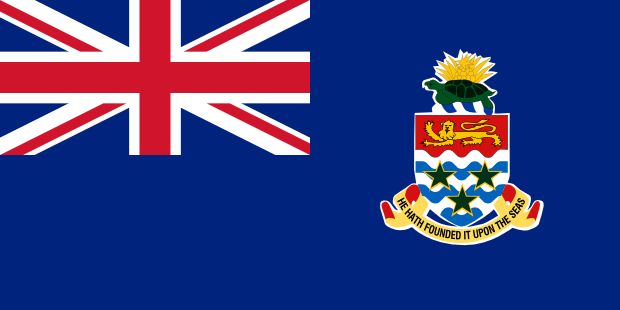
Flag is available in resolutions
| Icon 88x44 |  |
| Icon 32x16 |  |
Cayman Islands
The Cayman Islands: A Jewel of the Caribbean
Nestled in the western Caribbean Sea, approximately 240 kilometers south of Cuba and 265 kilometers northwest of Jamaica, lie the Cayman Islands, a British Overseas Territory comprising three distinct islands: Grand Cayman, Cayman Brac, and Little Cayman. This archipelago, though geographically small, punches well above its weight in terms of economic significance and natural beauty, drawing visitors and businesses from across the globe. The islands are a testament to a fascinating blend of colonial history, a thriving modern economy, and a breathtaking natural environment that continues to captivate all who set foot on its shores.
The population of the Cayman Islands is a vibrant tapestry woven from diverse ethnic backgrounds, reflecting centuries of migration and settlement. The majority of residents are of mixed African and European descent, with smaller but significant populations of Caucasians and Asians. This multiculturalism is evident in the islands’ lively culture, their cuisine, and their welcoming spirit. The official language is English, though a local dialect, Caymanian Creole, is widely spoken and adds a unique flavor to everyday conversations. The population is concentrated primarily on Grand Cayman, the largest and most developed of the three islands, with George Town serving as its bustling capital and commercial hub. The smaller islands, Cayman Brac and Little Cayman, offer a more tranquil and sparsely populated experience, attracting those seeking a slower pace of life and an even more intimate connection with nature. The high standard of living, coupled with excellent healthcare and education systems, makes the Cayman Islands an attractive place to live and work, contributing to a stable and content populace.
The history of the Cayman Islands is a captivating narrative of exploration, settlement, and eventual self-governance. First sighted by Europeans in the early 16th century, likely by Christopher Columbus during his final voyage, the islands remained largely uninhabited for centuries. Their strategic location, however, did not go unnoticed. Spanish cartographers initially named them Las Tortugas due to the abundance of sea turtles, a resource that would play a significant role in the islands’ early economy. It wasnt until the late 17th century that permanent settlements began to emerge, primarily driven by shipwrecked sailors, buccaneers, and later, by Loyalists fleeing the American Revolution. The British formally claimed the islands in 1670 as part of the Treaty of Madrid. For much of their history, the Caymans were administered as a dependency of Jamaica. This period saw the development of key industries such as shipbuilding, fishing, and the aforementioned turtle hunting. The islands’ strategic importance also led to a British naval presence, with a small garrison established on Grand Cayman. The mid-20th century marked a turning point when Jamaica gained its independence from the United Kingdom in 1962. The Cayman Islands, however, opted to remain a British Crown Colony, a decision that paved the way for its distinct economic trajectory. This decision allowed the islands to develop their financial services sector, unhindered by the economic policies of a newly independent Jamaica. The subsequent decades have seen the Cayman Islands transform into a leading international financial center, a testament to astute governance and a commitment to economic diversification.
Geographically, the Cayman Islands are a trio of low-lying islands formed from coral reefs and limestone. Grand Cayman, the largest, stretches approximately 35 kilometers in length and is about 16 kilometers at its widest point. Its coastline is a stunning panorama of white-sand beaches, including the world-renowned Seven Mile Beach, and dramatic coral cliffs. The island’s interior is characterized by lush vegetation, mangrove forests, and a unique geological formation known as the “Blossom’s Cave.” Cayman Brac, the second-largest island, is named for its prominent bluff, a limestone cliff that rises about 43 meters above sea level, offering breathtaking views and challenging hiking opportunities. Little Cayman, the smallest and most sparsely populated, is a haven for nature lovers and divers, boasting pristine coral reefs and a tranquil, undeveloped landscape. The waters surrounding the islands are exceptionally clear, with visibility often exceeding 30 meters, making them a world-class destination for snorkeling and scuba diving. The marine environment is incredibly rich, teeming with colorful coral formations, diverse fish species, stingrays, and even occasional whale sharks. The islands topography is relatively flat, with no significant rivers or mountains, ensuring a warm, tropical climate year-round, with average temperatures ranging from 24°C to 30°C, and distinct wet and dry seasons.
The economic landscape of the Cayman Islands is dominated by two principal sectors: financial services and tourism. The islands have carved out a formidable reputation as a leading offshore financial center, attracting a vast array of international banks, investment funds, insurance companies, and trust services. This success is attributed to a stable political environment, a robust legal framework that adheres to international standards, a tax-neutral regime, and a highly skilled workforce. The financial services industry contributes significantly to the islands’ GDP and provides high-paying employment opportunities for its residents. Tourism, on the other hand, is the lifeblood of the local economy, drawing millions of visitors each year who are enticed by the pristine beaches, crystal-clear waters, and a plethora of recreational activities. Grand Cayman, in particular, is a major cruise ship destination, with its modern port facilities and a wide range of amenities catering to discerning travelers. The islands offer a luxurious vacation experience, from world-class resorts and fine dining to adventure sports and cultural excursions. Beyond these two pillars, the Cayman Islands also have a modest but important fishing industry, particularly for lobster and conch, and a growing but still nascent agricultural sector. The government has made significant investments in infrastructure, including a modern international airport and well-maintained road networks, to support these key industries and enhance the quality of life for its citizens.
The Cayman Islands offer a wealth of tourist attractions and activities, catering to a wide spectrum of interests. For beach enthusiasts, Seven Mile Beach on Grand Cayman is an absolute must-visit. This crescent of powdery white sand is consistently ranked among the world’s best beaches, offering calm, turquoise waters perfect for swimming, sunbathing, and a variety of water sports. Beyond its iconic beach, Grand Cayman boasts other significant draws. Stingray City, a shallow sandbar where visitors can interact with friendly southern stingrays, is an unforgettable experience. The Cayman Turtle Centre provides an educational opportunity to learn about the conservation of sea turtles and witness these magnificent creatures up close. For those interested in history and culture, the Pedro St. James Historic Site, the oldest surviving stone structure on the island, offers a glimpse into the Cayman Islands’ past. Nature lovers will find paradise on the smaller islands. Little Cayman is a diver’s dream, renowned for its dramatic wall dives, including the famous Bloody Bay Wall, a vibrant coral reef teeming with marine life. Cayman Brac offers hiking trails that lead to stunning viewpoints and opportunities to explore caves and bird sanctuaries. The islands also offer excellent opportunities for kayaking, paddleboarding, and exploring the intricate mangrove ecosystems. The culinary scene is also a significant attraction, with a fusion of Caribbean, European, and Asian influences, offering everything from fresh seafood to international gourmet cuisine. The vibrant nightlife, particularly on Grand Cayman, adds another layer to the islands appeal, with numerous bars and restaurants offering live music and entertainment.
In conclusion, the Cayman Islands represent a remarkable success story, a testament to strategic planning, economic foresight, and an unwavering commitment to preserving their natural beauty. From their humble beginnings as a haven for seafarers and fishermen, they have evolved into a global financial powerhouse and a premier tourist destination. The harmonious blend of a thriving economy, a rich cultural heritage, and an unparalleled natural environment ensures that the Cayman Islands will continue to be a sought-after destination for both business and leisure for generations to come. Their unique character, shaped by history and geography, continues to draw people to their shores, creating a vibrant and dynamic society that embodies the spirit of the Caribbean.
Information about Cayman Islands
The information comes from the publication CIA The World Factbook.
Automated text translation, excuse errors, please!
Country Cayman Islands is situated in a location / continent Central America. Cayman Islands has an area of 264 km2 and 52 560 residents. The highest point has a height 43 above sea level. and it is called The Bluff (Cayman Brac). The lowest point is located at the level of 0 above sea level and it is named Caribbean Sea. System of government is The British Crown Colony.The capital city is George Town (on Grand Cayman). Cayman Islands has the international abbreviation CJ.
Cayman Islands - economy
Total gross domestic product (GDP) is 2 250 000 000 $. Total gross domestic product per capita in purchasing power parity is 43 800 $. GDP grows by 1.10 % a year. Inflation (consumer price index) is equal to 2.00 % a year. Cayman Islands have 39 000 working-age population (from a total population 52 560 people). Unemployment is at 4.00 %. The total amount of foreign debt is 70 000 000 USD.
Cayman Islands - demography
As suggested above, Cayman Islands has 52 560 people. Population growth is in the amount 2.24 % per year. Number of children born per 1000 population per year is 12.21.Every mother has average 1.87 children. The infant mortality rate is 6.49 .Average estimated life expectancy makes 80.80 years. Mortality is 5.19 people per 1000 population per year.
Cayman Islands - transport and telecommunications
Cayman Islands has 785 km of roads and 3 airports. There is registered 116 ships.
Number of active mobile phones (sim card) in the country Cayman Islands is 95 100. Number of active fixed telephone lines is 37 200. Cayman Islands has 23 000 internet users, who have the available 23 079 Internet connections. Cayman Islands has been assigned a domain first Choose range .ky.
Cayman Islands - energetics
Cayman Islands consumes a year 555 600 000 kWh of electricity. Annual electricity production is 593 500 000 kWh in power plants with a total installed electrical capacity 152 600 kW. Cayman Islands exports 0 kWh and imports 0 kWh of electricity per year Energy mix of power generation is as follows: fossil fuels: 100 %, nuclear energy: 0 %, renewable: 0.0 %, hydropower: 0.0 %.
Keywords: telecommunications, flag, Flags of countries, all flags, flag states, national flags, list of flags, energetics, Flag of Cayman Islands, flags of countries in the world, economy, Cayman Islands, demography, world countries, information, list of countries, transport, politic.