Saint Lucia
Flag of Saint Lucia
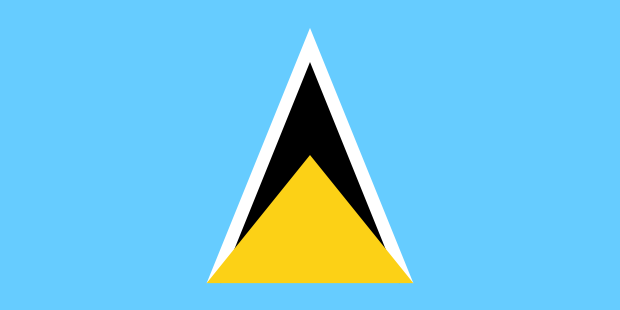
Flag is available in resolutions
| Icon 88x44 |  |
| Icon 32x16 |  |
Saint Lucia
Saint Lucia: Jewel of the Caribbean
Nestled in the heart of the Eastern Caribbean, Saint Lucia is an island nation that captivates with its dramatic volcanic landscapes, lush rainforests, and pristine beaches. This relatively small island, measuring just 238 square miles, punches well above its weight in terms of natural beauty and cultural richness. Its iconic Pitons, two majestic volcanic spires that rise dramatically from the turquoise waters, are a UNESCO World Heritage site and a symbol of the island’s untamed splendor. Beyond its breathtaking scenery, Saint Lucia boasts a fascinating history, a vibrant culture, and a burgeoning economy driven by tourism and agriculture.
The story of Saint Lucia is one deeply intertwined with the ebb and flow of colonial powers and the resilience of its indigenous peoples. Originally inhabited by the indigenous Arawak and Carib peoples, the island was first sighted by Europeans in the late 15th century, likely by Christopher Columbus on his fourth voyage in 1502, though he never landed. The French were the first to establish a settlement in 1638, but their claim was soon contested by the British. Over the next century and a half, Saint Lucia was a veritable pawn in the colonial chess game, changing hands between France and Britain no less than fourteen times. This constant flux of sovereignty left an indelible mark on the island’s culture, evident in its blend of French and English influences, its Creole language, and its unique culinary traditions. The island finally achieved its independence from Britain on February 22, 1979, becoming a sovereign nation within the Commonwealth. This hard-won freedom is celebrated annually with vibrant parades, cultural festivals, and a palpable sense of national pride. The legacy of slavery, which underpinned the island’s early plantation economy, also forms a significant part of its historical narrative, with many Saint Lucians tracing their ancestry back to West Africa. Efforts to preserve and promote this heritage are evident in the island’s museums, historical sites, and ongoing cultural initiatives.
Geographically, Saint Lucia is a marvel of volcanic activity and tropical abundance. Its mountainous interior is dominated by the Pitons, Gros Piton and Petit Piton, which are not only visually stunning but also represent the remnants of ancient volcanic plugs. The island’s topography is characterized by steep, verdant slopes that cascade down to the coast, interspersed with fertile valleys where bananas and other crops are cultivated. The coastline is a diverse tapestry of sandy beaches, rocky coves, and coral reefs, offering a paradise for snorkelers and divers. The northern part of the island is generally flatter and more developed, home to the capital city of Castries and the bustling international airport. The south, in contrast, retains a more rugged and wild character, with the dramatic Soufrire caldera and the bubbling mud baths offering a glimpse into the island’s geothermal energy. The rainforests that cloak the mountains are teeming with biodiversity, home to numerous endemic species of birds, reptiles, and plants. Hiking trails wind through these lush ecosystems, leading to hidden waterfalls and panoramic viewpoints, offering an immersive experience of Saint Lucia’s natural wonders. The island’s climate is tropical, with warm temperatures year-round and distinct wet and dry seasons. The trade winds provide a welcome breeze, moderating the heat and contributing to the island’s pleasant microclimates.
The Saint Lucian economy, while diversified, is heavily reliant on tourism. The island’s breathtaking natural beauty, luxurious resorts, and vibrant culture attract visitors from around the globe, making it a premier Caribbean destination. From the world-renowned Pitons to the tranquil beaches of Anse Chastanet and Sugar Beach, the island offers a diverse range of experiences for every traveler. The tourism sector provides significant employment opportunities, supporting hotels, restaurants, tour operators, and a host of ancillary businesses. Beyond tourism, agriculture remains an important pillar of the economy. Bananas, once the island’s primary export, continue to be cultivated, though the industry has faced challenges from global competition and climate change. Other agricultural products include coconuts, cocoa, mangoes, and spices, contributing to both local consumption and niche export markets. The government is actively working to diversify the economy further, promoting sectors such as information technology, financial services, and light manufacturing. Investment in infrastructure, including improvements to roads, utilities, and telecommunications, is ongoing to support economic growth and attract foreign investment. The island’s commitment to sustainable development is also gaining momentum, with a focus on eco-tourism, renewable energy, and conservation efforts.
Saint Lucia’s appeal extends far beyond its natural landscapes and economic endeavors; its cultural tapestry is rich and compelling. The island’s population, a vibrant mix of African, European, and Indian heritage, has forged a unique identity characterized by warmth, hospitality, and a deep connection to tradition. The official language is English, but the everyday lingua franca is Kwéyl, a French-based Creole language that reflects the island’s colonial past and its enduring African influences. This linguistic duality adds a unique charm to interactions and cultural expressions. Music and dance are integral to Saint Lucian life, with genres like soca, calypso, and reggae filling the air during festivals and celebrations. The annual Jazz & Arts Festival, held in April, is a major international event that draws renowned musicians and art enthusiasts from around the world. The island’s cuisine is a delightful fusion of Caribbean, French, and Indian flavors, with fresh seafood, tropical fruits, and aromatic spices taking center stage. Dishes like green fig and saltfish, callaloo soup, and cocoa tea are local delicacies that offer a true taste of Saint Lucia. The island’s festivals, such as the vibrant Jounen Kwéyl, which celebrates Creole heritage, and the colorful Independence Day celebrations, provide invaluable insights into the island’s cultural soul.
For the discerning traveler, Saint Lucia offers an abundance of attractions that cater to every interest. The iconic Pitons, Gros Piton and Petit Piton, are not just for admiring from afar; hiking to their summits offers a challenging yet incredibly rewarding experience with unparalleled panoramic views. The drive along the scenic west coast, with its winding roads and breathtaking vistas, is an adventure in itself. The Sulphur Springs Park, the world’s only drive-in volcano, allows visitors to witness the raw geothermal power of the earth, with bubbling mud baths and steaming fumaroles providing a unique and memorable experience. The nearby Diamond Falls Botanical Gardens, with its vibrant flora and mineral-rich waterfall, is a tranquil oasis of natural beauty. For those seeking underwater adventures, the marine reserves around the Pitons, particularly at Anse Chastanet and Sugar Beach, offer world-class snorkeling and diving opportunities, with vibrant coral reefs teeming with marine life. The historic town of Soufrire, once the island’s capital, is a charming base for exploring the southern attractions, boasting colonial architecture and a lively harbor. Castries, the bustling capital, offers a taste of local life with its vibrant market, where vendors sell fresh produce, spices, and local crafts. The Pigeon Island National Landmark, a historic site with remnants of military fortifications and beautiful beaches, provides a glimpse into Saint Lucia’s strategic past and offers excellent opportunities for birdwatching. From the adrenaline rush of zip-lining through the rainforest canopy to the serene indulgence of a spa treatment overlooking the Caribbean Sea, Saint Lucia promises an unforgettable journey into a land of unparalleled beauty, rich history, and vibrant culture.
Information about Saint Lucia
The information comes from the publication CIA The World Factbook.
Automated text translation, excuse errors, please!
Country Saint Lucia is situated in a location / continent Central America. Saint Lucia has an area of 616 km2 and 162 178 residents. The highest point has a height 950 above sea level. and it is called Mount Gimie. The lowest point is located at the level of 0 above sea level and it is named Caribbean Sea. System of government is Republic, Commonwealth member country and the date of independence 22nd February 1979. The capital city is Castries. Saint Lucia has the international abbreviation ST.
Saint Lucia - economy
Total gross domestic product (GDP) is 2 128 000 000 $. Total gross domestic product per capita in purchasing power parity is 12 800 $. GDP grows by 0.20 % a year. Inflation (consumer price index) is equal to 2.60 % a year. Saint Lucia have 79 700 working-age population (from a total population 162 178 people). Unemployment is at 20.00 %. Saint Lucia issued 8.10 % GDP to healt care .The total amount of foreign debt is 470 400 000 USD.
Saint Lucia - demography
As suggested above, Saint Lucia has 162 178 people. Population growth is in the amount 0.38 % per year. Number of children born per 1000 population per year is 14.42.Every mother has average 1.80 children. The infant mortality rate is 12.39 and maternal mortality 35.00 deaths per 100,000 births. Average estimated life expectancy makes 77.04 years. Mortality is 7.10 people per 1000 population per year.
Saint Lucia - transport and telecommunications
Saint Lucia has 1 210 km of roads and 2 airports.
Number of active mobile phones (sim card) in the country Saint Lucia is 216 500. Number of active fixed telephone lines is 35 900. Saint Lucia has 142 900 internet users, who have the available 90 Internet connections. Saint Lucia has been assigned a domain first Choose range .lc.
Saint Lucia - energetics
Saint Lucia consumes a year 317 300 000 kWh of electricity. Annual electricity production is 358 000 000 kWh in power plants with a total installed electrical capacity 76 000 kW. Saint Lucia exports 0 kWh and imports 0 kWh of electricity per year Energy mix of power generation is as follows: fossil fuels: 100 %, nuclear energy: 0 %, renewable: 0.0 %, hydropower: 0.0 %.
Keywords: Flag of Saint Lucia, economy, national flags, list of countries, Flags of countries, flag, flags of countries in the world, Saint Lucia, energetics, list of flags, flag states, world countries, telecommunications, information, transport, demography, all flags, politic.