El Salvador
Flag of El Salvador
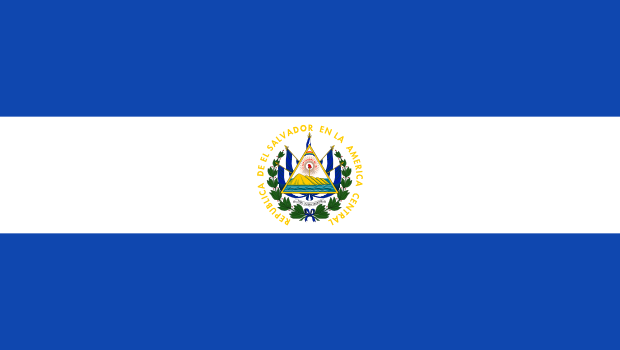
Flag is available in resolutions
| Icon 88x50 |  |
| Icon 32x18 |  |
El Salvador
El Salvador: A Nation Forged in Fire and Resilience
Nestled within the isthmus of Central America, El Salvador, though the smallest nation in the region by land area, punches far above its weight in terms of historical significance, cultural richness, and a spirit of enduring resilience. Known affectionately as the „Land of Volcanoes,“ its dramatic landscape is a constant reminder of the powerful geological forces that shaped it and continue to influence the lives of its people. From ancient Mayan civilizations to the turbulent 20th century and its present-day aspirations, El Salvador’s story is one of struggle, adaptation, and a burgeoning sense of national pride.
The Salvadoran population, predominantly Mestizo, is a vibrant tapestry woven from indigenous roots and Spanish colonial influence. This blend is evident not only in the peoples appearance but also in their rich cultural traditions, particularly in their music, dance, and cuisine. The Salvadoran people are renowned for their warmth, hospitality, and a strong sense of community, often expressed through shared meals and lively celebrations. Despite historical challenges that led to significant emigration, the Salvadoran diaspora remains deeply connected to its homeland, contributing to the nation’s economy and cultural landscape abroad. The official language is Spanish, but indigenous languages, though less widely spoken, are a cherished part of El Salvadors heritage. The countrys religious landscape is predominantly Roman Catholic, a legacy of Spanish colonization, but with a growing presence of Protestant denominations and a rich tradition of syncretism, blending Catholic beliefs with indigenous spiritual practices. This religious diversity often finds expression in vibrant festivals and local traditions, adding another layer to the nations cultural mosaic.
El Salvadors history is a compelling narrative of ancient civilizations, colonial rule, and a tumultuous 20th century. Long before the arrival of Europeans, the territory was inhabited by various indigenous groups, most notably the Maya, who left behind impressive archaeological sites that speak to their advanced civilization. The Pipil people, who spoke a Nahuatl dialect, were also a significant presence. Spanish colonization began in the 16th century, bringing with it profound changes in social, economic, and religious structures. For centuries, El Salvador was part of the Captaincy General of Guatemala, experiencing periods of both exploitation and nascent development under Spanish rule. Independence from Spain was achieved in 1821, followed by a brief period as part of the First Mexican Empire and then the Federal Republic of Central America. The dissolution of this federation in 1841 marked the birth of El Salvador as a sovereign nation. The late 19th and early 20th centuries were characterized by political instability, economic dependence on coffee exports, and the rise of a powerful oligarchy. The mid-20th century saw growing social unrest and a widening gap between the wealthy elite and the impoverished majority. This simmering tension eventually erupted into a brutal 12-year civil war (1979-1992) between the U.S.-backed government and leftist guerrilla forces. The conflict resulted in immense loss of life, widespread displacement, and profound societal trauma. The Chapultepec Peace Accords, signed in Mexico City in 1992, brought an end to the war, ushering in a new era of peace-building and democratic transition. While the scars of the civil war remain, El Salvador has made significant strides in rebuilding its institutions, fostering reconciliation, and striving for a more equitable society.
Geographically, El Salvador is a land of striking contrasts and dramatic beauty. Its compact size belies a diverse topography, dominated by a central plateau, fertile volcanic plains, and a rugged coastline along the Pacific Ocean. The country is famously situated on the Pacific Ring of Fire, a horseshoe-shaped zone of intense seismic and volcanic activity. This geological reality has endowed El Salvador with numerous volcanoes, many of which are active, shaping the landscape and contributing to the rich volcanic soil that is ideal for agriculture. Prominent among these are Santa Ana (Ilamatepec), San Vicente (Chinchontepec), and San Miguel (Chaparrastique), each with its own unique character and historical significance. The presence of these volcanoes also influences the climate, which is tropical, with distinct wet and dry seasons. The coastline, stretching for approximately 300 kilometers, offers a mix of black sand beaches, popular for surfing, and charming fishing villages. Inland, the landscape is dotted with numerous lakes, the most famous being Lake Ilopango, a caldera lake of immense beauty, and Lake Coatepeque, a popular recreational spot. The countrys rivers, though relatively short, are vital for irrigation and transportation, with the Lempa River being the most significant. Despite its small size, El Salvador boasts a surprising array of ecosystems, from tropical dry forests to cloud forests in the higher altitudes, supporting a diverse range of flora and fauna.
The Salvadoran economy, while historically reliant on agriculture, has been undergoing a process of diversification. Coffee remains an important export commodity, renowned for its high quality, but the nation is also increasingly focusing on other sectors. Manufacturing, particularly in the textile and apparel industry, has grown significantly, driven by export-oriented factories known as „maquilas.“ Remittances from Salvadorans working abroad, especially in the United States, constitute a substantial portion of the national income, playing a crucial role in supporting families and stimulating domestic consumption. The service sector is also expanding, encompassing tourism, telecommunications, and financial services. In recent years, El Salvador has made bold moves in embracing technological innovation, most notably with its adoption of Bitcoin as legal tender in 2021, a decision that has garnered both international attention and debate. This move reflects a forward-looking approach to economic development, aiming to attract investment and foster financial inclusion. The country is also investing in infrastructure development, including roads, ports, and energy projects, to enhance its competitiveness and improve the quality of life for its citizens.
El Salvador offers a wealth of tourist attractions, catering to a variety of interests. For history buffs and archaeology enthusiasts, the Mayan ruins of Tazumal, Joya de Cerén (a UNESCO World Heritage site known as the „Pompeii of the Americas“), and San Andrés provide a glimpse into the country’s ancient past. Nature lovers can explore the „Ruta de las Flores,“ a scenic route winding through charming mountain villages and coffee plantations, offering breathtaking vistas and opportunities for hiking and birdwatching. The country’s volcanic landscapes are a major draw, with opportunities to hike to the craters of volcanoes like Santa Ana, offering panoramic views of the surrounding countryside and lakes. Surfing enthusiasts flock to the Pacific coast, with spots like El Tunco and El Zonte renowned for their consistent waves. The capital city, San Salvador, while bearing the scars of its turbulent past, is a vibrant metropolis with museums, bustling markets, and a growing culinary scene. The National Palace and the Metropolitan Cathedral are significant historical and architectural landmarks. For those seeking relaxation, the country’s pristine beaches and tranquil lakes offer idyllic settings. The warmth and friendliness of the Salvadoran people further enhance the tourist experience, making visitors feel welcome and at home. El Salvador is also gaining recognition for its adventure tourism offerings, including zip-lining, white-water rafting, and exploring lava tubes. The country’s commitment to developing sustainable tourism is also evident, with efforts to preserve its natural beauty and cultural heritage for future generations.
Information about El Salvador
The information comes from the publication CIA The World Factbook.
Automated text translation, excuse errors, please!
Country El Salvador is situated in a location / continent Central America. El Salvador has an area of 21 041 km2 and 6 090 646 residents. The highest point has a height 2 730 above sea level. and it is called Cerro El Pital. The lowest point is located at the level of 0 above sea level and it is named Pacific Ocean. System of government is republic and the date of independence 15th September 1821. The capital city is San Salvador. El Salvador has the international abbreviation ES.
El Salvador - economy
Total gross domestic product (GDP) is 45 150 000 000 $. Total gross domestic product per capita in purchasing power parity is 7 600 $. GDP grows by 1.40 % a year. Inflation (consumer price index) is equal to 5.10 % a year. El Salvador have 2 577 000 working-age population (from a total population 6 090 646 people). Unemployment is at 7.00 %. El Salvador issued 3.90 % GDP to healt care .The public debt of the country is 57.30 % GDP. The total amount of foreign debt is 12 950 000 000 USD.
El Salvador - demography
As suggested above, El Salvador has 6 090 646 people. Population growth is in the amount 0.30 % per year. Number of children born per 1000 population per year is 17.44.Every mother has average 2.04 children. The infant mortality rate is 19.66 and maternal mortality 81.00 deaths per 100,000 births. Average estimated life expectancy makes 73.69 years. Mortality is 5.63 people per 1000 population per year.
El Salvador - transport and telecommunications
El Salvador has 10 886 km of roads, 283 km of railway lines and 65 airports.
Number of active mobile phones (sim card) in the country El Salvador is 7 837 000. Number of active fixed telephone lines is 950 000. El Salvador has 746 000 internet users, who have the available 22 372 Internet connections. El Salvador has been assigned a domain first Choose range .sv.
El Salvador - energetics
El Salvador consumes a year 5 756 000 000 kWh of electricity. Annual electricity production is 5 728 000 000 kWh in power plants with a total installed electrical capacity 1 501 000 kW. El Salvador exports 101 600 000 kWh and imports 215 800 000 kWh of electricity per year Energy mix of power generation is as follows: fossil fuels: 53 %, nuclear energy: 0 %, renewable: 15.6 %, hydropower: 31.4 %.
Keywords: list of countries, Flag of El Salvador, El Salvador, all flags, world countries, list of flags, flag states, demography, Flags of countries, energetics, economy, information, transport, flag, telecommunications, national flags, flags of countries in the world, politic.