Dominica
Flag of Dominica
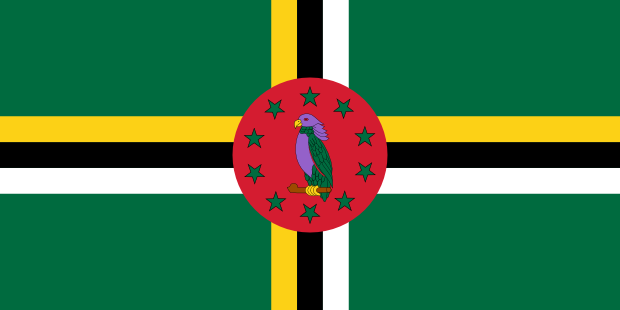
Flag is available in resolutions
| Icon 88x44 |  |
| Icon 32x16 |  |
Dominica
Dominica: The Nature Island of the Caribbean
Dominica, often referred to as the „Nature Island“ of the Caribbean, is a sovereign island nation nestled in the Lesser Antilles archipelago. Its breathtaking natural beauty, characterized by lush rainforests, towering volcanic peaks, and pristine beaches, sets it apart from its more developed, resort-heavy neighbors. This island paradise offers a compelling blend of rich history, vibrant culture, and a burgeoning economy, all set against a backdrop of unparalleled natural splendor.
The population of Dominica, as of recent estimates, hovers around 74,000 inhabitants. This relatively small populace contributes to a strong sense of community and a palpable connection to the island’s heritage. The dominant ethnic group is of African descent, a legacy of the transatlantic slave trade, with a significant minority of European, East Indian, and indigenous Kalinago heritage. The Kalinago people, the indigenous inhabitants of Dominica, maintain a unique and protected territory on the island’s northeast coast, preserving their distinct traditions and way of life. This cultural mosaic is reflected in Dominica’s vibrant festivals, its distinctive Creole language, a blend of French, English, and African dialects, and its rich culinary traditions. The official language is English, but the French-based Creole is widely spoken, adding a unique linguistic charm to the island. Life on Dominica is generally laid-back, with a strong emphasis on family, community, and a deep respect for the natural environment.
Dominica’s history is as dramatic and varied as its landscape. The island was originally inhabited by the indigenous Kalinago people for centuries before Christopher Columbus arrived in 1493. However, it was the French who first attempted to colonize the island in the 17th century, followed by the British in the 18th century. The struggle for control between these European powers was fierce and prolonged, with Dominica changing hands multiple times before ultimately becoming a British Crown Colony in 1805. The island gained internal self-governance in 1967 and achieved full independence from the United Kingdom on November 3, 1978. The legacy of colonialism is evident in the island’s architecture, legal system, and the prevalence of English and French-derived Creole. The period of slavery left an indelible mark, shaping the island’s demographics and cultural identity. More recently, Dominica has faced numerous challenges, including devastating hurricanes and economic fluctuations, but the resilience of its people has always shone through, rebuilding and adapting with remarkable fortitude.
Geographically, Dominica is a geological marvel. It is the largest island in the Lesser Antilles chain, covering an area of approximately 750 square kilometers. The island’s interior is dominated by a rugged mountain range, home to the highest peak in the Lesser Antilles, Morne Diablotins, which stands at 1,447 meters. These mountains are heavily forested, supporting an incredibly diverse array of flora and fauna. The volcanic origins of the island are evident in its numerous hot springs, geysers, and the world’s second-largest boiling lake, a truly awe-inspiring natural phenomenon. The coastline is a dramatic interplay of black volcanic sand beaches, rocky coves, and sheer cliffs plunging into the turquoise waters of the Caribbean Sea. The dense rainforests are a biodiversity hotspot, earning Dominica its “Nature Island” moniker. These pristine ecosystems are home to endemic species of birds, reptiles, and plants, many of which are found nowhere else on Earth. The island is crisscrossed by numerous rivers and streams, many cascading over cliffs to form spectacular waterfalls, such as Trafalgar Falls and Emerald Pool. The absence of extensive coral reefs around much of its coast, due to its volcanic nature, means its shores are less developed for traditional beach tourism, further preserving its wild, untamed beauty.
Dominica’s economy, while historically reliant on agriculture, has been progressively diversifying. For many years, bananas were the primary export crop, but the industry has faced significant challenges due to fluctuating global prices and crop diseases. The government has been actively promoting diversification into other agricultural products, such as citrus fruits, cocoa, and tropical flowers. The tourism sector is a crucial and growing pillar of the economy, attracting visitors seeking eco-tourism, adventure, and a genuine connection with nature. Dominica’s commitment to preserving its natural environment makes it an ideal destination for hikers, divers, birdwatchers, and those looking for an authentic Caribbean experience away from mass tourism. The government has also been investing in renewable energy, particularly geothermal and hydro-power, recognizing the island’s vast natural resources. Small-scale manufacturing, particularly in food processing and light industry, also contributes to the economy. However, the island remains vulnerable to external economic shocks and natural disasters, necessitating a continued focus on building economic resilience and sustainable development.
Dominica’s tourist attractions are intrinsically linked to its natural wonders. The Cabrits National Park on the northwest peninsula is a prime example, encompassing the dramatic volcanic peaks of Cabrits and a protected marine area. Within the park, visitors can explore the well-preserved ruins of Fort Shirley, a significant historical site offering panoramic views. Morne Trois Pitons National Park, a UNESCO World Heritage Site, is the island’s ecological heartland. It features the iconic Boiling Lake, accessible via a challenging but rewarding hike, and the stunning Freshwater Lake. The park’s network of trails leads through dense rainforests to a multitude of waterfalls, including the majestic Trafalgar Falls, with its twin cascades and thermal pools, and the serene Emerald Pool. For diving and snorkeling enthusiasts, the waters off the coast of Dominica are renowned for their clarity and abundant marine life. The Champagne Reef, where volcanic gases bubble up through the seabed, offers a unique underwater experience. The Kalinago Territory provides a fascinating cultural immersion, allowing visitors to learn about the traditions, crafts, and history of the last remaining indigenous community in the Eastern Caribbean. Beyond its natural and cultural offerings, Dominica boasts charming towns and villages, such as the capital, Roseau, with its colorful markets and colonial architecture, and the picturesque fishing village of Portsmouth. The island’s commitment to conservation means that much of its natural beauty remains unspoiled, offering an authentic and unforgettable travel experience for those who seek it.
Information about Dominica
The information comes from the publication CIA The World Factbook.
Automated text translation, excuse errors, please!
Country Dominica is situated in a location / continent Central America. Dominica has an area of 751 km2 and 73 126 residents. The highest point has a height 1 447 above sea level. and it is called Morne Diablatins. The lowest point is located at the level of 0 above sea level and it is named Caribbean Sea. System of government is republic and the date of independence Third November 1978. The capital city is Roseau. Dominica has the international abbreviation DO.
Dominica - economy
Total gross domestic product (GDP) is 989 500 000 $. Total gross domestic product per capita in purchasing power parity is 14 000 $. GDP grows by 0.50 % a year. Inflation (consumer price index) is equal to 3.50 % a year. Dominica have 25 000 working-age population (from a total population 73 126 people). Unemployment is at 23.00 %. Dominica issued 5.90 % GDP to healt care .The public debt of the country is 78.00 % GDP. The total amount of foreign debt is 303 000 000 USD.
Dominica - demography
As suggested above, Dominica has 73 126 people. Population growth is in the amount 0.22 % per year. Number of children born per 1000 population per year is 15.60.Every mother has average 2.06 children. The infant mortality rate is 12.38 .Average estimated life expectancy makes 76.18 years. Mortality is 8.03 people per 1000 population per year.
Dominica - transport and telecommunications
Dominica has 780 km of roads and 2 airports. There is registered 43 ships.
Number of active mobile phones (sim card) in the country Dominica is 111 000. Number of active fixed telephone lines is 15 500. Dominica has 28 000 internet users, who have the available 722 Internet connections. Dominica has been assigned a domain first Choose range .dm.
Dominica - energetics
Dominica consumes a year 79 520 000 kWh of electricity. Annual electricity production is 85 500 000 kWh in power plants with a total installed electrical capacity 22 200 kW. Dominica exports 0 kWh and imports 0 kWh of electricity per year Energy mix of power generation is as follows: fossil fuels: 72.1 %, nuclear energy: 0 %, renewable: 0.9 %, hydropower: 27.0 %.
Keywords: flag, list of countries, economy, Flags of countries, demography, flags of countries in the world, national flags, world countries, list of flags, Dominica, transport, energetics, telecommunications, Flag of Dominica, all flags, flag states, information, politic.